To address the challenges associated with detecting manipulated satellite imagery, researchers have developed a novel multi-scale framework based on optical scanning holography (OSH). Their developments, published in Scientific Reports, focus on the critical role of optical signal processing to enhance detection capabilities.
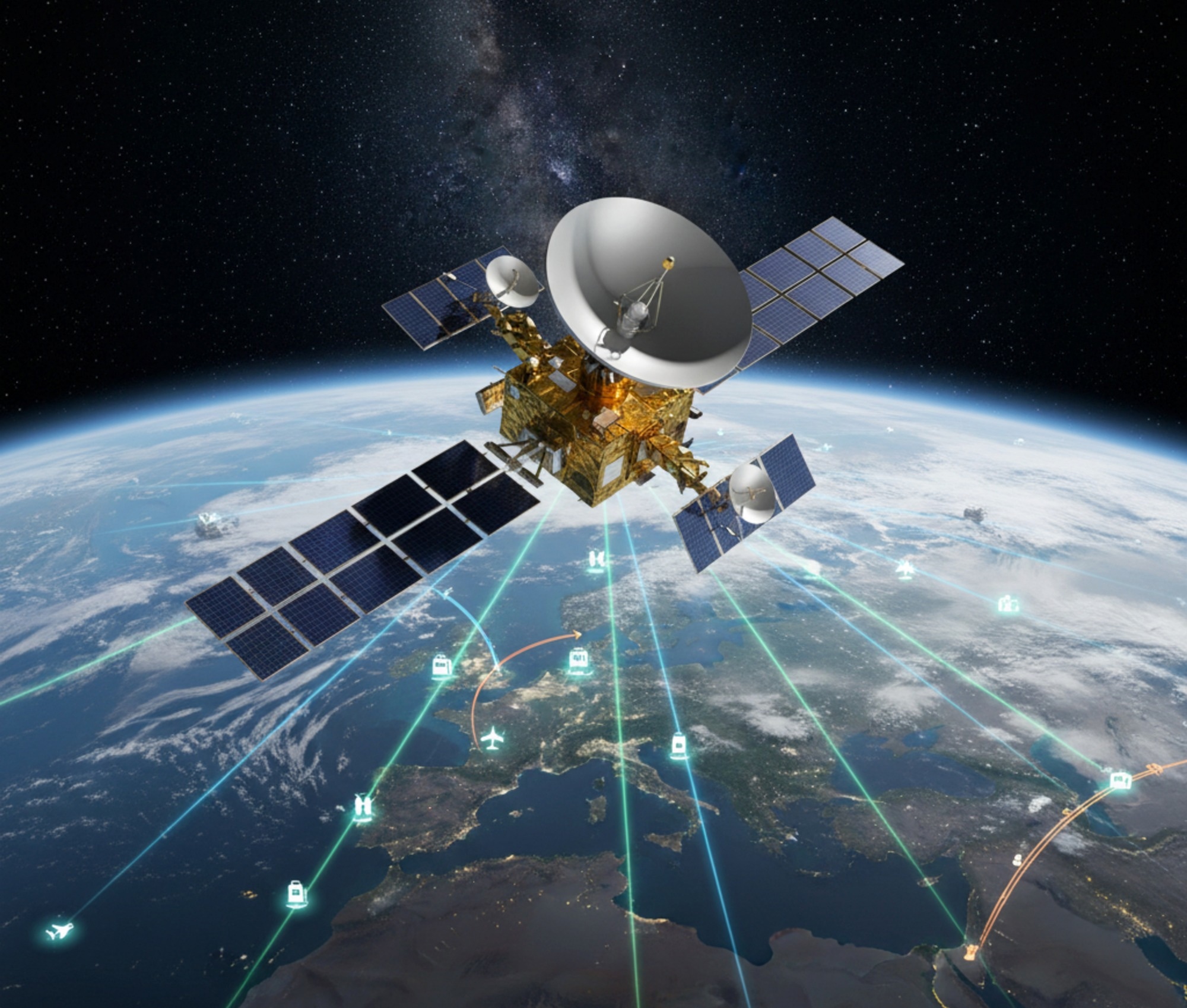 Study: Multi-scale optical scanning holography for robust manipulation detection in satellite images. Image Credit: CGD Shahidul/Shutterstock.com
Satellite Deepfake Challenges
The proliferation of deepfake technology has extended beyond everyday media to critical applications like remote sensing, raising significant concerns about the authenticity of satellite images.
Detecting these sophisticated manipulations is arduous, as artifacts are often subtle and distributed across complex spatial structures that traditional image forensics methods, primarily reliant on spatial or independent frequency-domain analyses, frequently overlook.
Download a free copy of this page here!
The need for a robust detection mechanism capable of discerning these nuanced inconsistencies is paramount for security-sensitive applications. This research highlights the limitations of conventional approaches and emphasizes the potential of representation-centric methods, particularly those that integrate a broader spectrum of image information beyond mere pixel values.
Multi-Scale OSH Approach
The proposed framework integrates multi-scale holographic representations with deep learning to enhance the robustness and discriminative capability of manipulated image detection. At its core is the optical scanning holography (OSH) transformation, a critical optical process that maps an input image into a richer, more structured representation space.
Unlike conventional frequency-domain techniques like Fourier decomposition, which treat spatial and frequency components separately, OSH establishes a controlled interaction between them. This is achieved through a modulation process defined by an optical transfer function (OTF).
This unique approach enables OSH to jointly encode different aspects of the image, crucially incorporating phase information alongside spatial and frequency data. The integration of phase information is particularly valuable for highlighting the subtle inconsistencies that are often imperceptible in the spatial domain alone.
The framework leverages a multi-scale OSH transformation, where each OSH scale contributes distinct spectral characteristics. Combining these multiple scales into a multi-channel feature space significantly enhances the overall expressiveness of the input, allowing the downstream neural network to capture minute artifacts that might otherwise go undetected.
The resulting multi-channel OSH-based features, combining spatial, frequency, and phase-aware information, form a unified tensor that serves as input for a convolutional neural network (CNN).
This CNN, comprising four convolutional blocks, is specifically designed to learn hierarchical feature representations from this multi-domain input, exploiting complementary cues not available in a single representation domain. The network architecture ensures efficient learning and generalization, with batch normalization, ReLU activations, and dropout layers contributing to stable training and prevention of overfitting.
OSH's Superior Detection Performance
The optical design, specifically the OSH transformation, proved to be a cornerstone of the framework’s exceptional performance. The model, when evaluated on a test set of 10,000 satellite images,
achieved a remarkable accuracy of 99.31%, with a precision of 0.9871, recall of 0.9998, and an F1-score of 0.9935.
This strong performance underscores OSH’s ability to generate a highly discriminative feature space by jointly integrating spatial, frequency, and crucially, phase information. The ablation study further reinforced the significance of the OSH representation, showing a consistent improvement in accuracy as more OSH-transformed inputs (scales) were incorporated.
This finding strongly suggests that the enriched input representation, rather than increased model complexity, is the primary driver of the observed performance gains.
Qualitative analysis using Grad-CAM visualizations provided deeper insights into the model's decision-making process, showcasing its ability to attend to distinct regions consistent with its frequency-aware representation, especially in manipulated images.
Unlike a spatial-domain ResNet-50 baseline, which often responded to broad semantic regions, the OSH-based model emphasized specific, subtle inconsistencies that are characteristic of manipulation artifacts. For instance, OSH-based representations often revealed regular, grid-like textures in manipulated samples that were absent in authentic ones, highlighting its discriminative value as visually demonstrated.
This ability to leverage complementary structural and frequency-domain cues, stemming directly from the OSH’s optical properties, enabled the network to detect subtle manipulation artifacts that conventional CNNs, relying purely on spatial appearance, might miss.
The computational complexity analysis also highlighted the efficiency of the framework, reporting an impressive throughput of 860.13 FPS and an end-to-end inference time of 1.163 ms per image, making it suitable for near-real-time applications despite the sophisticated preprocessing involved.
OSH for Satellite Security
This research successfully demonstrated a multi-scale framework built on OSH for detecting manipulated satellite imagery. By creating a multi-domain feature space that integrates spatial, frequency, and phase-related characteristics, the framework significantly outperforms traditional methods that rely solely on spatial information.
The experimental outcomes unequivocally support this design choice, with the proposed framework achieving 99.31% accuracy and a very high recall on manipulated samples. This performance, superior to CNN- and transformer-based baselines, is attributed to the enhanced input representation provided by OSH, rather than merely increasing model complexity.
The authors note that the framework has not yet been evaluated against diffusion-generated satellite imagery or under operational conditions. Therefore, future work is planned to extend this approach to other modalities and address open robustness questions, including resilience to diffusion-generated forgeries and platform-induced imaging artifacts.
Despite this current limitation, these findings position the framework as a potentially highly effective and practical solution for security-sensitive remote sensing applications.
Journal Reference
Khairy M. (2026). Multi-scale optical scanning holography for robust manipulation detection in satellite images. Scientific Reports. 16. 26798. DOI: 10.1038/s41598-026-67323-1. https://www.nature.com/articles/s41598-026-67323-1.