Wasatch Photonics has added a new 23 nm bandwidth option to its Cobra-D 800 OCT spectrometer. It reaches an imaging depth of 15.5 mm, with 0.01 nm spectral resolution, centered at 842 nm. The new option brings more depth to industrial and medical OCT while keeping the cost and simplicity of 800 nm silicon detection.
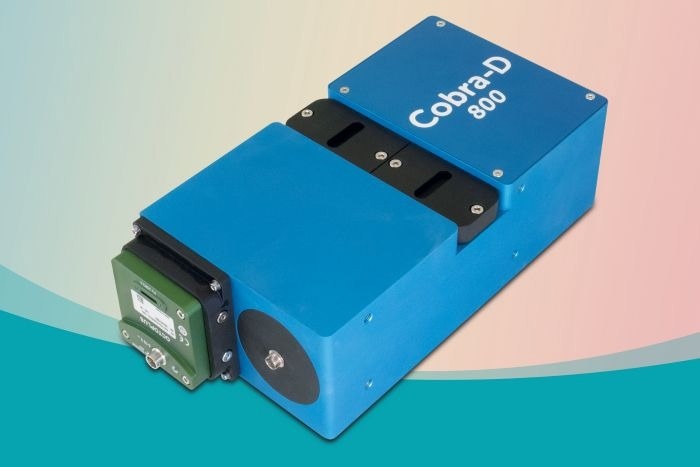 Image Credit: Wasatch Photonics
The 23 nm Cobra-D gives an OCT system 15.5 mm of imaging range. In laser welding, that means two things: a deeper view into the weld at the center of the field, and a wider work area at the edges. On a non-telecentric scan lens, the light path grows toward the edge of the field, so the edges need depth to stay in view. More depth means more field from the same lens, or more margin over the same field, all at 800 nm with silicon detectors. Laser machining, surface and microelectronics inspection, nondestructive testing, and eye imaging gain the same depth.
The 23 nm option uses the same compact housing as the existing Cobra-D versions. Customers who already use the Cobra-D 800 can switch to the deeper version with no changes to their optics or mechanics. Similar to the other Cobra-D 800 spectrometers, it weighs under 6 kg, runs at up to 250 kHz, and comes with software kits for C++, C#, LabVIEW, and MATLAB. It is built on Wasatch Photonics' patented volume phase holographic (VPH) gratings and in-house manufacturing, giving OEMs the sensitivity, low roll-off, and stability they need for production.