Analyzing microplastics (MPs) in drinking water is evolving from a research project to a routine analytical task. As regulatory frameworks grow, consistent monitoring programs are likely to significantly increase the volume of drinking water samples that require analysis.
This transition throws new demands on analytical laboratories, which must balance accurate polymer identification with the throughput needed for routine, large-scale monitoring.
Using the LUMOS II ILIM and ParticlePlus™ process, entire 25 mm filters may be analyzed in under 30 minutes.
Automated data collection and AI-driven polymer classification enable reproducible, operator-independent microplastic analysis suitable for typical laboratory processes. This article describes the analysis of a drinking water sample collected in Hungary.
Experimental
The ParticlePlus™ procedure is intended for IR laser imaging (ILIM) microscopes. For this study, the following configuration was used.
- Sample Details: A 20 L sample of raw drinking water was collected in Hungary and filtered via a 25 mm Whatman® aluminum oxide filter (0.2 µm pore size) provided by Eurofins Analytical Services Hungary Kft.
- Measurement Setup: The LUMOS II ILIM in transmission mode and ParticlePlus™ software were utilized for automatic full-filter imaging. The laser wavenumber was tuned with a spectral step size of 4 cm-1 spanning the MIR fingerprint area of 1800–1250 cm-1.
- Data Analysis Tool: Bruker's Microplastic Identifier (MPID) processed and analyzed hyperspectral data without user input. The identification threshold value was set at 750.
Results
The post-filtration instrument-to-result time for the entire 25 mm filter was 17 minutes, which included 12 minutes for full-filter capture of 22.5 million IR spectra and five minutes for automated processing.
MPID conducted fully automated microplastic analysis with machine-learning (ML) models for unsupervised particle detection and classification, as well as determining particle-specific parameters such as size, morphology, and spatial distribution.
A total of 61 particles were detected and identified, including 49 polymer particles and 12 calcium carbonate (CaCO3) particles, indicating the capacity to discriminate between polymeric and inorganic particles.
Polyethylene (PE) was the most prevalent polymer, accounting for 21 particles (36% of all polymers), followed by polypropylene (PP, 11), polyethylene terephthalate (PET, 9), polyamide (PA, 7), and polymethyl methacrylate (PMMA, 1).
Based on the sample volume examined, this equates to a microplastic concentration of 2.45 MPs per liter.
The particle size distribution ranged from 8 µm to 83 µm, with the largest proportion ofof particles (43%) falling in the 20–50 µm range. This distribution matches the generally reported size range for environmental microplastics in drinking water.
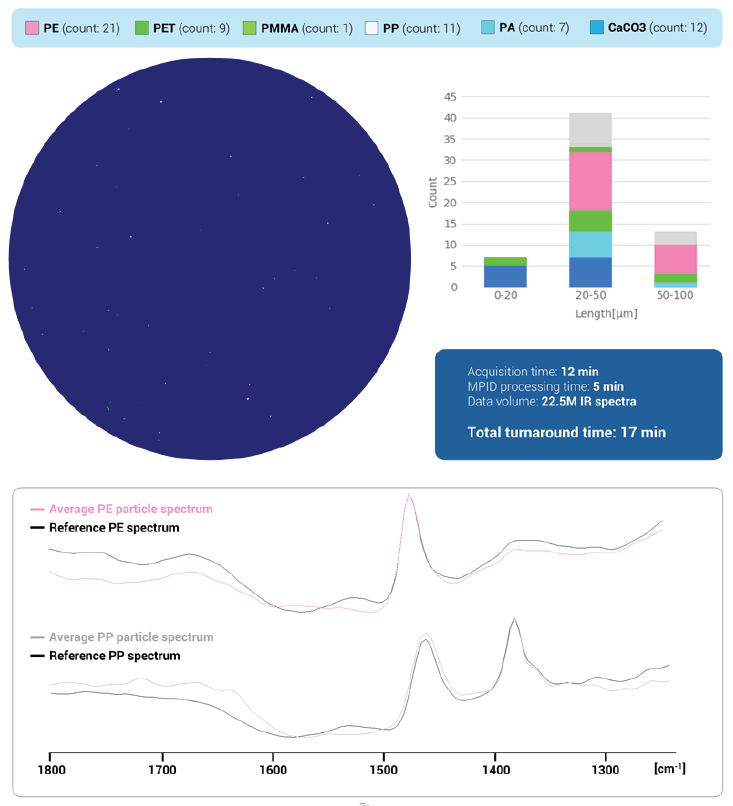
Fig 1. Comprehensive results summary for the drinking water sample. Image Credit: Bruker Optics
The quality of the unsupervised polymer classification is demonstrated by comparing the average spectra of detected PE and PP particles (the two most common polymer classes) to the respective library reference spectra.
The excellent spectral agreement verifies the robustness of the AI-driven identification and shows that reliable polymer identification is possible despite the short turnaround time.
Conclusion
- High-throughput routine analysis is possible with a turnaround time of less than 30 minutes for each 25 mm filter.
- MPID uses AI to detect and classify particles reliably, eliminating the need for manual spectrum evaluation.
- Simultaneous determination of polymer type, particle size, morphology, and spatial distribution enables thorough characterization of each particle.
- The LUMOS II ILIM, when combined with ParticlePlus™, is an effective option for monitoring drinking water on a wide scale.
The Fastest IR Microscope Ever Built: LUMOS II ILIM
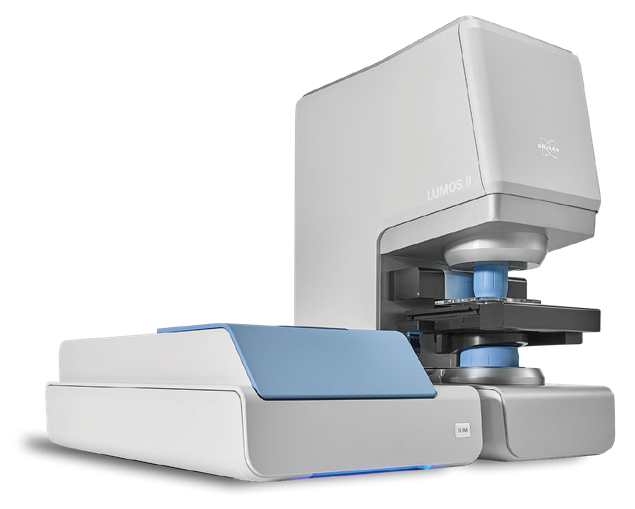
Image Credit: Bruker Optics
Acknowledgments
Produced using materials originally authored by Domenic Dreisbach (PhD), Product Manager, Bruker Optics GmbH & Co. KG.

This information has been sourced, reviewed, and adapted from materials provided by Bruker Optics.
For more information on this source, please visit Bruker Optics.