Optical coherence has long been associated with lasers because they produce light with highly predictable phase relationships across space and time. But the physics of coherence extends far beyond laser sources. Recent work shows that partially coherent light can support imaging, communication, and photonic computing, offering useful trade-offs in bandwidth, stability, and system design. The most important shift is that coherence now serves as a tunable resource rather than a fixed property of a laser source.
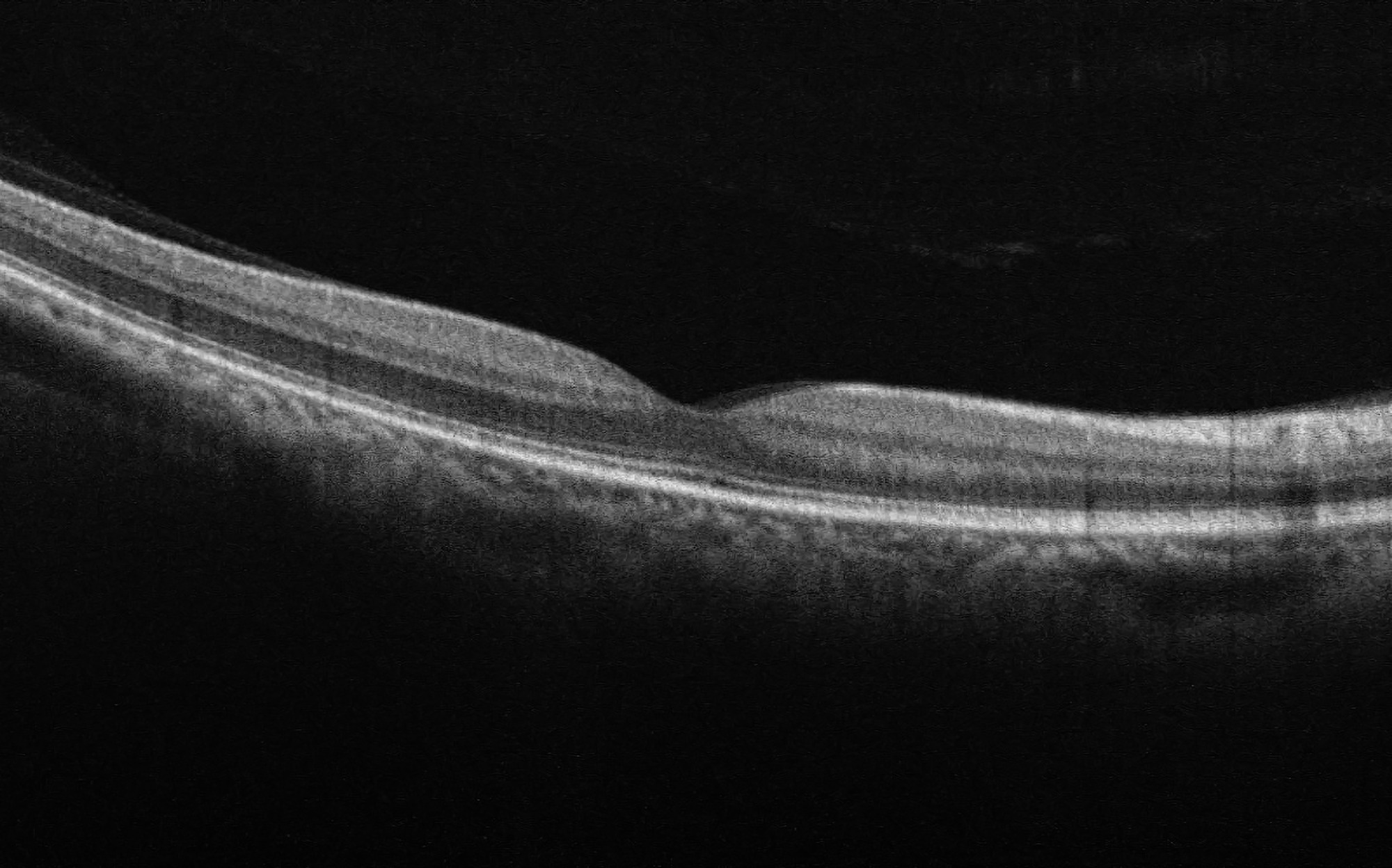 Image Credit: Mehmet Cetin/Shutterstock
What is Partial Coherence?
Coherence describes how well the phases of a light field correlate across space or time. A fully coherent beam maintains perfect phase relationships everywhere, while a fully incoherent source has none. Most real-world light falls in between, making partial coherence the norm rather than the exception.1
When a light beam carries random phase fluctuations, those fluctuations occur far too rapidly to observe directly. Researchers therefore describe partially coherent light in terms of its statistical properties, specifically the cross-spectral density function. This function captures the average correlations between field amplitudes at two spatial positions, providing a complete second-order statistical portrait of the beam.1
The spatial distribution of these correlations is called the complex spatial coherence structure. Controlling it, rather than just controlling amplitude or phase, has opened an entirely new design space for optical science.1
Coherence as a Design Variable
Classical coherence theory treats light as a statistical field with measurable correlations across space, time, or both. For partially coherent light, those correlations can be described through cross-spectral density, coherence matrices, and coherent mode decomposition, which give engineers control over how the field behaves during propagation and interference. This framework offers greater flexibility for modeling structured sources, mixed states, and broadband emissions beyond conventional laser assumptions.2,3
Partially coherent light appears in many practical sources, including LEDs, spectrally filtered emitters, and lasers whose fluctuations are deliberately broadened. New models focus on how the coherence function itself can be shaped, measured, and reconstructed, which opens a path to direct field engineering rather than only source cleanup. That change is significant because many devices perform better when coherence aligns with the task rather than being maximized by default.3,4
Models Beyond the Laser Ideal
New theoretical work emphasizes spatial coherence structure, not just average coherence width. Scientists now use generalized van Cittert Zernike ideas and coherent mode decomposition to design fields with custom correlation patterns, including nonuniform or anisotropic coherence. These models enable beams to maintain beneficial propagation characteristics while minimizing issues such as speckle, sensitivity to turbulence, and unwanted interference effects.2,5
A second line of modeling focuses on full-dimensional coherence reconstruction. Recent techniques analyze partially coherent light by extracting complex coherent modes and their correlations, thereby recovering field behavior that simpler scalar measurements may overlook. This approach is crucial in modern optics, as real-world systems often rely on both amplitude and phase statistics simultaneously.2,3
Imaging and Sensing Applications
Partially coherent light has strong value in imaging because it can suppress speckle and improve robustness in scattering or fluctuating environments. Research shows that tailored coherence structures support robust optical imaging, sub-Rayleigh imaging, and optical encryption, especially when the illumination is designed for a specific scene or medium. In these systems, coherence acts like a control knob for image formation quality and privacy.2,3
Optical coherence tomography also benefits from this line of research because source bandwidth, coherence length, and mutual intensity shape axial resolution and contrast. Broader recent discussions place partially coherent light inside a larger imaging toolkit that includes environmental sensing, astronomical sensing, and integrated photonics. These applications rely on stable statistical control rather than the high spatial and temporal coherence associated with standard lasers.2,3,6
Communication and Propagation
Free-space links and atmospheric channels often benefit from partial coherence because random fluctuations can degrade fully coherent beams. Custom coherence width and coherence distribution can reduce turbulence-induced distortion and improve transmission stability. That makes partially coherent models useful for beam shaping, robust far-field transfer, and protected optical communication.2,5
The same idea extends to vector and spatiotemporal fields, where coherence can differ across polarization states or across time and space together. Recent research highlights self-focusing, self-splitting, and self-shaping behaviors that arise from specially designed correlation functions. Those effects show that partially coherent light can carry structure that is difficult to express with a simple laser-only model.5
Computing with Partial Coherence
The most visible recent example comes from photonic computing. Nature reported a partially coherent photonic convolutional processing system that uses reduced temporal coherence to improve parallelism and ease phase-control demands. The work showed that partial coherence can reduce the need for strict feedback control and thermal stabilization, which are major challenges in large-scale photonic circuits.4
Saving this for later? Download a PDF here.
This result changes the design logic for optical hardware. Instead of forcing every channel to stay phase locked, the system uses limited coherence to keep intensity stable across paths and to increase the number of usable wavelength channels. This model gives partially coherent light a clear role in scalable photonic tensor cores and other multiplexed processors.4
Measurement and Reconstruction
A useful model also needs a usable measurement method. A recent work published in Light: Science & Applications presented a universal method to analyze, process, and generate spatially partially coherent light in multimode systems, which supports direct characterization of the field rather than indirect inference alone.2,3
New experimental breakthroughs include generalized Hanbury Brown Twiss methods, self-referencing holography, and incoherent modal decomposition. These tools help map the real and imaginary parts of the coherence function and connect them to application-specific performance. As these methods mature, partially coherent light becomes easier to design as a reproducible input for imaging, communications, and computing.3,5
What Comes Next?
The emerging landscape of optical coherence is extending beyond traditional laser applications. It is moving towards a field-based view in which source statistics, correlation structure, and device behavior are designed together. This direction favors models that treat coherence as a valuable engineering resource rather than as a nuisance to be removed.2-4
For researchers and industry teams, the practical implications are clear. Partially coherent light can improve robustness, parallelism, and imaging control when the model is well-suited to the application. The next stage of optical design will depend on how well engineers can measure and shape coherence with the same precision that they now apply to amplitude and phase.2-4
References and Further Reading
- Chen, Y. et al. (2021). Partially coherent light beam shaping via complex spatial coherence structure engineering. Advances in Physics: X, 7(1). DOI:10.1080/23746149.2021.2009742. https://www.tandfonline.com/doi/full/10.1080/23746149.2021.2009742
- Yonglei, L. et al. (2022). Research advances of partially coherent beams with novel coherence structures: engineering and applications. Opto-Electronic Engineering, 49(11), 220178. DOI:10.12086/oee.2022.220178. https://www.oejournal.org/article/doi/10.12086/oee.2022.220178
- Roques-Carmes, C., Fan, S., & Miller, D. A. (2024). Measuring, processing, and generating partially coherent light with self-configuring optics. Light: Science & Applications, 13(1), 260. DOI:10.1038/s41377-024-01622-y. https://www.nature.com/articles/s41377-024-01622-y
- Dong, B. et al. (2024). Partial coherence enhances parallelized photonic computing. Nature, 632(8023), 55-62. DOI:10.1038/s41586-024-07590-y. https://www.nature.com/articles/s41586-024-07590-y
- Yu, J. et al. (2023). Research progress on manipulating spatial coherence structure of light beam and its applications. Progress in Quantum Electronics, 91-92, 100486. DOI:10.1016/j.pquantelec.2023.100486. https://www.sciencedirect.com/science/article/abs/pii/S0079672723000356
- Eladawi, N. et al. (2020). Optical coherence tomography: A review. Diabetes and Fundus OCT. Volume 1: Computer-Assisted Diagnosis. DOI:10.1016/B978-0-12-817440-1.00007-3. https://www.sciencedirect.com/science/chapter/edited-volume/abs/pii/B9780128174401000073
Disclaimer: The views expressed here are those of the author expressed in their private capacity and do not necessarily represent the views of AZoM.com Limited T/A AZoNetwork the owner and operator of this website. This disclaimer forms part of the Terms and conditions of use of this website.