Introduction
Raman spectroscopy is a well-established and powerful analytical tool for measuring both organic and inorganic chemicals. It is widely used in academic and corporate research and development, industrial process monitoring and control, and for the routine identification of illicit drugs, pharmaceuticals, explosives, and hazardous materials.
Over the past four decades, Raman instruments have been developed for a wide variety of applications and can be generally categorized as handhelds, laboratory systems, and process analyzers. Each of these instrument types is designed for specific application requirements, but they all share the same basic components: a light source (typically a laser), a detection module, and a sampling interface.
These fully integrated instruments are designed to comply with various laser safety standards (e.g., 21 CFR 1040.1, IEC 60825-1) and offer comprehensive software packages with features that support compliance with a variety of industry standards for data collection, such as 21 CFR Part 11 and European Pharmacopeia E2.2.48. For handheld and process instruments, the units are also often designed to meet or exceed various standards for shock and vibration (MIL-STD-810H, IEC 60068), drop tests (ASTM D5276), ingress protection (EN 60529 for dust and liquids), and other equivalent standards.
For applications such as basic research, analytical instrument teaching courses, technology evaluations for new applications, and early-stage new product development, many of these compliance requirements and advanced capabilities are not necessary, and users may prefer to work at the component level. For the ultimate in experimental flexibility, researchers can design their own Raman components from the ground up using lenses, mirrors, gratings, filters, and other components. Such systems are generally assembled on optical tables to ensure alignment precision and stability.
Another approach often used by companies developing their own instrumentation is to purchase individual components (lasers, spectrometers, probes, and sampling accessories) and integrate them into a working system. Such components are offered by many companies. This approach can help speed up early-stage breadboard and breadboard prototyping and allows researchers to choose from a wide range of performance specifications. However, care must be taken to thoroughly test the components together to ensure they work well when integrated and provide the required level of performance.
The Advent of DIY Raman Kits
A recent approach to configuring a Raman analyzer involves companies that offer a complete set of components needed to build one. The use of fiber-optic probes as the primary sample interface, rather than free-space optics, offers flexibility and simplicity. One version of these complete hardware sets involves pre-configured DIY Raman kits designed to meet various price/performance tiers.
Flexibility in Wavelength Selection
Pre-configured DIY Raman kits are available with the three most common laser wavelengths used in Raman analysis: 532 nm, 785 nm, and 1064 nm. End users can choose the optimal wavelength for their specific applications, ranging from 532 nm for studying carbon allotropes to 1064 nm for analyzing fluorescent and biological materials. The lasers used in these DIY Raman kits generally operate at powers below 499 mW at 785 nm and 1064 nm, and below 50 mW at 532 nm, ensuring a laser classification of IIIB. This simplifies the implementation of user safety protocols compliant with ANSI Z136.1 and IEC 60825-14 in the locations where these kits will be used. Higher-powered lasers are available when the application requires it. These kits typically use multi-mode lasers that are fiber-optically coupled to enable easy interconnection with the other kit components. Laser modules are available in compact, software-controlled modules or in small benchtop packages that provide either software or manual control over the laser parameters.
Flexibility in Choosing Performance Level
The quality of Raman spectra is often quantified by the signal-to-noise ratio (SNR). It is greatly influenced by the choice of the detection module and its characteristics. SNR is an excellent metric for comparing different platforms and detectors, as it measures the system's final performance, independent of differences in gain, analog-to-digital converter resolution, quantum efficiency, and noise sources that can make direct comparisons challenging.
Pre-configured DIY kits are available with different price/performance 'tiers' to fit any application and project budget. Entry-level kits use a front-illuminated CCD that is temperature-stabilized to 14 °C. Higher-performance kits offer a back-thinned CCD detector cooled to -2 °C, providing higher sensitivity and lower noise levels than the Entry-level tier. Research-grade kits utilize a two-stage cooling to -25 °C to provide the lowest dark noise for the most challenging applications. DIY Raman kits that utilize 1064 nm lasers use InGaAs array detectors optimized for Raman applications and cooled to -20 °C to reduce dark noise. Figure 1 shows a typical comparison of the SNR of these different performance tiers on the same sample under the same exposure conditions and laser power at the sample.
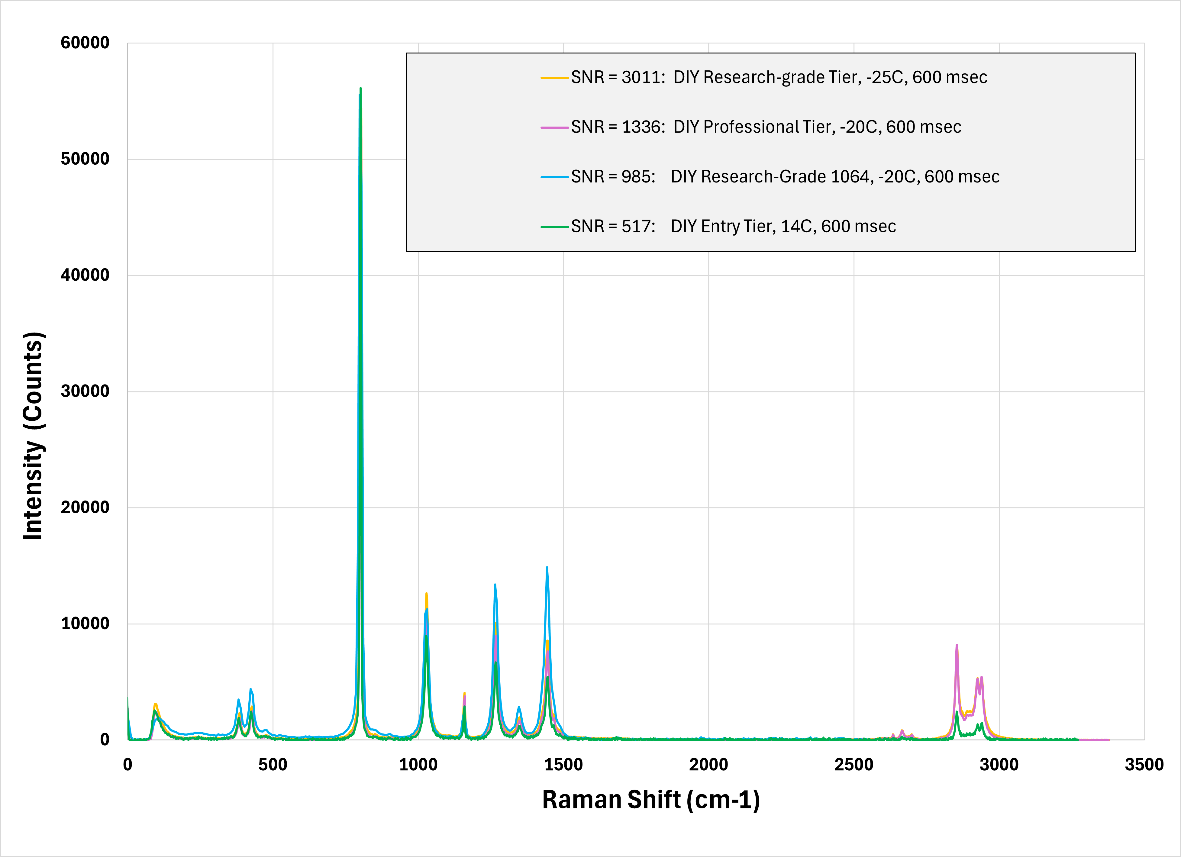
Figure 1. Signal-to-noise comparison of the Raman spectra of cyclohexane measured on different DIY Raman Kit performance tiers (785 and 1064 nm). Image Credit: Metrohm AG
Ease of Assembly and Upgrades
DIY Raman kits are designed for ease of assembly and use. While the main optical components can be easily connected with fiber optic cables, component-level designs are not always easy to relocate to where an experiment will be performed, whether that is under a fume hood or at a production line in a pilot plant. Pre-configured DIY Raman kits are designed to be assembled onto an included optical breadboard. Lasers and spectrometers come pre-assembled onto mounting plates for direct attachment to the breadboard. Once assembled, these DIY Raman kits can be easily relocated using the handles provided on the optical breadboard. Figure 2 illustrates some of the steps of the DIY Raman Kit assembly process.
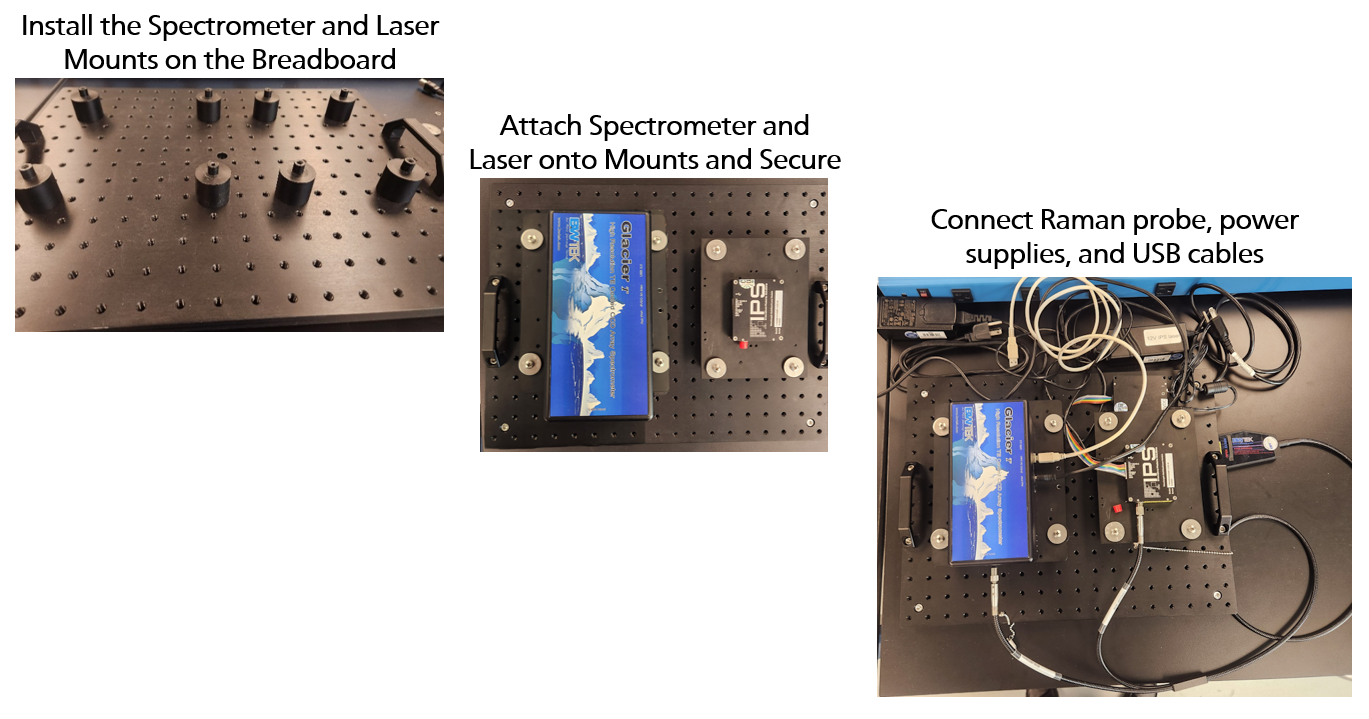
Figure 2. Assembly process for a 532/785 nm Entry Level DIY Raman Kit. Image Credit: Metrohm AG
The different tiers of spectrometers are attached to identical mounting plates, so upgrading a system from an Entry Level tier to a Research Grade tier is as simple as removing the Entry Level spectrometer and replacing it with a Research Grade spectrometer (Figure 3). Harmonizing the components' design to the same fiber-optic connector type enables the same probe and laser to be used for both configurations.
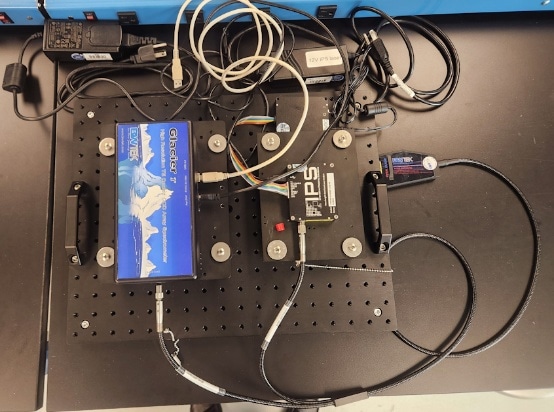
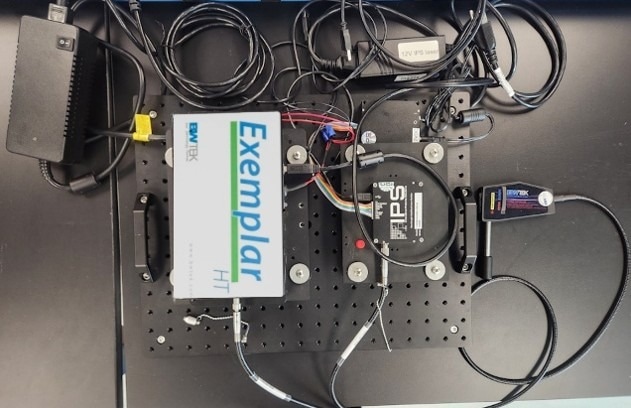
Figure 3. An example of a DIY Raman Entry Level Kit being converted to a Research-grade kit by swapping out the spectrometer. Image Credit: Metrohm AG
Software for DIY Raman Kits
Software can be a key differentiator when choosing and using a DIY Raman kit. When components are procured from different vendors, they may come with separate software packages, making it more challenging to configure full experimental protocols. A pre-configured DIY Raman kit provides a single software package that can identify and control both the spectrometer and the laser, including internal spectrometer shutters, basic spectrometer parameters, laser on/off control, power levels, and other key laser parameters. This capability allows for the configuration of more complex experiments.
Some end users want to write their own control and analysis software. The robust Software Development Kit (SDK) supplied with DIY Raman Kits is an essential tool for supporting these efforts, allowing users to access and reproduce all key spectrometer and laser functions used in the commercial software package.
Applications Where a DIY Raman Kit Can Be the Right Solution
Early-stage application development. Raman spectroscopy has proven to be a powerful analytical tool across a wide range of applications. For researchers evaluating this technique for a new application, there are often multiple questions that must be addressed to determine whether Raman spectroscopy can provide a solution. Finding the right wavelength is an essential first step. In addition, understanding the key characteristics of the Raman spectra (e.g., key peaks, SNR, fluorescence interference and reaction kinetics) may involve evaluating different types of spectrometers to determine an optimal configuration. Custom probes for contact, in situ, or standoff analysis may also need to be evaluated. A DIY approach with multiple options for these components combines the flexibility to interchange components with the stability of retaining the same basic operating platform and software to help speed up this process.
Education, research and teaching labs. A laboratory Raman product is an excellent tool for exposing students to the basics of analytical techniques and helping them understand their strengths and weaknesses. When it comes to more advanced courses, such as instrumental analysis and optics, or research projects, a DIY Raman kit provides additional opportunities to look under the hood and understand how these instruments work. In addition, with a DIY Raman kit, the user assembles the kit from its components, providing hands-on experience with each part of the overall system. The ability to easily swap out key components allows for additional opportunities to understand the role and impact of each component on the overall kit.
Pilot plant at-line or in-line process analysis. When considering a solution for an online process analyzer, it is often essential to do pilot studies before making a commitment to the purchase and installation of an online process Raman analyzer. This can be beneficial in the design of the process sample interface and sample handling system, and evaluating differences observed moving from the lab to the process. The mobility of a DIY Raman kit minimizes the differences between the hardware used in the comparison of lab results and early process data and help refine requirements of the process Raman analyzer. Utilizing a DIY Raman kit and a Process Raman analyzer that use the same core components from the same supplier can greatly simplify the transition from lab to process.
Conclusion
Both laboratory Raman systems and component-based DIY Raman kits can provide results for many applications. The strengths and weaknesses of each depend on the applications. In general:
- For routine applications requiring regulatory compliance, such as QA/QC of incoming raw materials, including controlled access to certain functions, automated reporting and log files, and time/date stamps, a laboratory Raman system designed to provide those features is an ideal solution.
- When evaluating chemical properties of reactions to determine end points, reaction kinetics, and quantitative analysis of key components using chemometric models, laboratory systems that offer that functionality can greatly simplify model development and implementation.
- For education and teaching applications, both a laboratory Raman system and a DIY Raman kit can provide excellent solutions. For exposure to collecting Raman spectra as part of an Analytical Chemistry curriculum, or to support advanced-level chemometrics courses, a laboratory Raman platform with an all-inclusive software suite is ideal. For more advanced hardware-focused courses, such as Instrumental Analysis, or to support undergraduate research projects, a component-level DIY Raman kit offers more flexibility in allowing customization and can help students to get a hands-on understanding of the inner workings of these devices. A robust SDK can also benefit advanced Physical Chemistry students using Python to learn about instrument control.
- When Researchers are on a tight budget but need the power of Raman analysis, a DIY Raman kit allows them access to the same core hardware and equivalent data quality as a laboratory Raman system, but at a lower entry price point. In return for the lower cost, the user takes on the responsibilities of assembling the hardware and using third-party tools to build spectral libraries or analyze their Raman data.

This information has been sourced, reviewed and adapted from materials provided by Metrohm AG.
For more information on this source, please visit Metrohm AG.