*Important notice: This news reports on an unedited version of an accepted paper and is awaiting final editing. Therefore, the paper should not be regarded as conclusive or treated as established information.
In an attempt to better understand manufacturing processes and inform conservation practices, a new method has been developed to investigate the chemical composition and crystallinity of historic transparent papers. These results, gained by combining X-ray diffraction and Fourier transform infrared spectroscopy, were published in npj Heritage Science.
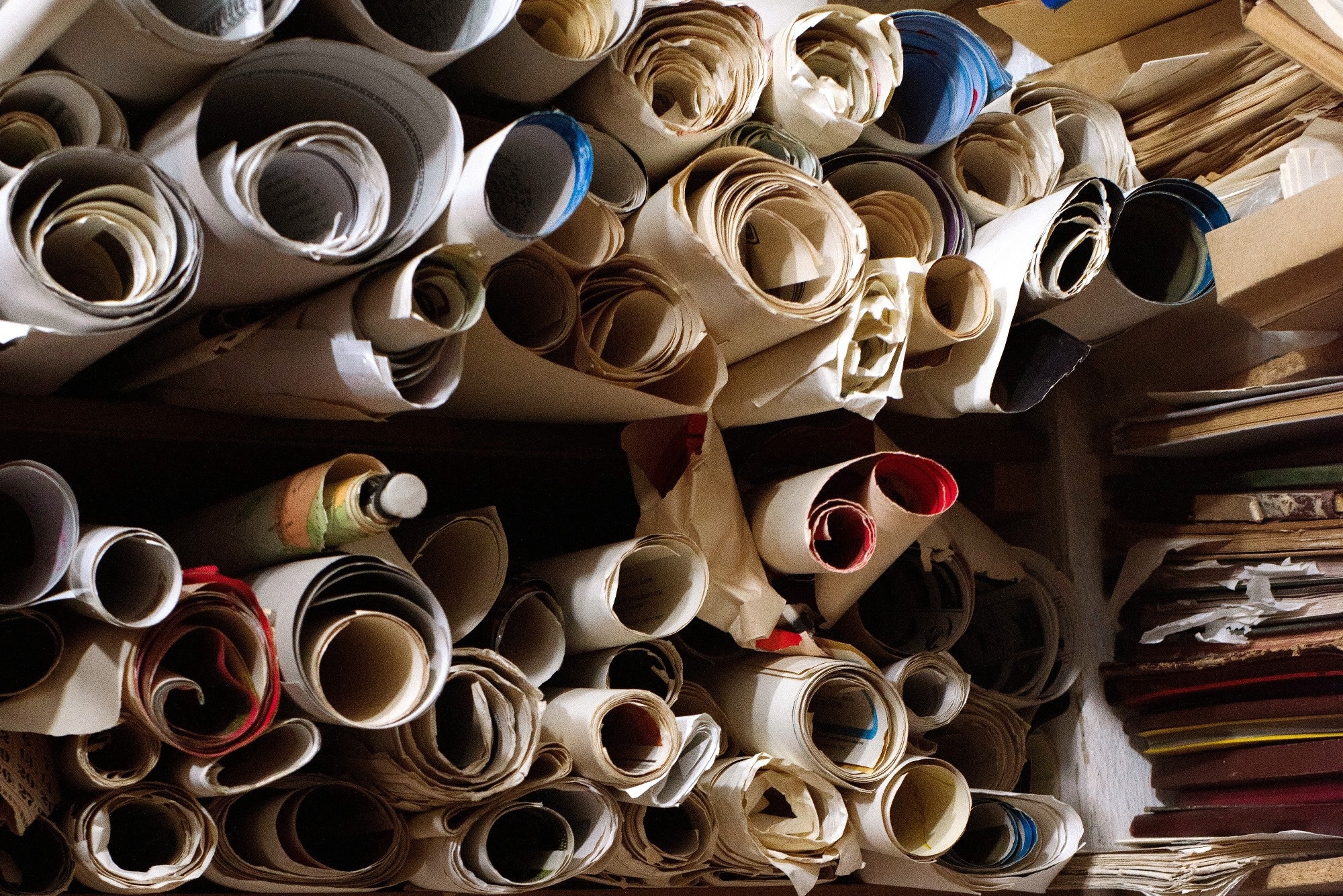 Study: An X-ray diffraction and Fourier transform-infrared spectroscopy evaluation of historic transparent paper. Image Credit: savitskaya iryna/Shutterstock.com
Historic Transparent Paper Context
Transparent paper has been used since the Middle Ages, gaining significant popularity from the 1860s onward, notably in architecture and design. Its principal characteristic is translucency, achieved by reducing light scattering within the paper matrix.
Optically, this translucency is realized by filling the air gaps in the paper with materials matching the refractive index of cellulose fibers, allowing light to transmit with minimal reflection or diffusion. Historically, this effect was induced via impregnation with oils, waxes, or resins; chemical treatments using acids or zinc chloride; or mechanical overbeating of pulp.
Download a free PDF for later!
Understanding the optical properties linked to these manufacturing methods is crucial, as transparent paper often deteriorates differently over time compared to traditional paper, affecting not only its physical integrity but also its light-transmission capabilities.
XRD and FTIR Analysis
This study emphasizes a combined physicochemical approach employing X-ray diffraction (XRD) and Fourier Transform Infrared (FTIR) spectroscopy to investigate the optical and structural properties of historic transparent paper samples.
XRD analysis focuses on evaluating cellulose crystallinity, a critical factor influencing the scattering and transmission of light. Crystallinity affects how cellulose fibers are ordered; higher crystallinity generally correlates with improved transparency due to reduced structural heterogeneity that scatters light.
Among the 10 historic paper samples analyzed, considerable variability in cellulose crystallinity was observed. The XRD patterns showed a prominent (200) reflection peak at approximately 14.5 degrees 2θ, signifying crystalline cellulose regions.
The crystallinity index (CI) and crystallinity ratio (CR), derived from these XRD profiles, revealed that some samples exhibited significant loss of crystallinity, which could impact their optical properties negatively by increasing scattering.
The FTIR spectra illuminated the chemical composition underpinning transparency. Aside from cellulose signatures, bands originating from diterpenoid resins, such as sandarac and manila copal, were consistently present across all samples.
These resins are known to have refractive indices close to those of cellulose; their presence likely contributes to reduced internal light scattering and the characteristic transparency. The presence of these resins also aligns with historical records of impregnating agents used to enhance translucency.
Moreover, one sample showed peaks indicative of proteinaceous materials like rabbitskin glue, which might have been used as a backing or consolidant. This layer may influence not only physical support but also optical properties by modifying light interactions at interfaces within the paper sheet.
Microscopic imaging complemented the spectroscopic data, revealing variations in surface texture and coloration that also affect light transmission and scattering. Samples with higher crystallinity tended to have visible color differences and exhibited better optical clarity, underscoring the relationship between chemical and structural integrity and optical performance.
Cellulose Crystallinity Insights
The optical quality of transparent paper fundamentally depends on both its microstructural arrangement and chemical composition. The scattering of light is minimized when air voids within the fibrous matrix are filled with substances closely matching cellulose’s refractive index.
Resins such as sandarac and manila copal fulfill this role, as confirmed by FTIR analysis. These materials impart transparency while simultaneously influencing the durability and aging behavior. However, despite enhancing translucency, resin impregnation often leads to brittleness and discoloration over time, undermining both mechanical and optical properties.
Loss of cellulose crystallinity, as indicated by decreased CI and CR values in some samples, can result from acid hydrolysis (as in vegetable parchment production), mechanical treatments, or natural aging. Reduced crystallinity increases the heterogeneous domains within cellulose microfibrils, leading to enhanced light scattering and diminished transparency.
This degradation of crystallinity also correlates with physical damage, such as cracks and tears, which further alter the optical path by scattering light at damaged interfaces.
Manufacturing choices, such as the use of acid baths or mechanical overbeating, impact optical qualities. Acid-treated vegetable parchments may initially exhibit good translucency but suffer crystallinity loss and increased brittleness, reducing long-term optical stability.
Comparisons between samples suggest that those treated or backed with proteins like rabbitskin glue may better retain their crystallinity and, by extension, optical clarity. This protective layer may act as a barrier to moisture and environmental contaminants that accelerate cellulose degradation.
Conservation Implications and Future Work
This review highlights the critical optical features of historic transparent paper, emphasizing the significance of cellulose crystallinity and resin impregnation in achieving and maintaining translucency. Variability in crystallinity among historic samples reveals how different manufacturing and aging processes affect light transmission properties.
Future work focused on correlating optical performance with molecular degradation will enhance preservation methods to extend the life and utility of these culturally important materials while maintaining their distinctive optical qualities.
Journal Reference
Kennedy C.J., Rosair G., et al. (2026). An X-ray diffraction and Fourier transform-infrared spectroscopy evaluation of historic transparent paper. npj Heritage Science. https://www.nature.com/articles/s40494-026-02723-0.