An Overview
Chiral Light
Circularly Polarized Luminescence from Chromium (III) Spin-flip Emitters
Chiral Molecular Design Shaping Light-matter Interactions
Predictive Chiral Biomarkers
Enantioselective Sensing Techniques
Role of Chiral Light in Chemistry and Biology
References and Further Reading
Chiral light has emerged as a crucial tool in modern chemistry and biology. Its ability to interact differently with left- and right-handed molecules offers new opportunities to study molecular chirality and to control chemical reactions. In chemistry, chiral light can influence stereoselective processes, while in biology, it can aid in the investigation of biomolecular structures and cellular functions.1-6
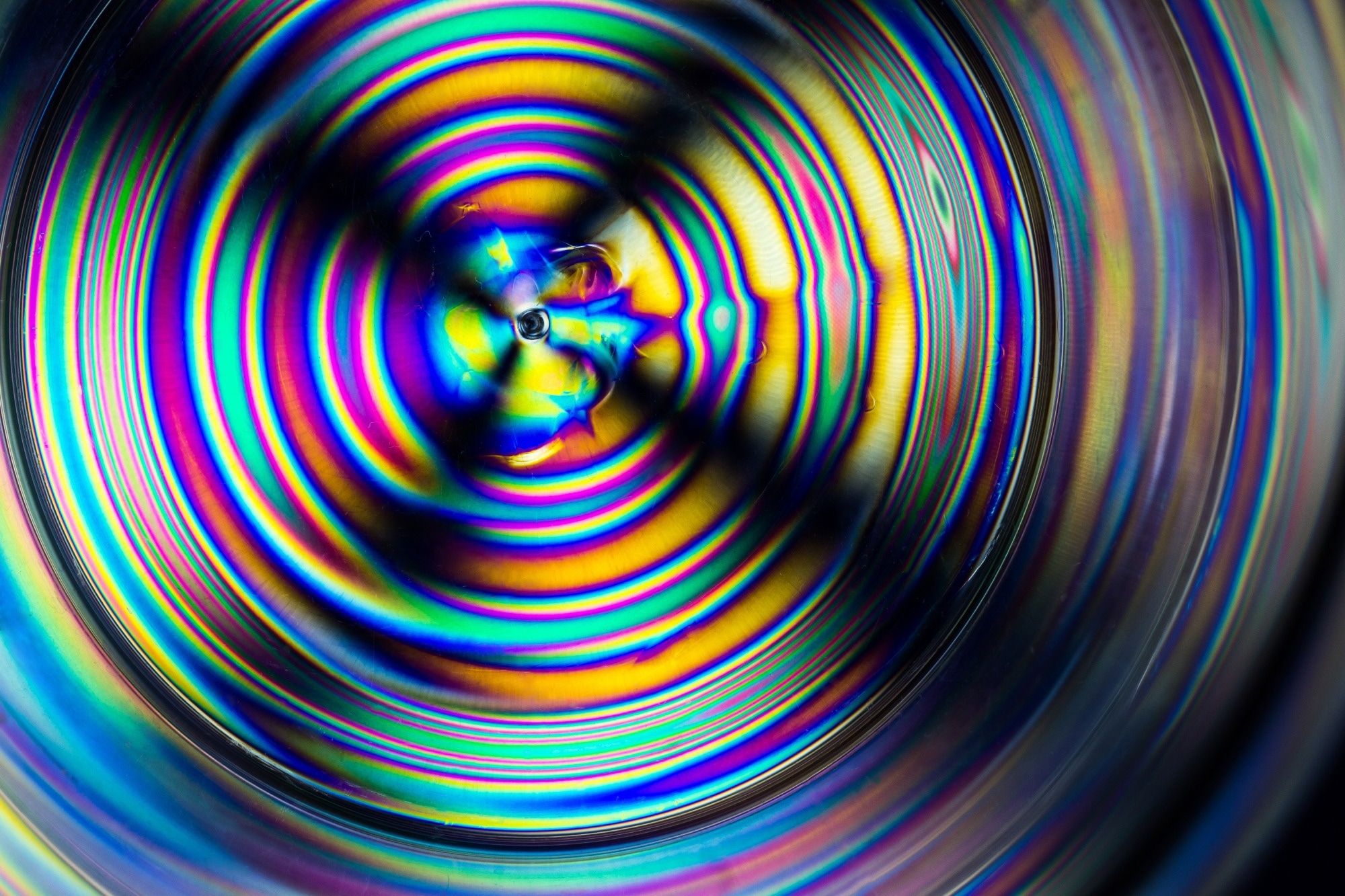 Image Credit: Zdenek Kubik/Shutterstock
An Overview
Chirality is a crucial phenomenon that describes the ability of an object to have two non-superimposable mirror-image forms (enantiomers), analogous to the distinction between left and right hands.1,2
Scientifically defined over a century ago, this concept has received attention in recent years owing to its key role in natural phenomena. Chirality is crucial in several disciplines, including biology, physics, and chemistry, influencing material properties, light-matter interactions, and molecular behavior.
Chiral matter can be composed of achiral molecules organized in chiral patterns, as in cholesteric liquid crystals, and of chiral molecules that cannot be matched by their mirror images, such as sugars and amino acids.
In chemistry, chirality refers to molecules existing as enantiomers, specifically pairs of structures that cannot be superimposed because their atoms are spatially arranged differently. However, most biologically essential molecules, such as sugars and amino acids, are chiral.1,2
Chiral Light
A circularly polarized plane wave is a basic example of chiral light. This wave can be either left-handed, exhibiting clockwise rotation of the electric field vector when viewed in the direction of wave propagation, or right-handed, displaying counterclockwise rotation.2
Interfering circularly polarized waves or vortex beams are other electromagnetic fields that can also be chiral. Chirality flow density metrics and chirality density can be used to quantify their chirality.2
Chiral light-matter interactions enable diverse research applications, from the development and use of chiroptical tools to investigate chemical phenomena to the synthesis of photoactive chiral molecules and materials, and to enantioselective photochemistry.3
Circularly Polarized Luminescence from Chromium (III) Spin-flip Emitters
Circularly polarized luminescence (CPL), an emerging tool in chiral photonics, enables applications in security inks, sensing, and circularly polarized organic light-emitting diodes (OLEDs). Although most advanced CPL emitters are organic chromophores, 4d/5d transition-metal compounds, or lanthanide complexes, recent studies are increasingly focusing on kinetically inert chromium (III) polypyridines.4
Their metal-centered near-infrared (NIR) ‘spin-flip’ emissions generate relatively large and long-lived dissymmetry factors when chirality is encoded through helically wrapped di-tridentate ligands.4 CPL from chromium(III) spin-flip emitters has advanced to the point where rational molecular design enables simultaneous control of both CPL brightness and dissymmetry factor.4
Chromium(III) complexes have atypical photophysical properties, combining Laporte- and spin-forbidden metal-centred transitions with long excited-state lifetimes, thereby creating a favorable balance between magnetic and electric transition moments. However, the low radiative rates and weak absorption linked with these forbidden transitions increase the challenges of optimizing CPL brightness.
Recent developments show that careful ligand design and control of the coordination environment can address this limitation. Approaches such as matrix rigidification, isotopic substitution, or antenna sensitization further enhance emission efficiency without altering the inherent CPL response.4
Recent advances, such as the first chromium(III)-based CP-NIR-OLED and magnetically induced CPL, have shown that these complexes are model systems for chiroptical photophysics. They can serve as promising platforms for functional photonic materials operating in the NIR region.4
Chiral Molecular Design Shaping Light-matter Interactions
Several studies have shown a shift from synthesizing chiral architectures to using them as platforms for probing and controlling light–matter interactions.5
Across boramidines, ylide-derived heterocycles, macrocycles, cationic helicenes, and supramolecular ionic assemblies, subtle conformational or stereochemical changes can be amplified into distinct differences in emission, absorption, electronic circular dichroism (ECD), excited-state dynamics, circularly polarized light, and time-resolved or nonlinear optical responses.
Thus, chirality can be treated as an addressable function that shapes photophysical behaviour at several levels, rather than as only a structural attribute. Studies on chirality/light interactions are most powerful when theory, spectroscopy, stereochemical control, and synthesis are integrated into a single molecular platform.5
Predictive Chiral Biomarkers
Biomolecular chirality and functionality are closely related, indicating potential medical applications. Specific chiral molecules at measured levels can serve as biomarkers for disease prognosis and diagnosis. For highly sensitive chiroptical techniques differentiating among enantiomers, these biomarkers are suitable targets. Multiple classes of chiral molecules were studied to determine their potential as predictive biomarkers.6
Metabolites, which are small molecules created by cellular metabolic pathways, have received closer attention in cancer research. Studies have shown that new chiral metabolites that promote cancer development and progression can be produced through enzyme mutations.
Download the PDF of this page here
For instance, mutations in the isocitrate dehydrogenase 2 (IDH2) and 1 (IDH1) genes characterize patients with high- and low-grade glioma. The activity of mutated IDH1/2 enzymes leads to increased production of the d-enantiomer of 2-hydroxyglutarate, both systemically and locally in brain tissue.6
Enantioselective Sensing Techniques
Research into the construction, application, and design of point-of-care devices with enantioselective sensing properties has been expanding rapidly due to the importance of chiral biomolecules as disease biomarkers.
Chiral enantiomers have almost indistinguishable chemical/physical properties, except for interactions with chiral light and other enantiomeric compounds. Thus, efforts are underway to identify highly effective and sensitive methods for discriminating and quantifying the chiral enantiomers present in a mixture.6
Additionally, the chiral discrimination of a particular enantiomer is essential for pharmaceuticals that exist as stereoisomers, with each enantiomer possessing distinct pharmacodynamic, pharmacokinetic, and biological properties.6
A study achieved picogram-level precision in the enantioselective differentiation of biomolecules using locally intense chiral light–matter interactions on a twisted metamaterial platform surface. This plasmonic “twisted” metamaterial clearly detected molecular handedness, resolving the ambiguity arising from analyzing solely the spectral shift owing to changes in the refractive index.6
Role of Chiral Light in Chemistry and Biology
Chiral light plays an important role in chemistry and biology by interacting differently with left- and right-handed molecules. In chemistry, it supports chiroptical studies, molecular design, and CPL.
In biology, chiral light enables identification of chiral biomarkers and enantioselective sensing of metabolites and pharmaceuticals. These applications help in understanding and controlling chemical and biological systems.
References and Further Reading
- Sakhno, T. V., Minaev, B. P., & Sakhno, Y. E. (2025). Chirality in Biology, Luminescence, Catalysis, and Spintronics: An Analysis of New Approaches: A Review. Theoretical and Experimental Chemistry, 61(3), 155-179. DOI: 10.1007/s11237-026-09862-2, https://link.springer.com/article/10.1007/s11237-026-09862-2
- Dyakov, S. et al. (2025). Strong coupling of chiral light with chiral matter: a macroscopic study. Optica, 12(9), 1406-1416. DOI: 10.1364/OPTICA.569452, https://opg.optica.org/optica/fulltext.cfm?uri=optica-12-9-1406
- Oppermann, M. (2026). Editorial. Chimia, 80(6). DOI: 10.2533/chimia.2026.353, https://www.chimia.ch/chimia/article/view/2026_353
- Jiménez, J. R., & Piguet, C. (2026). New Insights into Circularly Polarized Luminescence from Chromium (III) Spin-Flip Emitters. Chimia, 80(6), 371-377. DOI: 10.2533/chimia.2026.371, https://www.chimia.ch/chimia/article/view/2026_371
- Fabri, B., Saleh, N., & Lacour, J. (2026). When Chiral Molecular Design Shapes Light-Matter Interactions. Chimia, 80(6), 356-363. DOI: 10.2533/chimia.2026.356, https://www.chimia.ch/chimia/article/view/2026_356
- Lininger, A. et al. (2023). Chirality in light–matter interaction. Advanced Materials, 35(34), 2107325. DOI: 10.1002/adma.202107325, https://advanced.onlinelibrary.wiley.com/doi/full/10.1002/adma.202107325
Disclaimer: The views expressed here are those of the author expressed in their private capacity and do not necessarily represent the views of AZoM.com Limited T/A AZoNetwork the owner and operator of this website. This disclaimer forms part of the Terms and conditions of use of this website.