A recent review paper has examined the integration of ultrashort pulses from X-ray free-electron lasers (XFELs) with diamond anvil cells (DACs). The work evaluated how XFEL pulses serve as dynamic drivers and ultrafast probes, enabling measurements of phase equilibria, chemical reaction kinetics, and processes relevant to planetary geophysics under extreme conditions. Findings were published in Nature Communications.
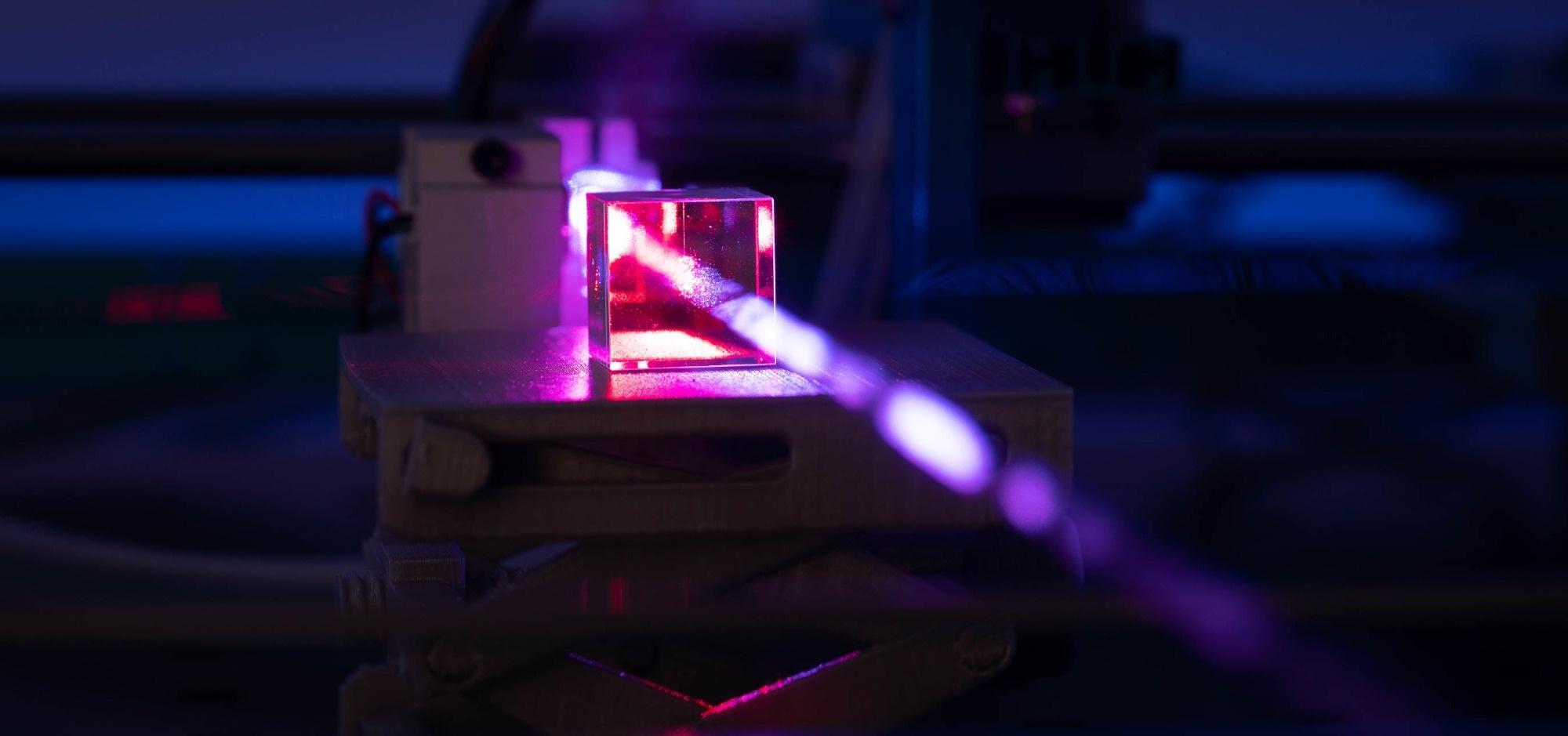 Study: Using X-ray free electron lasers to explore extreme states under quasi-static compression. Image Credit: luchschenF/Shutterstock.com
Advancements in X-Ray Probing Techniques
Understanding material behavior at high pressures and temperatures requires specialized X-ray techniques. DACs have traditionally been used to quasi-statically compress microscopic samples, while focused X-ray beams and infrared heating lasers measure their physical properties.
Hard XFELs have expanded these capabilities by delivering pulses shorter than 50 fs with photon energies above 12 keV. Their high-energy X-rays can penetrate diamond anvils, allowing for measurements of transient phenomena before thermal expansion alters the compressed material.
Methodologies for Extreme State Analysis
Researchers examined megahertz-repetition-rate pulse trains at facilities like the European XFEL for serial X-ray pump-probe experiments. The X-ray pulses deposit energy throughout the sample via
photoabsorption, initiating electronic cascades and electron-phonon coupling that raise the temperature on picosecond timescales. Pulse-resolved X-ray diffraction tracked structural changes, while streaked optical pyrometry measured temperature.
Pulsed infrared laser heating was also considered as a complementary approach. Infrared pulses lasting 20–420 ns have been used to probe statistically compressed samples, and the authors identify the potential utility of combining these approaches for future high-temperature experiments.
This configuration enabled measurements of structural responses during controlled thermal cycling. Complementary diagnostics are also being developed for such experiments. X-ray emission spectroscopy has already been used to investigate electronic spin states, while future iterations of time-resolved XFEL imaging could examine processes such as liquid immiscibility and viscosity.
Some configurations utilized high-atomic-number metallic foils embedded within lower-atomic-number samples to enhance energy coupling. The incident X-ray beam heats the absorbing foil, which then transfers heat to the surrounding material through thermal conduction. This indirect heating approach can reduce unwanted chemical reactions associated with infrared heating and allows rapid heating of low-atomic-number samples.
Key Findings in High-Pressure Crystallography
The X-ray laser techniques provided measurements of material behavior relevant to planetary science and high-pressure crystallography. Serial X-ray heating experiments produced body-centered cubic iron at pressures above 200 GPa and temperatures exceeding 4400 K.
Microsecond-scale heating was controlled to limit chemical diffusion and carbon contamination from the diamond anvils, enabling observation of iron phase transitions under conditions pertinent to Earth’s core.
In studies of planetary materials, diamond precipitation from polystyrene was observed at 20 GPa and 2200 K over timescales of approximately 30 μs. This pressure is lower than previous shock-compression estimates, suggesting that diamond formation in icy planets such as Uranus and Neptune may occur at shallower depths. The resulting diamond-rich material could significantly influence the transport of material within planetary interiors.
Download a free copy of this page for later!
X-ray irradiation also enabled the formation of compounds through non-equilibrium pathways in DACs, including unstable gold hydride, which formed above 40 GPa and 2200 K and reverted to face-centered cubic gold upon cooling. Yttrium hydrides and iron nitrides were synthesized under non-equilibrium conditions using targeted hard X-ray exposure.
Dynamic compression experiments on water revealed multiple phase-transition pathways within the stability field of ice VI. High-resolution X-ray diffraction identified five distinct routes involving freezing and melting, demonstrating that crystallization can proceed through the metastable ice XXI phase before reaching stable structures.
Implications for Geophysical Research and Material Synthesis
The integration of XFELs with static compression platforms offers powerful tools for studying planetary interiors and simulating conditions associated with asteroid impacts. Measurements of the thermal conductivity of mantle minerals, such as bridgmanite, at pressures up to 60 GPa and temperatures of 3100 K can improve estimates of core-mantle heat flux and refine models of planetary thermal evolution.
These techniques also support the study of non-equilibrium states and transient chemical reactions, providing routes to synthesize metal hydrides and other materials under conditions that are difficult to access by conventional methods.
Future Directions in XFEL Research
This research shows that combining XFELs with quasi-static compression devices offers a novel approach to studying extreme states of matter while resolving both structural and temporal changes. Current methods have successfully captured metastable phases and rapid crystallization processes, but questions remain about the spatial and temporal distribution of heat and the non-equilibrium electron dynamics produced by intense X-ray irradiation.
Future work should focus on enhancing diagnostics, including multi-color pyrometry and hard X-ray split-and-delay lines. Facility upgrades could enable two-bucket multipulse schemes with sub-nanosecond pulse separations, facilitating measurements of hydrodynamic expansion and thermal relaxation between successive X-ray exposures.
Extending detection to photon energies above 30 keV and combining XFEL measurements with ultrashort-pulse infrared drive lasers could further illuminate photochemical reactions and structural dynamics relevant to planetary interiors and materials synthesis.
Journal Reference
Husband, R.J., et al. (2026). Using X-ray free electron lasers to explore extreme states under quasi-static compression. Nature Communications, 17. DOI: 10.1038/s41467-026-77171-2, https://www.nature.com/articles/s41467-026-77171-2.
Disclaimer: The views expressed here are those of the author expressed in their private capacity and do not necessarily represent the views of AZoM.com Limited T/A AZoNetwork the owner and operator of this website. This disclaimer forms part of the Terms and conditions of use of this website.