Sponsored by CavitarReviewed by Ify IsiborAug 10 2026
Laser-based illumination is an important aspect of the image quality provided by Cavitar Welding Cameras, enabling clear visualization of the welding process in conditions where arc light, spatter, and high brightness would otherwise render imaging impossible.
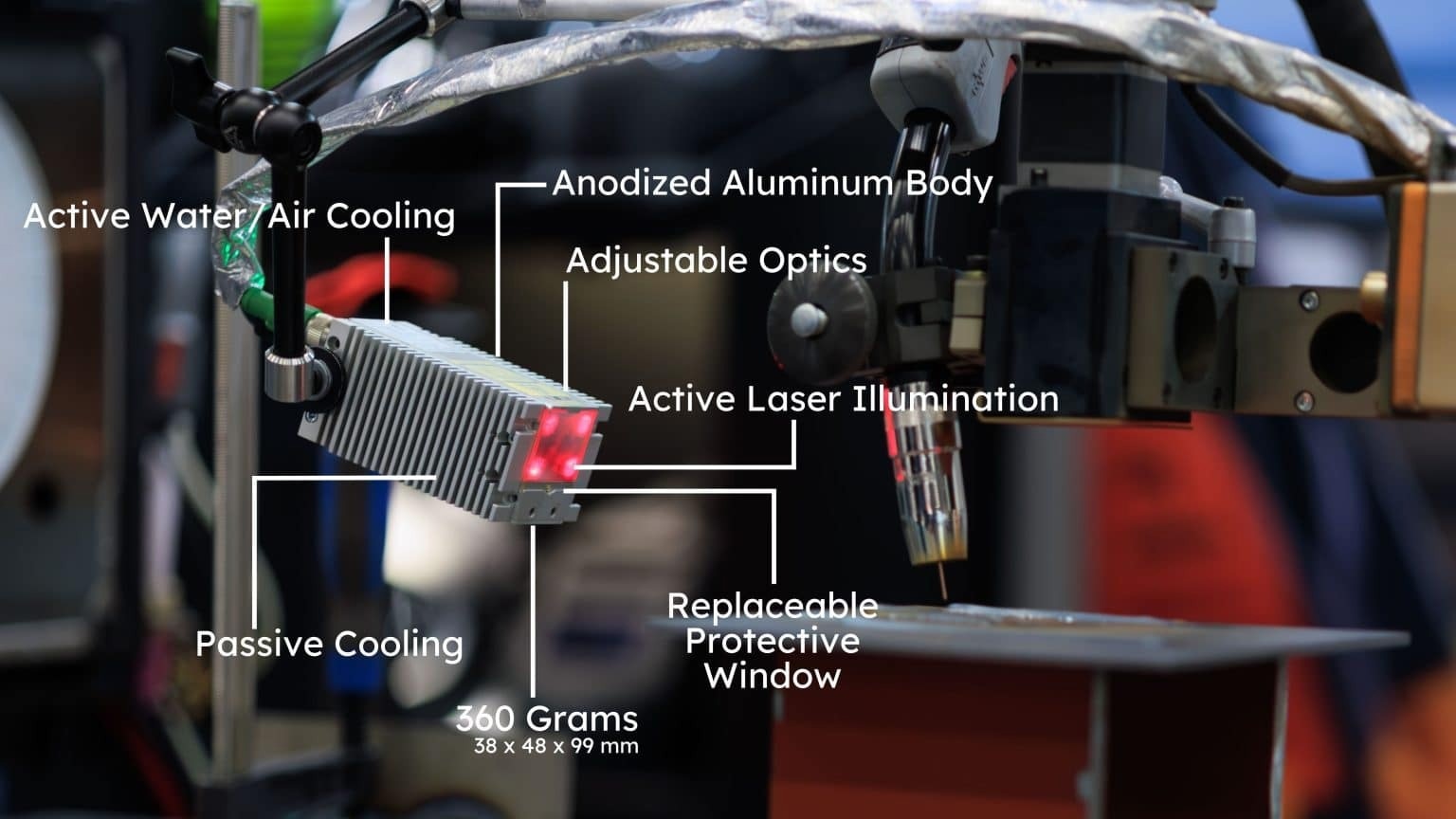
Image Credit: Cavitar
At the same time, any product including a laser source carries responsibility for both the manufacturer and the user. Laser safety should not be treated as a marketing ploy or a secondary issue; it is a regulated, quantifiable, and enforceable feature of product design. In industrial settings, compliance, transparency, and user safety must come first.
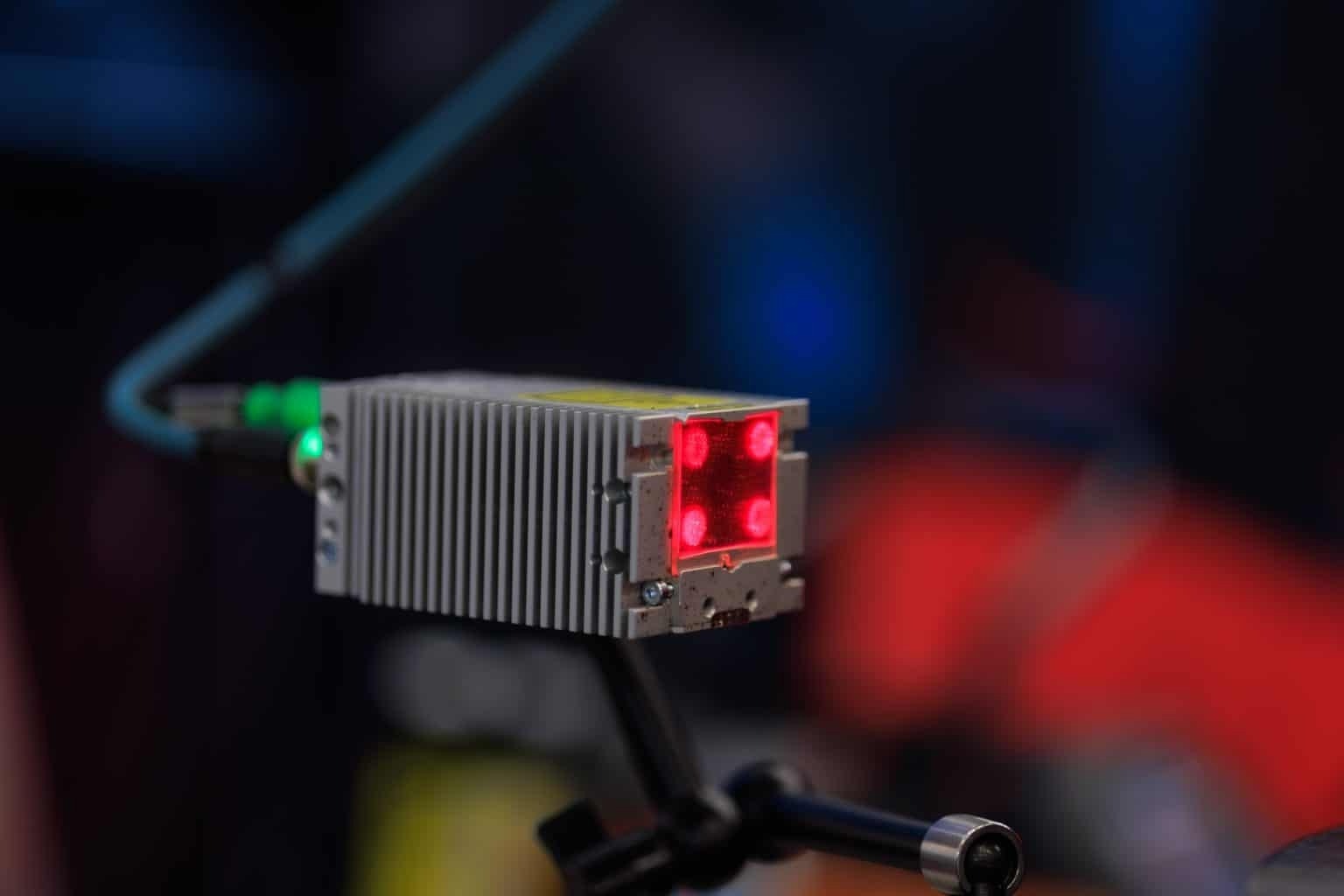
Cavitar Welding Camera C400: Class 3R Visible Laser. Image Credit: Cavitar
As one of the first developers of laser-based weld visualization technology, Cavitar has seen the field grow from a specialized solution to a widely discussed topic.
As interest grew, a wider range of goods entered the market, frequently using identical language but taking very diverse approaches to safety, certification, and validation. This emphasizes the importance of having a solid awareness of laser safety and legal duties.
This article will discuss how laser safety applies to welding cameras, how laser classes are defined, and how Cavitar approaches laser safety.
Magnetic Arc Blow of MAG Welding: #ArcLessVision from Cavitar Welding Camera C400
Video Credit: Cavitar
Part 1: Laser Safety Fundamentals in Welding Cameras
From a user safety and legal standpoint, any product that incorporates a laser source must adhere to laser safety rules. This, of course, is applicable to welding cameras.
In most industrial sectors, these legal requirements depend on the international standard IEC 60825-1, which specifies how laser products are classified and the safety measures required for each class.
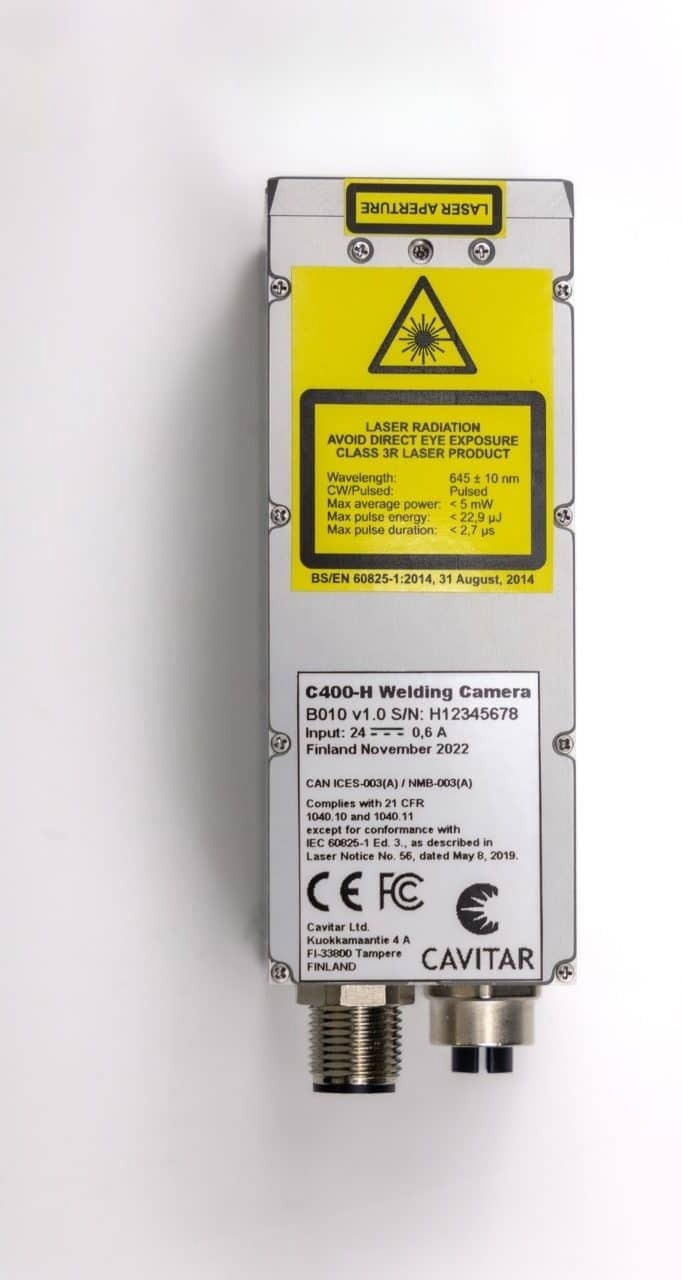
Cavitar Welding Camera C400 warning label. Image Credit: Cavitar
Laser classification ensures that laser radiation emitted by a product does not pose an unacceptable risk to operators, nearby personnel, or equipment when used as intended. Classification governs not just how a laser product can be used, but also how it should be developed, recorded, labeled, and supported.
As laser power and potential hazards grow, so do the safety requirements for the product and its users. These requirements may include product design features (e.g., interlocks, beam stoppers), product labeling, user training, and individual and collective protective equipment (e.g., laser safety goggles, physical barriers, and warning systems).
A laser product can only be allocated to a given class if all of the requirements for that class are satisfied. In other words, laser class is a defined safety framework that determines how a product can be legally and responsibly deployed in industrial settings.
Part 2: Understanding Laser Classes and Risk Levels
Laser classification is based on the comparison of the laser product's emitted output to the accessible emission limit (AEL), which denotes the maximum accessible emission allowed within a certain laser class.
As the laser class increases, so does the allowable emission level, and hence the possible risk and safety requirements for the laser product.
The following is a condensed description of the laser classes most important to industrial imaging applications.
- Class 1: Laser products that are considered safe under normal conditions. Labeling and wavelength information are needed, and the class must be clearly stated in promotional materials and documentation.
- Class 2: Applicable to laser radiation only. Considered safe for accidental short-term exposure as a result of the natural blink reflex. Radiation output labeling is necessary.
- Class 3R: Operators and personnel in close proximity to Class 3R instruments are required to undergo training not to stare directly into the laser beam. Mandatory laser safety goggles and complex interlock systems are not required when used as intended, though clear labeling, documentation, and user awareness are paramount.
- Class 3B: Direct beam exposure is hazardous to the eyes and, in some cases, the skin. Diffuse reflection exposure is usually safe. Key switches, remote interlocks, laser safety goggles, and mechanical beam stoppers are required if there is a possibility of beam exposure.
- Class 4: High-power lasers that may be hazardous, even when reflected diffusely. Such lasers necessitate strict procedural, engineering, and administrative controls.
Laser classes encompass a wide range of emission levels; this is a significant consideration that is sometimes forgotten. Two products in the same laser class may have dramatically different radiation outputs and accompanying risks.
In any case, classification is based on strict criteria such as product design and measured emission values.
Part 3: How Cavitar Approaches Laser Safety
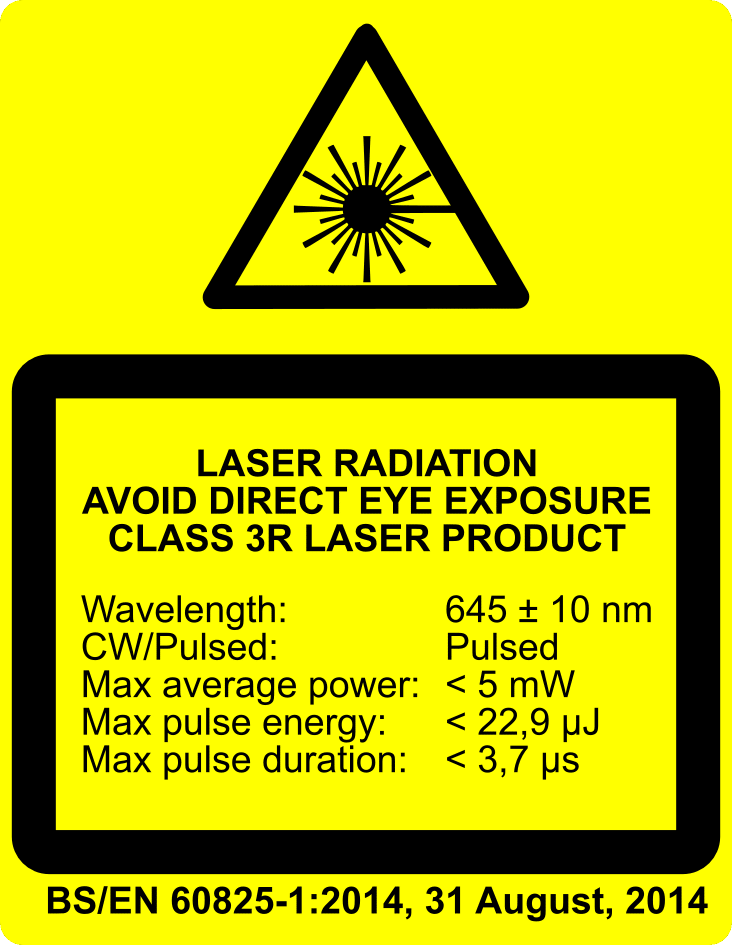
Example of laser warning label. Image Credit: Cavitar
Cavitar's laser classification is first analyzed by in-house laser experts, and then confirmed by measurements taken by independent recognized test facilities in line with IEC 60825-1.
Laser safety is a key design consideration for Cavitar. Its devices are classified as laser class 3R, indicating a purposeful engineering choice that balances imaging performance, usability, and safety.
Class 3R requires that operators and personnel in close proximity be trained not to stare directly at the laser beam. This training requirement is an essential component of responsible deployment, ensuring that the system is used as intended in real-world industrial settings.
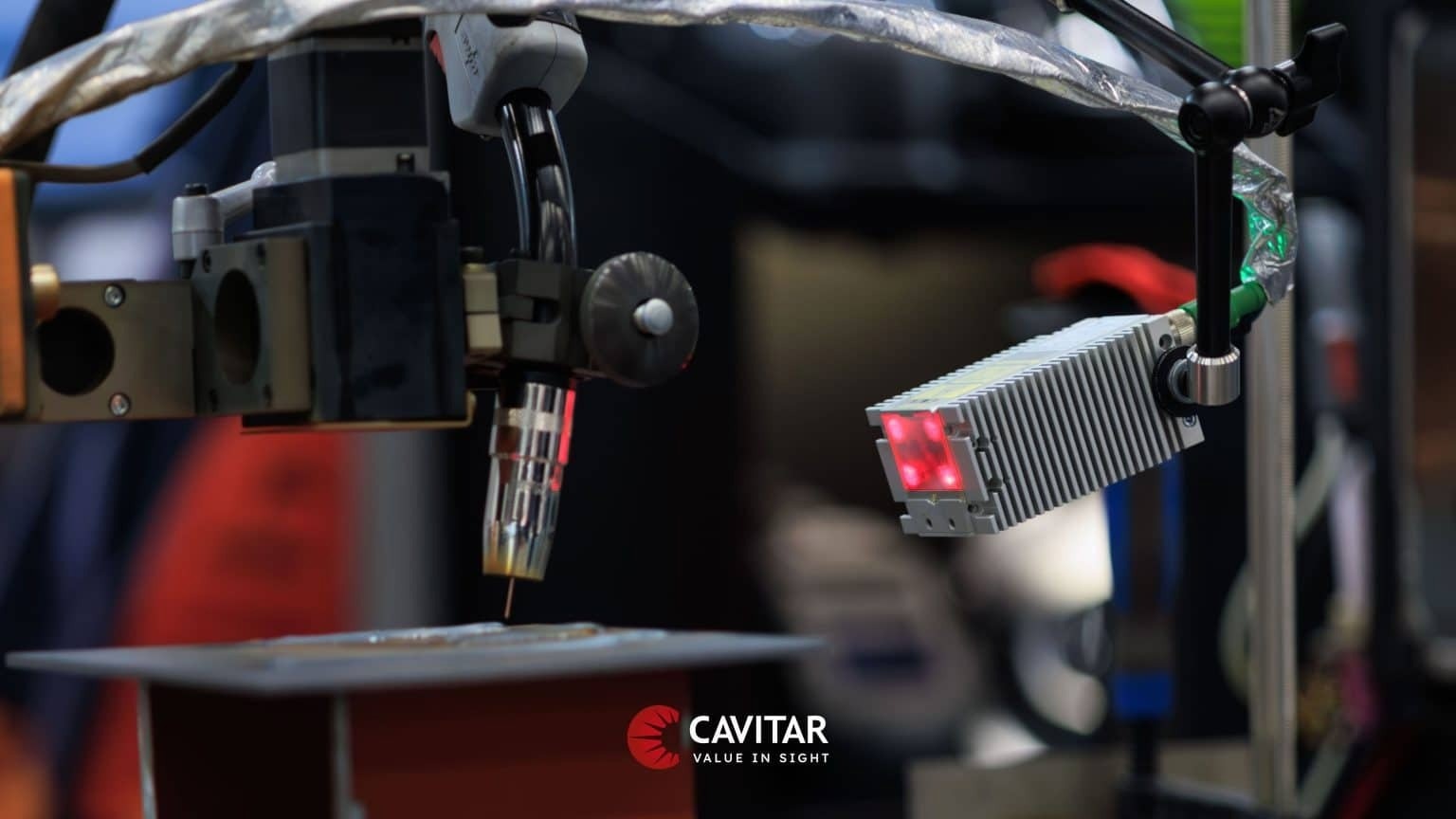
Cavitar Welding Camera C400 (Red Visible Laser). Image Credit: Cavitar
The use of visible red laser illumination, typically around 650 nm, is an important safety design decision in Cavitar’s systems. Because the laser output is visible, the human eye can immediately detect the beam. This considerably minimizes the chance of unintentional exposure when compared to invisible laser radiation.
As laser-based weld visualization becomes more common, it is crucial to note that not all technologies adhere to the same safety guidelines. Transparent classification, recorded compliance, and validated measures are critical for safeguarding operators, workplaces, and organizations against avoidable hazards.
Conclusion
The safe operation of a laser-based illumination welding camera requires that both the system design and field usage adhere to the laser class specified by international safety standards. As a responsible supplier, Cavitar fully complies with these requirements.
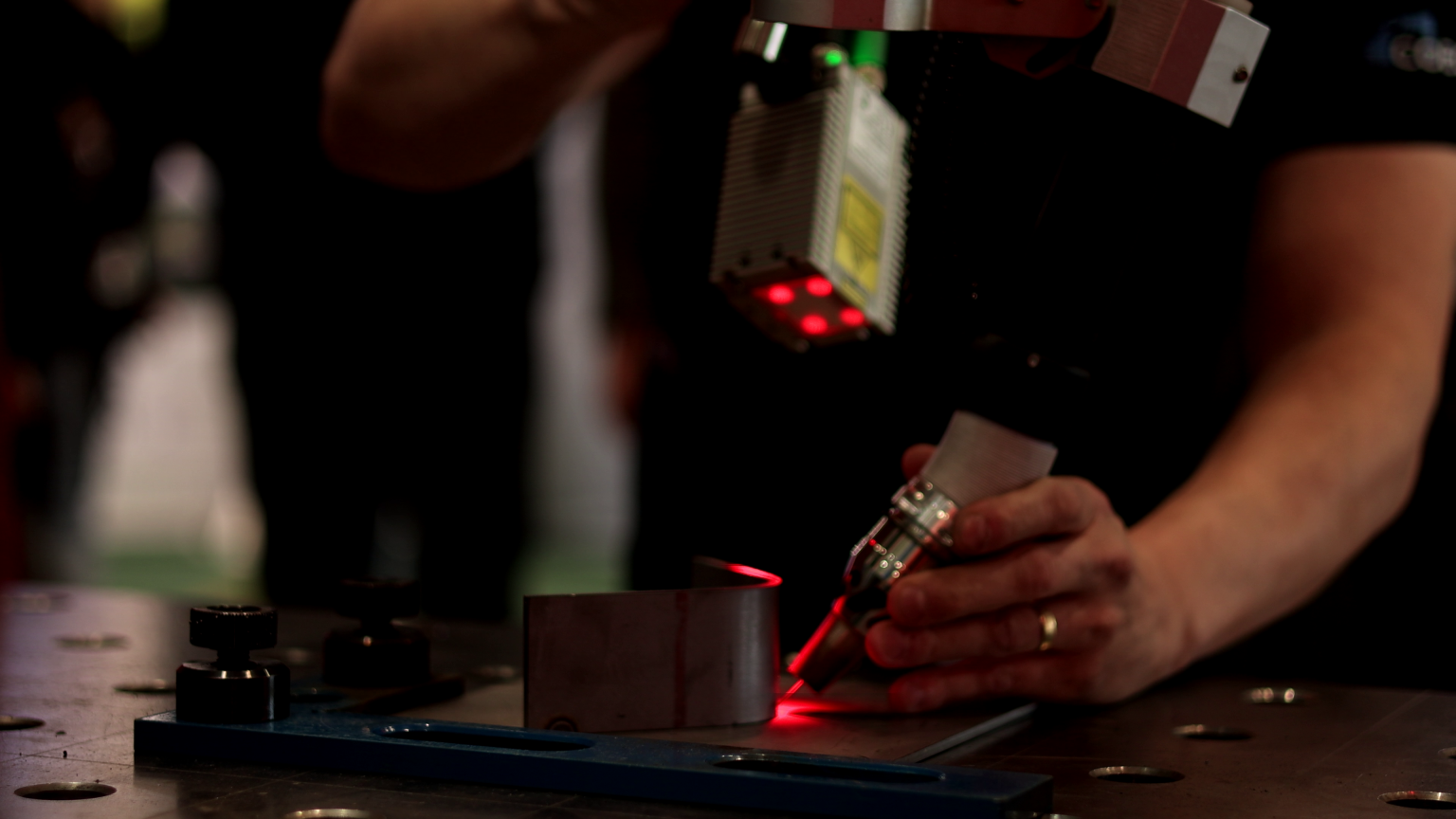
Cavitar Welding Camera C400 on Welding Cobot. Image Credit: Cavitar
As the industry evolves, it becomes increasingly necessary to ask the correct questions about laser safety.
Laser products sold in the European Union must conform with all applicable safety requirements and standards, including laser classification according to IEC 60825-1.
When a product's laser class, certification basis, or conformity papers are not clearly disclosed, users, integrators, and employers have difficulty verifying compliance and meeting their legal safety requirements.
Transparency regarding laser safety is thus not optional, but rather a fundamental requirement for responsible and lawful use in industrial settings.

This information has been sourced, reviewed, and adapted from materials provided by Cavitar.
For more information on this source, please visit Cavitar.