*Important notice: This news reports on an unedited version of the paper which has been accepted. and is awaiting final editing. Scientific Reports sometimes publishes preliminary scientific reports that are not fully edited and, therefore, should not be regarded as conclusive or treated as established information.
Near-infrared optical systems enable wireless data and power transfer to implants through tissue. This optics approach supports reliable communication, though textile layers reduce energy efficiency.
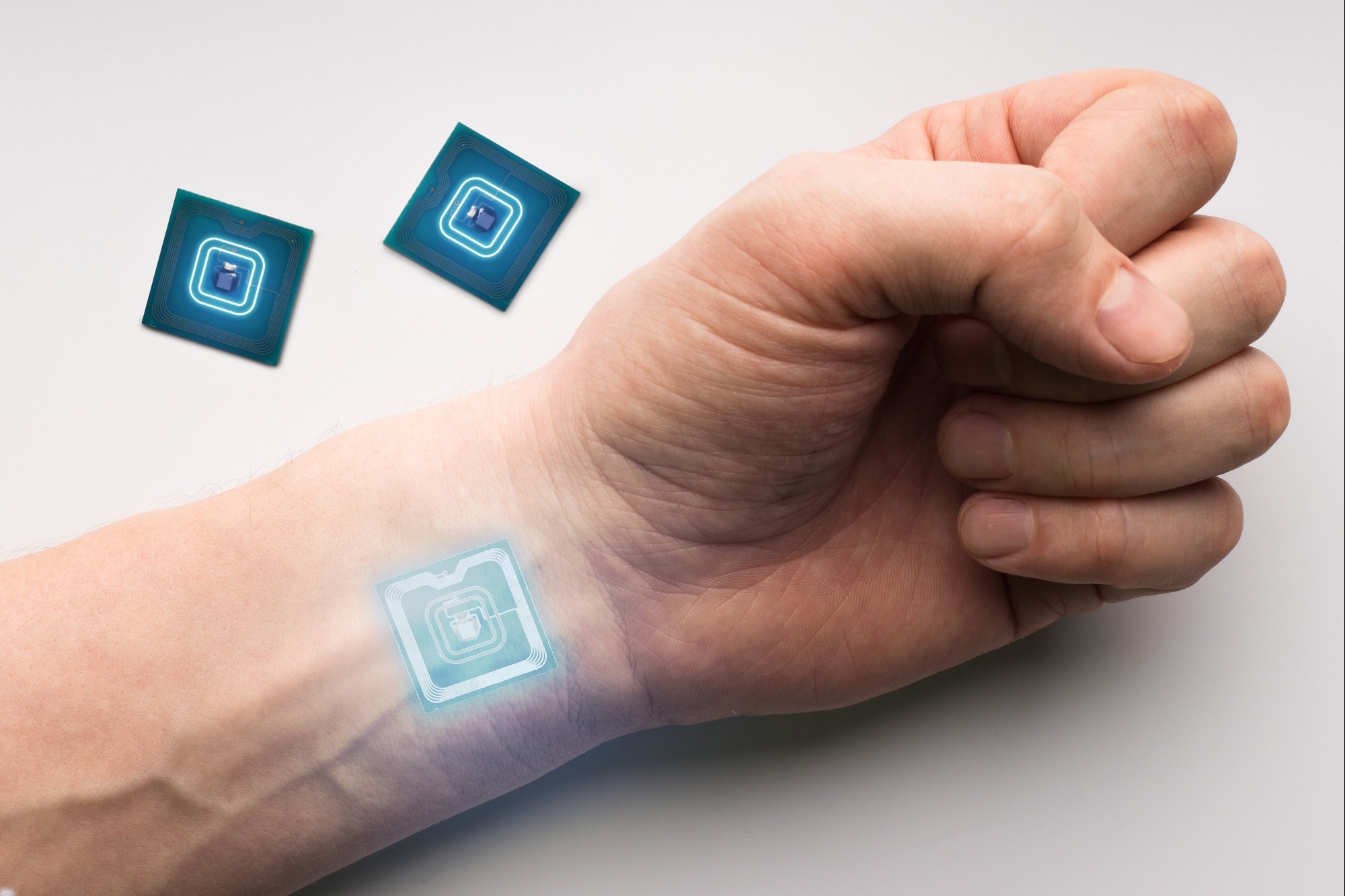 Study: Impact of a textile layer on joint optical data and power transfer to in-body devices: a study on an ex vivo approach. Image Credit: Igor Nikushin/Shutterstock
Recent advancements in biotelemetry have introduced a novel method for medical implants that uses light for wireless communication and energy transfer. A recent study published in Scientific Reports examined how surface obstructions, such as clothing, affect the efficiency of optical wireless data and power transfer systems for in-body electronic devices (IEDs).
The findings showed that near-infrared (NIR) light can effectively penetrate biological tissue and support the operation of IEDs. However, researchers demonstrated that textile layers cause significant signal attenuation, which must be considered in practical medical applications to maintain reliable power delivery and data transmission.
Optical Connectivity in Modern Medicine
The increasing use of IEDs, including ingestible smart pills and implanted neurostimulators, has heightened the demand for efficient wireless communication systems. Traditionally, radio frequency (RF) and inductive coupling have been employed for these applications, but these methods often face limitations, including electromagnetic interference (EMI) and limited bandwidth. Another challenge for long-term implants is the limited lifespan of conventional batteries, which typically require surgical replacement once depleted.
Experimental Setup: Simulating Real-World Conditions
To evaluate this technology under realistic conditions, researchers developed an experimental system using commercial off-the-shelf (COTS) components. The transmitter setup consisted of a Universal Software Radio Peripheral (USRP) 2920 connected to an 850 nm near-infrared light-emitting diode (LED). It used Gaussian Minimum Shift Keying (GMSK) modulation through GNU Radio to encode data onto the optical signal.
The light beam was transmitted through a 4 cm thick ex vivo porcine tissue sample, which closely represents human soft tissue due to its similar light scattering and absorption properties. The receiver system simulated an implanted medical device, comprising a high-sensitivity photodetector to receive optical telemetry signals and a photovoltaic cell to harvest residual optical energy. The harvested energy was then managed by a Power Management Integrated Circuit (PMIC) to charge a 0.16 Farad supercapacitor.
To replicate real-world conditions, two textile samples were placed between the light source and the tissue: a thin, white porous fabric (Sample 1) and a thicker, black dense fabric (Sample 2). Then, researchers evaluated how these textile layers influenced the overall performance of the optical communication and power transfer system.
Impact of Textile Layers on Optical Performance
The results showed a clear relationship between textile density and the reduction of optical system performance. In the baseline condition without clothing, the 850 nm NIR light maintained sufficient intensity for reliable data transmission and continuous energy harvesting. However, even the thinner textile layer (Sample 1) reduced the received optical power by 16.38%. The thicker black fabric (Sample 2) produced a much larger effect, reducing the signal intensity by 65.0% compared to the clothing-free condition.
Download the PDF of this page here
The energy-harvesting performance was also significantly affected by the textile layers. The open circuit voltage of the photovoltaic cell, VOC, decreased by 4.04% with the thin fabric and by 21.8% with the thick fabric. The total energy stored in the supercapacitor after seven transmission cycles dropped from 0.165 Joules in the clothing-free setup to only 0.046 Joules with the dense fabric, representing a 71.9% reduction in efficiency.
Despite this decrease, the system maintained stable data transmission without packet loss. This indicates that while clothing significantly reduces energy-harvesting performance, the optical communication link remains reliable for essential medical communications.
Future Directions for Wearable Medical Devices
This research has significant implications for the development of future wearable-to-implant communication systems. The combined approach is well-suited to devices that require regular updates or calibration, such as insulin pumps and drug delivery systems.
By understanding how clothing affects optical attenuation, engineers can design adaptive transmitters that automatically adjust power or modulation methods to compensate for different textile conditions. This ensures that medical implants continue to operate reliably.
Although the primary energy source remains a wearable NIR LED system, researchers suggested that ambient solar NIR radiation could serve as an additional energy source. This concept could support the development of optical harvesting fabrics or wearable patches designed to enhance the transmission of selected wavelengths to implanted devices.
Clinical Implications and Future Research
In summary, the study provides an important benchmark for advancing optical in-body communication from laboratory demonstrations to clinical use. It showed that combined optical data and power transfer can operate effectively through biological tissue, even when partially obstructed by everyday clothing materials. The findings indicated that while clothing reduces the energy-harvesting rate, it does not necessarily interrupt the communication link when the system employs sufficient power margins and highly sensitive receivers.
Future work should focus on ensuring thermal safety and alignment accuracy. Upcoming studies will likely investigate real-time temperature monitoring to prevent potential tissue damage from higher LED power levels used to overcome clothing attenuation. Additionally, the effects of different fabric colors and moisture conditions will require further analysis. By improving optical system models and developing advanced synthetic optical phantoms for long-term testing, researchers are moving closer to making battery-free, light-powered medical implants a practical standard for future healthcare systems.
Journal Reference
Fuada, S., Katz, M. (2026). Impact of a textile layer on joint optical data and power transfer to in-body devices: a study on an ex vivo approach. Sci Rep. DOI: 10.1038/s41598-026-48739-1, https://www.nature.com/articles/s41598-026-48739-1
Disclaimer: The views expressed here are those of the author expressed in their private capacity and do not necessarily represent the views of AZoM.com Limited T/A AZoNetwork the owner and operator of this website. This disclaimer forms part of the Terms and conditions of use of this website.