The semiconductor industry has always raced against the limits of physics, and today, light itself has become the bottleneck. Optical wafer inspection tools powered by traditional light-based inspection tools struggle to detect tiny defects in advanced chip manufacturing.
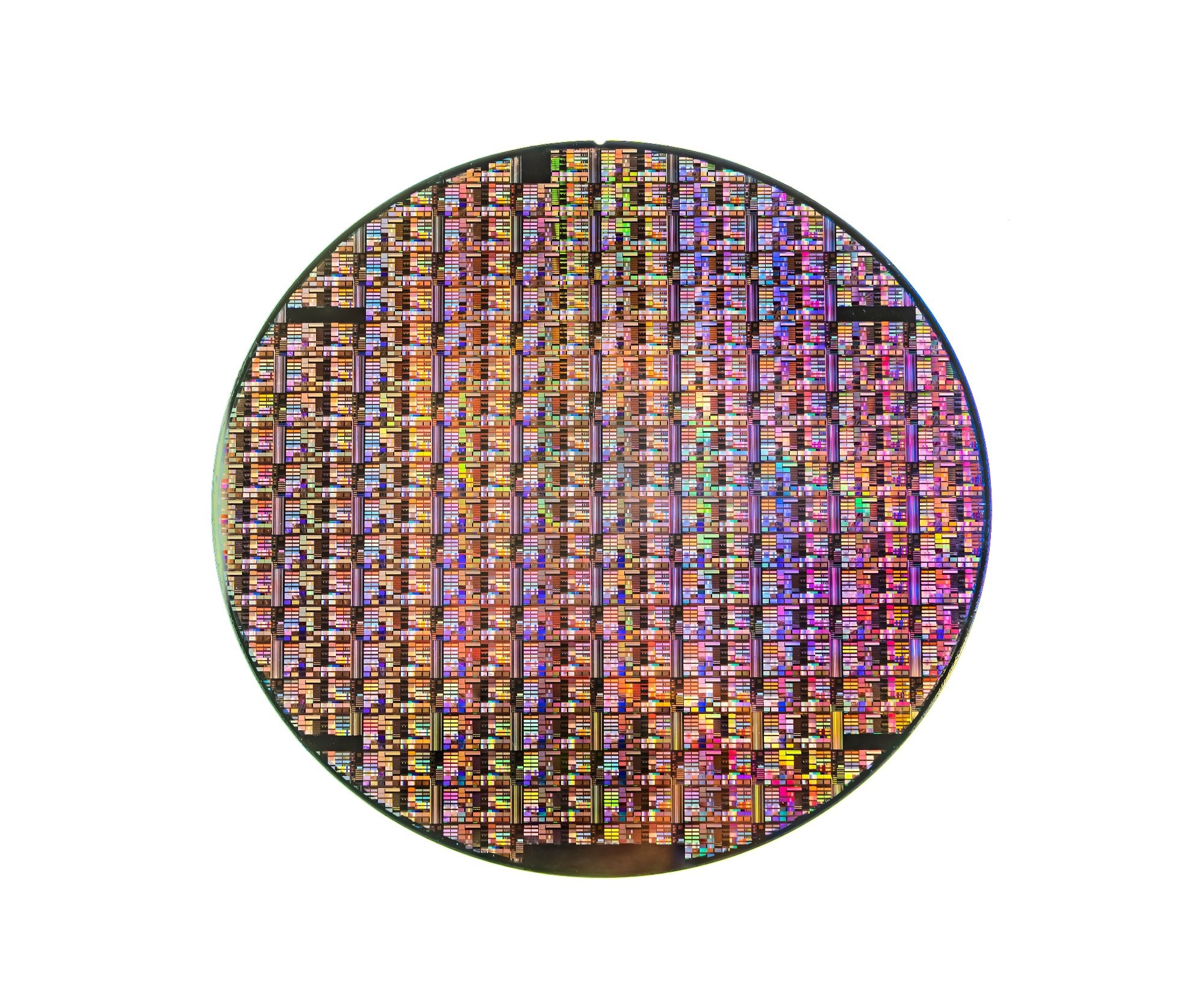 Image Credit: asharkyu/Shutterstock
New super-resolution techniques use advanced light manipulation, molecular fluorescence, evanescent fields, and computational reconstruction to detect these previously invisible features. These techniques are transforming how fabs approach quality control at the 10 nm node and below.
The Resolution Crisis in Modern Fabs
As semiconductor manufacturing advances, traditional optics struggle to keep up. When transistors shrink below 10 nm, the smallest features detectable with standard visible light become far too large to capture defects that impact production quality. This growing gap between what optics can resolve and what process engineers need to detect is driving the need for new super-resolution optical techniques to improve wafer inspection processes.1
The diffraction limit, described by Ernst Abbe in 1873, defines the minimum resolvable distance as approximately λ/(2·NA), where λ is the wavelength of light, and NA is the numerical aperture of the objective. For a 193 nm deep-ultraviolet (DUV) source with a high-NA objective, the practical resolution floor is roughly 50–70 nm. Defects at 20 nm or smaller fall entirely beneath this threshold, rendering them invisible to conventional brightfield tools without some form of computational or physical augmentation applied at either the illumination or detection stage of the system.2
Structured Illumination and Its Industrial Translation
Structured illumination microscopy (SIM) improves resolution by projecting a patterned light grid across the sample and extracting high-frequency spatial information through moiré frequency shifting. The interference between the illumination pattern and fine surface features encodes sub-diffraction detail into measurable low-frequency signals that a standard camera can capture without specialized detectors. After collecting multiple rotated and phase-shifted images, a reconstruction algorithm decodes this encoded information to produce lateral resolution approximately twice that of standard widefield imaging.3
A recent advancement called conjugate structured illumination microscopy (c-SIM) pushes this concept directly into semiconductor relevance. As reported in ACS Photonics, c-SIM used optical proximity correction to optimize the illumination field, aligning it with the background wafer pattern's geometric symmetry.
This technique enables the detection of defects as small as 29 nm with a 423 nm laser. It leads to the localization and classification of sub-wavelength defects across large wafer areas without fluorescent labels.4
STORM and Fluorescence-Based Single-Molecule Localization
Stochastic optical reconstruction microscopy (STORM) achieves super-resolution by imaging a sparse, randomly activated subset of fluorescent molecules, preventing overlapping emitters in the detector. It calculates precise centroid positions by fitting the point-spread function, enabling localization accuracy below the diffraction limit. Researchers from Hanyang University and Samsung Electronics demonstrated STORM imaging of semiconductor nanostructures with feature sizes as small as 30 nm and detected individual 20 nm contaminants on wafer surfaces.5
The key step in semiconductor STORM is a selective fluorophore-labeling chemistry developed specifically for silicon-based materials. The Hanyang team utilized positively charged polyethylenimine (PEI) to interact with negatively charged silicon oxide surfaces, anchoring fluorophores specifically to oxide layers while avoiding metal lines.
This material selectivity enables nanometer-precision mapping of oxide-metal boundaries, providing inline metrology data that closely matches SEM results without the throughput limitations of charged-particle tools.5
Evanescent Wave and Near-Field Illumination
Evanescent waves are electromagnetic fields generated by total internal reflection at a boundary between two media with different refractive indices. These non-propagating fields exist within a few hundred nanometers of a surface and decay exponentially with distance.
Therefore, it interacts almost exclusively with features physically located at the wafer-air interface, thereby improving the detection of weak scattering events from small particles and significantly reducing background noise from deeper structural layers.6
In wafer inspection, an evanescent illumination scheme using infrared standing waves has demonstrated the ability to reliably detect defects as small as 60 nm on patterned wafer surfaces. The annular geometry of the illumination creates a standing-wave interference pattern at the surface, with the periodicity adjustable by varying the incidence angle. By combining this method with a dark-field collection scheme, the bright background from the wafer pattern is suppressed, allowing defects to appear as bright points.6
Saving this for later? Download a PDF here.
Dark-Field Scattering and Diffraction Phase Microscopy
Dark-field imaging has long been a workhorse in optical wafer inspection, but a new work published in Sensors describes a dual-channel system that pairs dark-field scattering with diffraction phase microscopy (DPM) to achieve both high lateral and vertical sensitivity simultaneously.
The dark-field channels detect scattered light intensity from defects, while the DPM channel measures variations in optical path length due to topological changes. With this approach, simultaneous characterization of defects across different physical dimensions is possible. Thus, it overcomes the limitations of single-modality tools typically used in fabrication facilities.7
The combined system achieved a detection limit of 60 nm on unpatterned wafers, maintaining lateral sensitivity while preserving vertical phase information. A fractional Fourier transform extracts the phase map from the DPM signal’s carrier frequency, allowing for precise reconstruction despite measurement noise. Since both channels operate without physical contact or sample preparation, this method seamlessly integrates into current inline process flows, supporting advanced node inspection without electron-beam tools.7
Computational Imaging and the Road to Sub-10 nm
Lens-free and computational imaging methods address resolution challenges by using algorithmic reconstruction instead of traditional optics. A reflective system, detailed in Scientific Reports, employs speckle illumination to synthetically enhance the numerical aperture by capturing multiple diffraction-limited images with varying illumination patterns across a broad field of view. A convolutional neural network then reconstructs a high-resolution phase image, achieving 1.7 µm spatial resolution over a 1.8 × 1.8 mm² area without conventional imaging lenses.8
A report from Huazhong University of Science and Technology found that advancements in nanophotonics, optical vortex illumination, quantitative phase imaging, and deep learning contribute to achieving sub-10 nm sensitivity in inspections. The signal-to-noise ratio remains the key metric, necessitating progress in illumination optics, scattering models, and post-processing algorithms. As the research team noted, patterned wafer defect inspection will remain one of the most technically demanding open problems in semiconductor manufacturing for the foreseeable future.1
References and Further Reading
- Optical Wafer Defect Inspection at Nano Scale and Beyond. (2022). ELE Times Research Desk. https://www.eletimes.ai/optical-wafer-defect-inspection-at-nano-scale-and-beyond
- Huang, B. et al. (2010). Breaking the Diffraction Barrier: Super-Resolution Imaging of Cells. Cell, Volume 143, Issue 7, p1047-1058. DOI: 10.1016/j.cell.2010.12.002. https://www.cell.com/cell/fulltext/S0092-8674(10)01420-0
- Manton, J. D. (2022). Answering some questions about structured illumination microscopy. Philosophical Transactions. Series A, Mathematical, Physical, and Engineering Sciences, 380(2220), 20210109. DOI:10.1098/rsta.2021.0109. https://royalsocietypublishing.org/rsta/article/380/2220/20210109/112090/Answering-some-questions-about-structured
- Zhang, J. et al. (2025). Experimental Demonstration of Conjugate Structured Illumination Microscopy (c-SIM) for Sensing Deep Subwavelength Perturbations in Background Nanopatterns. ACS Photonics, 12, 5, 2710–2719. DOI:10.1021/acsphotonics.5c00227. https://pubs.acs.org/doi/10.1021/acsphotonics.5c00227
- Nguyen, D. T. et al. (2022). Super-Resolution Fluorescence Imaging for Semiconductor Nanoscale Metrology and Inspection. Nano Lett., 22, 24, 10080–10087. DOI:10.1021/acs.nanolett.2c03848. https://pubs.acs.org/doi/10.1021/acs.nanolett.2c03848
- Takahashi, S. et al. (2010). Super resolution optical measurements of nanodefects on Si wafer surface using infrared standing evanescent wave. CIRP Annals, 60(1), 523-526. DOI:10.1016/j.cirp.2011.03.053. https://www.sciencedirect.com/science/article/abs/pii/S0007850611000540
- Zhang, X. et al. (2026). High-Sensitivity Defect Inspection for Unpatterned Wafers via Integrating Dark-Field Scattering and Diffraction Phase Microscopy. Sensors, 26(4). DOI:10.3390/s26041271. https://www.mdpi.com/1424-8220/26/4/1271
- Lee, H. et al. (2024). Lens-free reflective topography for high-resolution wafer inspection. Scientific Reports, 14(1), 10519. DOI:10.1038/s41598-024-59496-4. https://www.nature.com/articles/s41598-024-59496-4
Disclaimer: The views expressed here are those of the author expressed in their private capacity and do not necessarily represent the views of AZoM.com Limited T/A AZoNetwork the owner and operator of this website. This disclaimer forms part of the Terms and conditions of use of this website.