The Fundamentals of Infrared Spectroscopy
The Fundamentals of Raman Spectroscopy
The Fundamentals of UV-Vis Spectroscopy
Infrared vs Raman vs UV-Vis: When to Use Each Technique?
What's Next for Optical Spectroscopy
References and Further Reading
Analytical chemistry is a methodical field of study in which different types of electromagnetic radiation are directed at molecules to observe how they respond. Each selected region of the spectrum, such as ultraviolet, near-infrared, or focused laser light, elicits distinct molecular behavior, revealing specific structural or compositional information.
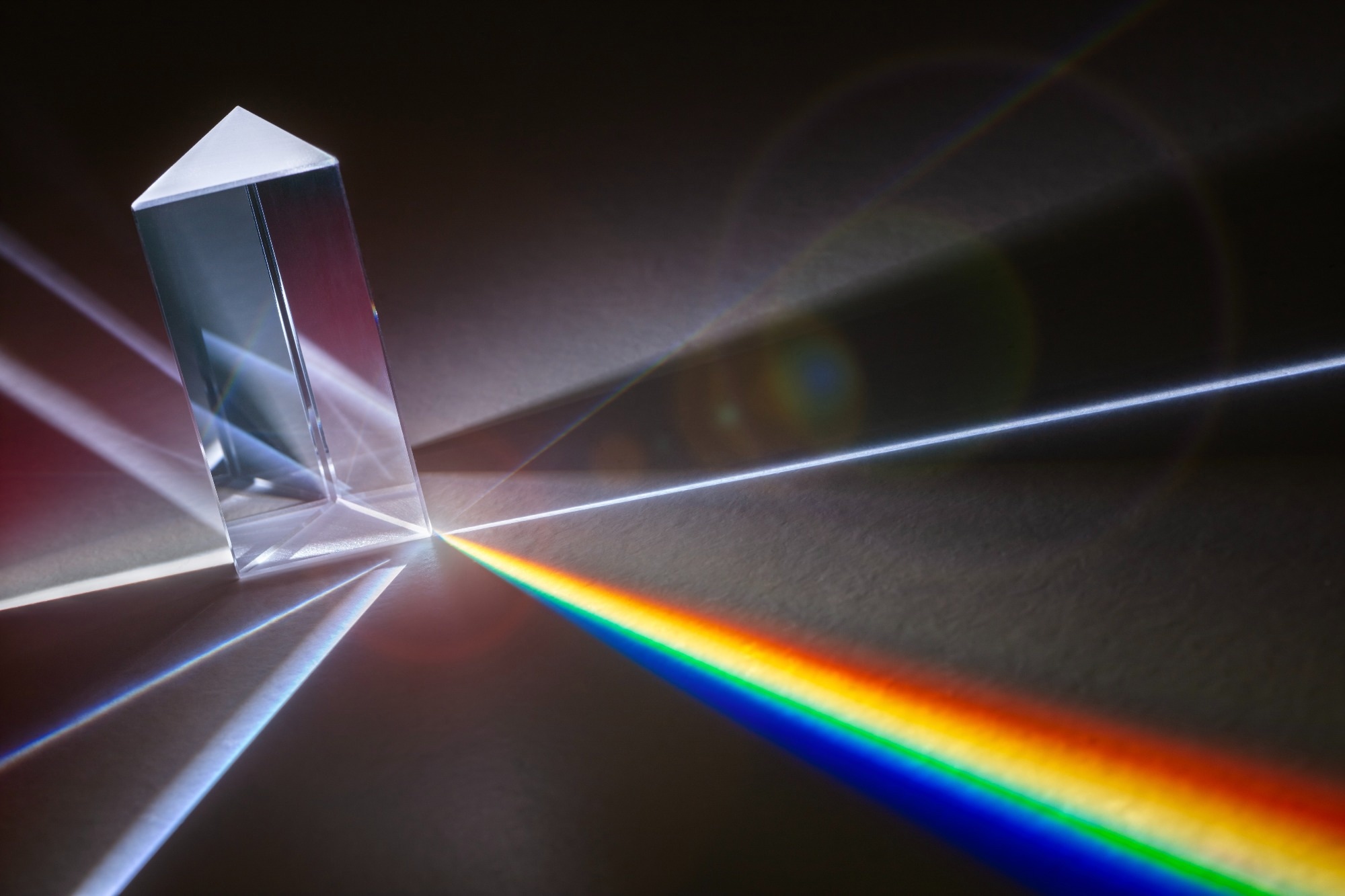
Image Credit: Brian A. Jackson/Shutterstock.com
Raman, NIR, and UV-VIS spectroscopy are the three main methods used in this field. All three fall within the broader categories of vibrational and electronic spectroscopy, but they differ fundamentally in the physical principles they rely on and the analytical problems they are designed to address.
The Fundamentals of Infrared Spectroscopy
Near-Infrared (NIR) spectroscopy spans 800nm to 2500nm. NIR spectra are made up of broad, overlapping bands rather than the crisp, distinct peaks found in other approaches. These are mostly caused by hydrogen bonds (C-H, O-H, and N-H) and overtones and combination bands of molecular vibrations.1
Important Features
In contrast to UV-VIS, which focuses on electronic transitions, NIR spectroscopy is associated with molecular “harmonics.” A helpful analogy is a vibrating guitar string. The fundamental note corresponds to the stronger absorption observed in the mid-infrared region, while NIR detects the weaker, higher-pitched overtones of that vibration.
One of the key advantages of NIR is its strong penetrating ability. Because NIR absorption bands are relatively weak, the light can travel deeper into a sample without being fully absorbed. This makes NIR particularly useful for analyzing intact materials, such as a grain of wheat or a pharmaceutical tablet, without requiring dilution, extensive preparation, or destruction of the sample.1 Because of this, NIR is the best non-destructive spectroscopic testing method.
Applications
There are several real-world uses for near-infrared spectroscopy in various industries. It helps farmers and agronomists make quick decisions during harvest by allowing them to assess the amounts of protein, moisture, and fat in grains directly in the field.2 It enables real-time monitoring of the alcohol content in fermentation tanks within the food and beverage industry, assisting producers in maintaining constant quality throughout the production process.
The method ensures effective incoming-goods inspection while preserving material integrity in chemical manufacture by identifying raw materials in warehouses without the need to open protective plastic liners.
Keep this article for later - Download the PDF here
The Fundamentals of Raman Spectroscopy
Raman spectroscopy differs significantly from UV-VIS and NIR spectroscopy because it is based on scattering rather than absorption. When a high-intensity laser strikes a sample, the vast majority of photons scatter off the surface without any change in energy. This process is known as Rayleigh scattering.3 However, a very small fraction of photons, roughly one in ten million, interact with molecular vibrations and either gain or lose energy during the process.
This change in photon energy is known as the Raman shift, and measuring it provides detailed information about the vibrational modes of the molecules in the sample. Because these vibrational signatures are highly specific, Raman spectroscopy can be used to identify molecular structures and chemical compositions with a high degree of precision.
Important Features
Raman spectroscopy provides what is often described as a “molecular fingerprint.” The resulting spectrum contains sharp, highly distinctive peaks that correspond to specific vibrational modes within the molecule. These well-defined signals reflect the molecule’s skeletal structure, allowing compounds to be identified with a high degree of specificity.
Another major advantage of Raman spectroscopy is its relative indifference to water. Water strongly absorbs in the IR and NIR regions, which can interfere with those techniques. In contrast, water is a very weak Raman scatterer. As a result, Raman spectroscopy can analyze samples in aqueous solutions and can often “see” through glass or plastic packaging with minimal interference.
Applications
Raman spectroscopy is useful in many different fields. It allows for the quick and non-invasive identification of unknown white powders or liquids using evidence bags at crime scenes or airports in forensics and security.4 The method is frequently utilized in materials research to provide insights into the structural and chemical characteristics of sophisticated materials such as carbon nanotubes, graphene, and diamond thin films. Raman spectroscopy facilitates the non-destructive identification of pigments in ancient paintings in the fields of art and archaeology, allowing researchers and conservators to examine cultural items without inflicting harm.
The Fundamentals of UV-Vis Spectroscopy
Ultraviolet-visible (UV-VIS) spectroscopy operates in the 200–800 nm wavelength range. When a molecule absorbs a UV or visible photon, one of its electrons is promoted from a ground-state orbital to a higher-energy excited state.5 This electronic transition forms the basis of UV-VIS analysis.
The spectra produced from these transitions can reveal valuable information about the sample being examined. By analyzing the wavelengths and intensities of absorption, scientists can gain insights into molecular structure, concentration, and the presence of specific chromophores within the material.
Important Features
UV-VIS is characterized by its dependence on chromophores, which are light-absorbing molecular components such conjugated double bonds. Because of this, it is a "selective" method; if a molecule lacks the proper electronic structure, UV-VIS cannot detect it. The Beer-Lambert Law serves as the main mathematical foundation.
Applications
Numerous applications in several scientific fields are supported by UV-VIS spectroscopy. It is frequently employed in the pharmaceutical industry to ascertain the concentration of active chemicals in liquid formulations, guaranteeing precise dosage and high-quality products.6 The method makes it possible to quantify proteins, DNA, and RNA in biochemistry, especially through absorbance measurements at 260 and 280 nm, providing crucial information for molecular biology operations. UV-VIS spectroscopy is used in environmental analysis to track the levels of phosphate and nitrate in water samples, providing a dependable way to evaluate water quality and identify possible contamination sources.
Infrared vs Raman vs UV-Vis: When to Use Each Technique?
Selecting the most appropriate analytical method requires an understanding of the principles behind each technique. Infrared methods, particularly those in the near-infrared region, detect molecular vibrations only when those vibrations produce a change in the distribution of electrical charge within the molecule.
Raman spectroscopy, however, follows a different rule. For a vibration to be detected by Raman, it must change how easily the molecule’s electron cloud can be distorted (its polarizability). If a vibration alters this property, the scattered light shifts in energy and becomes observable in the Raman spectrum.
In practical terms, this means the two techniques often complement one another. Molecules with more asymmetrical structures tend to respond strongly in the near-infrared because their vibrations create noticeable dipole changes. In contrast, molecules with highly symmetrical architectures frequently produce stronger Raman signals, since their vibrations more readily affect molecular polarizability.
When comparing the methods, ultraviolet-visible spectroscopy is particularly sensitive and capable of detecting extremely small amounts of a drug, although it is not always good at differentiating between various chemicals. Although Raman spectroscopy often requires stronger light sources and more sensitive detectors, it provides very unique chemical information. Although it frequently requires substantial data modeling to explain the vast and overlapping signals it creates, near-infrared spectroscopy occupies a middle ground by offering quick and easy-to-use observations.
What's Next for Optical Spectroscopy
Optical spectroscopy is expected to see considerable innovation in the years ahead as emerging technologies converge and industry needs evolve rapidly. As instrumentation and analytical capabilities continue to advance, the field is adapting to meet growing demands for faster, more detailed molecular analysis.
One important development is the integration of hyperspectral imaging systems with IR and Raman platforms. Together, these technologies are forming increasingly powerful analytical toolkits capable of delivering richer and more spatially resolved molecular insights.7 Simultaneously, real-time spectroscopic monitoring is becoming essential in contemporary production settings, especially as pharmaceutical continuous manufacturing grows and necessitates more stringent process control.
A greater focus on sustainability is driving the need for quicker, greener, and more resource-efficient analytical techniques, which is further accelerating these developments. When taken as a whole, these advancements point to a future where optical spectroscopy will be even more crucial in facilitating intelligent, automated, and ecologically responsible production across industries.
AI can boost food safety when coupled with spectroscopy. Find out how here!
References and Further Reading
- Pellicer, Adelina, and María del Carmen Bravo. "Near-infrared spectroscopy: a methodology-focused review." In Seminars in fetal and neonatal medicine, vol. 16, no. 1, pp. 42-49. WB Saunders, 2011.
- Bec, Krzysztof B., Justyna Grabska, and Christian W. Huck. "Near-infrared spectroscopy in bio-applications." Molecules 25, no. 12 (2020): 2948.
- Orlando, Andrea, Filippo Franceschini, Cristian Muscas, Solomiya Pidkova, Mattia Bartoli, Massimo Rovere, and Alberto Tagliaferro. "A comprehensive review on Raman spectroscopy applications." Chemosensors 9, no. 9 (2021): 262.
- Shipp, Dustin W., Faris Sinjab, and Ioan Notingher. "Raman spectroscopy: techniques and applications in the life sciences." Advances in Optics and Photonics 9, no. 2 (2017): 315-428.
- Mandru, Alekhya, Jyothi Mane, and Ramya Mandapati. "A review on UV-visible spectroscopy." Journal of Pharma Insights and Research 1, no. 2 (2023): 091-096.
- Vogt, Charlotte, Caterina Suzanna Wondergem, and Bert M. Weckhuysen. "Ultraviolet-visible (UV-Vis) spectroscopy." In Springer handbook of advanced catalyst characterization, pp. 237-264. Cham: Springer International Publishing, 2023.
- de Juan, Anna, and Rodrigo Rocha de Oliveira. "Hyperspectral image and chemometrics. A step beyond classical spectroscopic PAT tools." Analytical and Bioanalytical Chemistry 418, no. 1 (2026): 23-34.
Disclaimer: The views expressed here are those of the author expressed in their private capacity and do not necessarily represent the views of AZoM.com Limited T/A AZoNetwork the owner and operator of this website. This disclaimer forms part of the Terms and conditions of use of this website.