In a recent article published in The Astrophysical Journal, researchers presented a detailed optical and near-infrared spectroscopic study of a sample of 16 young stellar objects (YSOs) that exhibited significant photometric variability, as reported by the Gaia mission between 2021 and 2024.
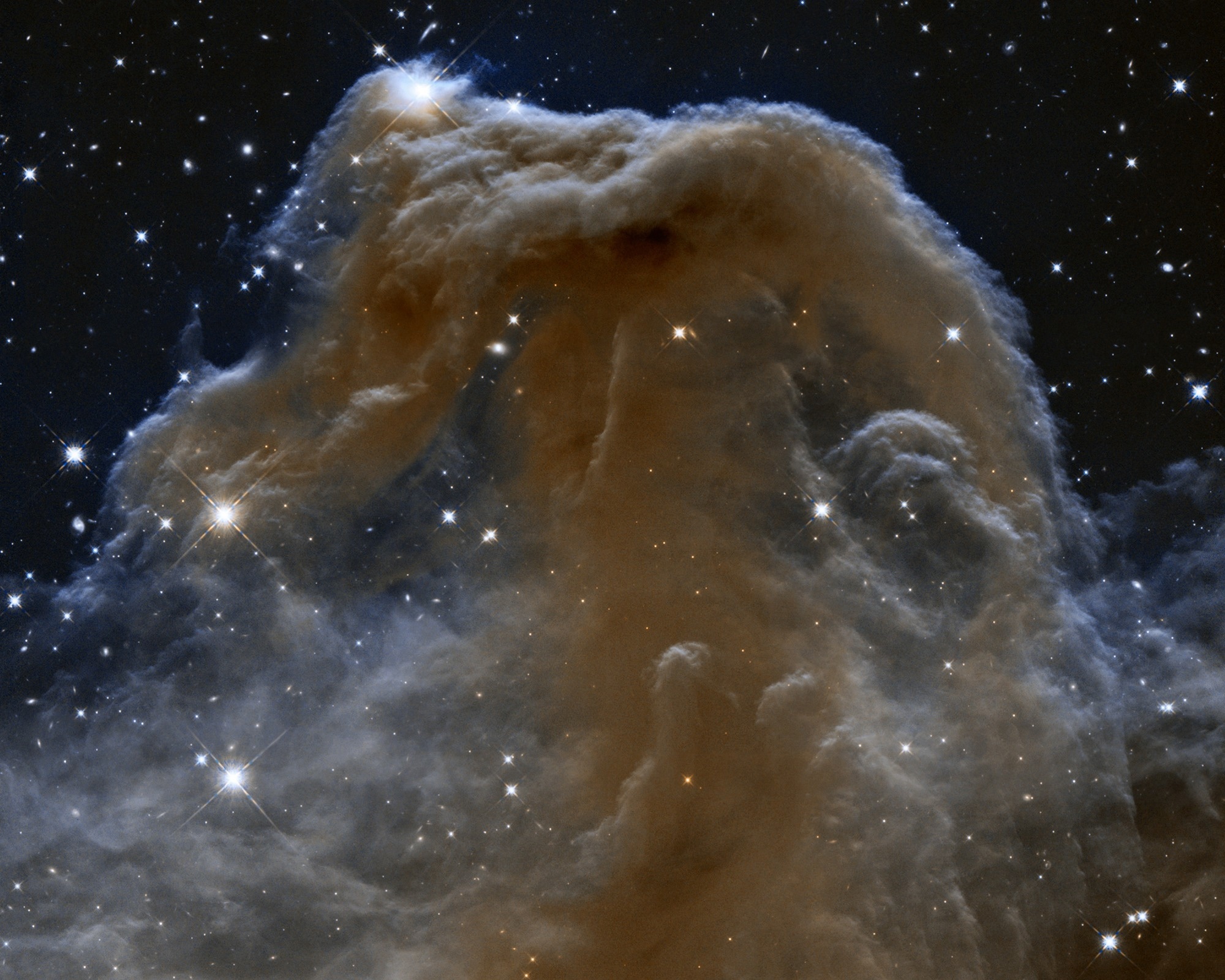
Image Credit: Pawel Radomski/Shutterstock.com
Understanding Variability in Young Stellar Objects
YSOs display variability on multiple timescales and amplitudes. About half show small amplitude variations over minutes to days, mostly attributed to stellar surface phenomena like spots or flares. Superposed on these short-term changes are longer-scale brightness fluctuations lasting months to years or even decades. These have two principal causes: varying extinction from circumstellar material and changes in the accretion rate, which can rise by several orders of magnitude during outbursts.
Eruptive Young Stars (EY) classification originally differentiated two classes, FU Orionis-type stars (FUors), which brighten significantly for decades, showing optically dominated absorption spectra, and EX Lupi-type stars (EXors), which have recurrent bursts of 1–3 magnitudes lasting from a few months to a year, characterized by emission line spectra. In recent years, ongoing surveys like Gaia, Zwicky Transient Facility, and others have vastly expanded the sample of candidate eruptive variables, including younger and more massive objects. Multiple subclasses have also been proposed, such as FUor-like and MNor-like sources with hybrid behaviors. Despite photometric discoveries, spectroscopic monitoring, especially in the optical wavelength range, has lagged behind, limiting the ability to robustly diagnose the accretion processes and discriminate true eruptive variables from extinction-driven events. High-quality optical spectroscopy is crucial because many accretion-related emission lines lie in this regime and provide direct diagnostics of the accretion columns, shocks, and outflows associated with YSOs
Spectroscopic Follow-Up of Gaia-Alerted Targets
The target selection began by mining the publicly available Gaia alerts catalog, filtering for sources classified or candidate YSOs that displayed significant brightening (typically around 1–2 magnitudes in the Gaia G-band) between 2021 and 2024 and with magnitudes suitable for LBT observation (G ≤ 17.5). This yielded about 60 candidates, from which 16 northern hemisphere objects were chosen for this study.
Optical spectra were obtained primarily with the LBT’s Multi-Object Double Spectrographs (MODS), complemented by near-infrared spectra using the LUCI instruments. Photometry from the authors’ acquisition images in optical (griz) and near-IR (JHKs) bands was used to calibrate and correct for slit losses. Additional archival multiwavelength photometry was compiled to construct spectral energy distributions (SEDs).
To evaluate extinction changes over different brightness phases, three independent methods were employed: analysis of near-IR colors (“photometric method”), fitting of the optical continuum slope (“continuum-fitting method”), and consistency checks among accretion line flux ratios (“line-fitting method”). The “continuum-fitting” approach was favored when possible due to its smaller uncertainties. Accretion luminosities (L_acc) and mass accretion rates (?_acc) were derived from emission line fluxes and stellar parameters, which were obtained by fitting the optical spectra to derive effective temperatures and applying extinction corrections.
Accretion Signatures and Drivers of Stellar Variability
All 16 sources showed spectroscopic signatures of active accretion, including emission lines from accretion columns such as hydrogen recombination and metallic lines, confirming their YSO nature and indicating that accretion plays a major role in their variability. Over half exhibited forbidden atomic lines indicative of outflowing material.
The light curves spanning about a decade revealed diverse behaviors, from isolated brightness peaks superposed on stable baselines to persistent irregular variability, implying that a combination of accretion variability and variable extinction may contribute to the observed brightness changes in different sources. The majority of variability appeared primarily related to accretion changes, rather than extinction, with only two sources showing extinction as the dominant factor.
During quiescence, the sources have accretion luminosities and rates consistent with typical classical T Tauri and Herbig Ae/Be stars. In contrast, during burst phases, sources with photometric brightening exceeding 2 magnitudes displayed L_acc and ?_acc following a shallower relation with stellar luminosity and mass, consistent with trends observed in previously studied EXor-type outbursts. This subset included a mixture of Class I, flat-spectrum, and Class II objects, demonstrating episodic accretion activity across evolutionary stages.
Notably, one Class I source, Gaia24beh, showed an accretion luminosity approximately an order of magnitude larger than typical EXor bursts of similar mass, suggesting that particularly intense accretion events may occur during the earliest protostellar stages. The accretion properties derived from the optical spectra were essential for this detailed classification, highlighting the power of optical diagnostics for understanding YSO variability.
What These Observations Reveal About Stellar Growth
This work delivers a comprehensive optical and near-infrared spectroscopic follow-up of a statistically selected sample of YSOs showing significant brightness variations alerted by Gaia. Optical spectroscopy proved critical in characterizing accretion luminosities and mass accretion rates across different brightness states and establishing that accretion-driven processes account for much of the observed variability in this sample.
The relatively small sample nevertheless provides supporting evidence that episodic accretion may occur across a broad range of young stellar objects during early stellar evolution, with implications for stellar growth and disk evolution. Overall, the optical spectroscopic perspective of this study offers valuable insights into the physical mechanisms driving young star variability, highlighting the importance of medium-resolution optical spectra in revealing the accretion processes that accompany stellar evolution.
Keep this for later - download the PDF of this page here
Source:
Journal Reference
Giannini T., Gangi M., et al. (2026). The Astrophysical Journal, 998, 54. DOI: 10.3847/1538-4357/ae2be8, https://iopscience.iop.org/article/10.3847/1538-4357/ae2be8/meta