 Interview conducted by Louis CastelApr 7 2026
AZoOptics talks to Simone Probst, doctoral researcher in the Department of Earth and Planetary Sciences at ETH Zurich, about using fibre-optic communication cables as dense seismic sensing networks on the Moon. She explains how Distributed Acoustic Sensing could transform lunar seismology by enabling continuous, high-resolution measurements of subsurface structure, from shallow regolith to the deep interior.
Could you briefly outline the core idea of using terrestrial-style fibre-optic communication cables as seismic sensors on the Moon?
The core idea is to repurpose telecommunication fiber as a continuous seismic array using a technology called Distributed Acoustic Sensing (DAS). We connect an interrogator to one end of the fiber, which sends laser pulses down the cable. When the ground shakes (e.g., from a moonquake, a meteoroid impact, or man made sources for active seismic imaging surveys) the fiber stretches or relaxes by small amounts. This changes how the laser pulses are backscattered. By analyzing this backscattered light, we can detect vibrations along the entire length of the cable that might be kilometers long. On the Moon, this could be deployed and form a robust, lightweight, and relatively easy-to-deploy seismic network with very dense spatial coverage.
From a technical standpoint, what adaptations or optimizations are needed to make DAS robust under lunar conditions such as vacuum, extreme temperatures, and regolith dust?
Optical fibres themselves are quite resilient. They’re already used in harsh environments on Earth, including high radiation and large temperature swings.
The interrogator (the laser instrument and recording unit), will need to be adapted to survive the extreme lunar temperatures, and withstand the large vibrations and accelerations during launch and landing.
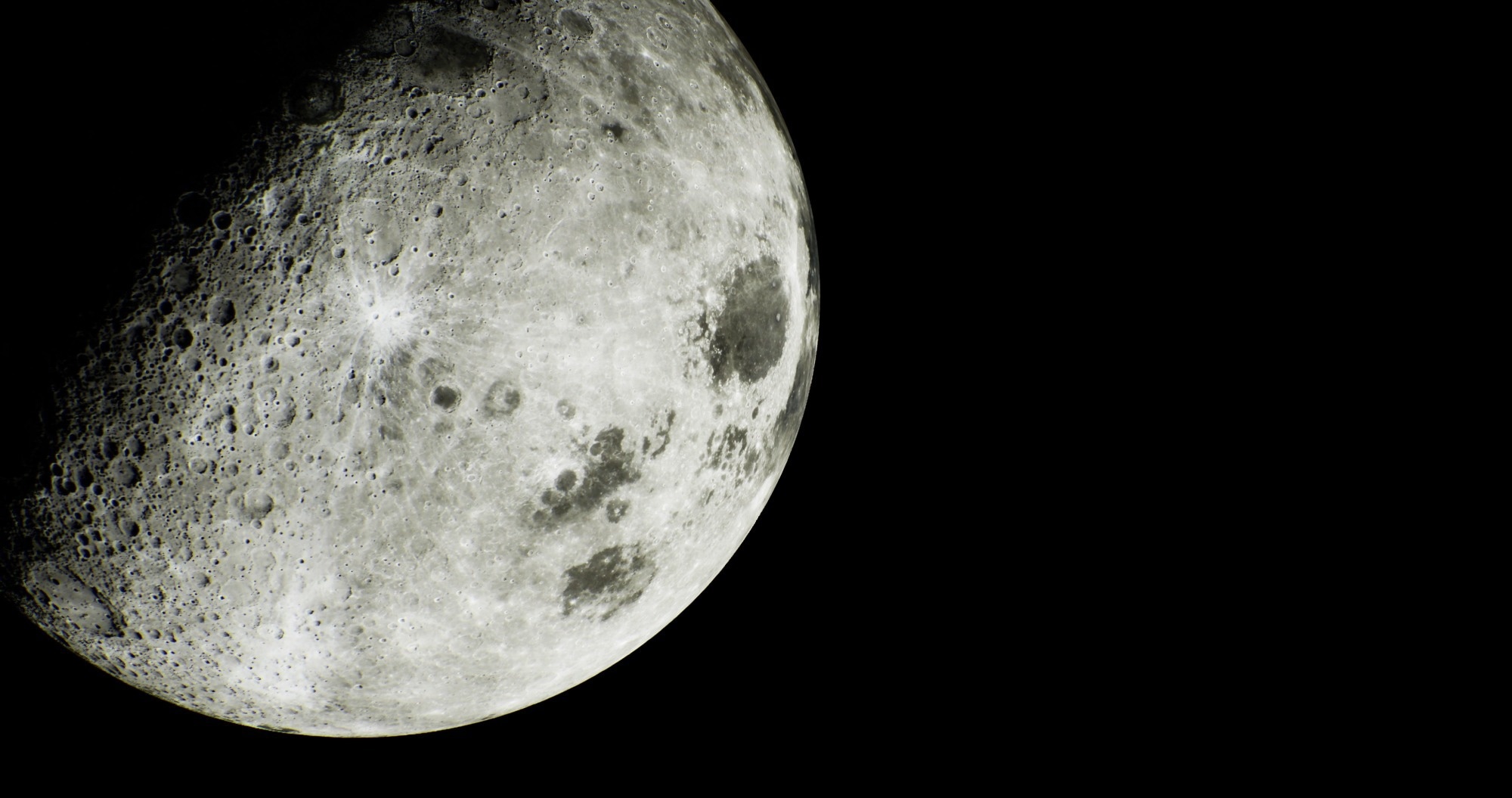
Image Credit: studio-icetray/Shutterstock.com
Given that Apollo’s seismic data were spatially sparse, how would a fibre-optic approach improve resolution and coverage?
A fibre-optic cable provides continuous measurements along its entire length, effectively acting as thousands of sensors closely spaced. This dense sampling is particularly useful on the Moon, where the near-surface scatters seismic energy very strongly. As a result, the wavefield is very complex, and single seismometers, spaced far apart, cannot capture it well. A densely sampled DAS cable is much better suited to resolving these scattered waves.
What new insights into the Moon’s internal structure or processes might this enable?
The scientific insights depend on how much cable can be deployed. Short cables (hundreds of meters to 1 km) would allow studies of the local shallow structures such as the regolith thickness, faults, ice deposits, and possible lava tubes. Longer cables (tens to hundreds of kilometers) could capture deeper-travelling seismic waves, and enable the imaging of the crust, the mantle, and potentially the lunar core.
What deployment architectures have you proposed for installing fibres in the lunar regolith and how do these choices influence signal quality and detectable seismic events?
Several deployment methods are possible. Manual deployment by astronauts, however, this would be costly and time-intensive. Rover-based deployment, which is more practical and would allow controlled placement of the cable on the surface. Ballistic deployment (e.g. launching the cable like a projectile), which is simpler but gives less control over how well the cable couples to the ground. Better ground coupling, which is more easily achieved through a rover-based deployment, will generally lead to better signal quality and more detectable seismic events.
Among moonquakes, meteoroid impacts, and lander activity, which signal sources do you expect to be most valuable for imaging the lunar interior, and how can they be distinguished in DAS data?
The different sources can be distinguished by their differing frequency content and their direction of arrival. For example, meteoroid impacts originate at the surface, whereas deep moonquakes originate from much further below. Moonquakes are most valuable for imaging the deep lunar interior because they generate waves that travel long distances. Meteoroid impacts and lander activity are much more useful to study shallow structures, where strong local signals are ideal.
How might future missions integrate fibre-optic seismic arrays with other geophysical instruments to build a more comprehensive model of the Moon’s formation and thermal evolution?
Seismology is just one piece of the puzzle. Integrating fiber-optic arrays with other instruments, such as heat-flow probes (to estimate internal temperatures) and magnetometers (to constrain past activity of the lunar core) can help to build a more complete picture of the lunar structure and history.
As fibre-optic technologies advance on Earth, which innovations appear most promising for enabling durable, long-lived lunar seismic networks?
Several emerging technologies on Earth could be especially valuable for lunar seismic networks. New types of optical fibres that reflect more light are being developed, which increases the sensitivity of DAS and makes it possible to detect weaker seismic events. Another important challenge is the large volume of data produced by DAS, which is difficult to transmit back to Earth with the limited bandwidth available on lunar missions. Advances in machine learning can help here: algorithms that automatically identify meaningful seismic signals directly on the Moon would allow only the relevant information to be transmitted, and reduce the data load.
Download the PDF of this interview here
About the Speaker

Simone Probst is a doctoral researcher in Earth and Planetary Sciences at ETH Zurich, where her research focuses on Distributed Acoustic Sensing and its application to future lunar seismology.
Disclaimer: The views expressed here are those of the interviewee and do not necessarily represent the views of AZoM.com Limited (T/A) AZoNetwork, the owner and operator of this website. This disclaimer forms part of the Terms and Conditions of use of this website.