*Important notice: This news reports on an unedited version of an accepted paper and is awaiting final editing. Therefore, the paper should not be regarded as conclusive or treated as established information.
Researchers have introduced a new approach to solar panel recycling that uses a near-infrared laser to detach aged polymer encapsulants from silicon cells. Combining laser-induced delamination with selective chemical treatment, the method could improve silver recovery from end-of-life photovoltaic modules, while reducing the need for bulk thermal processing. The findings were published in Communications Materials.
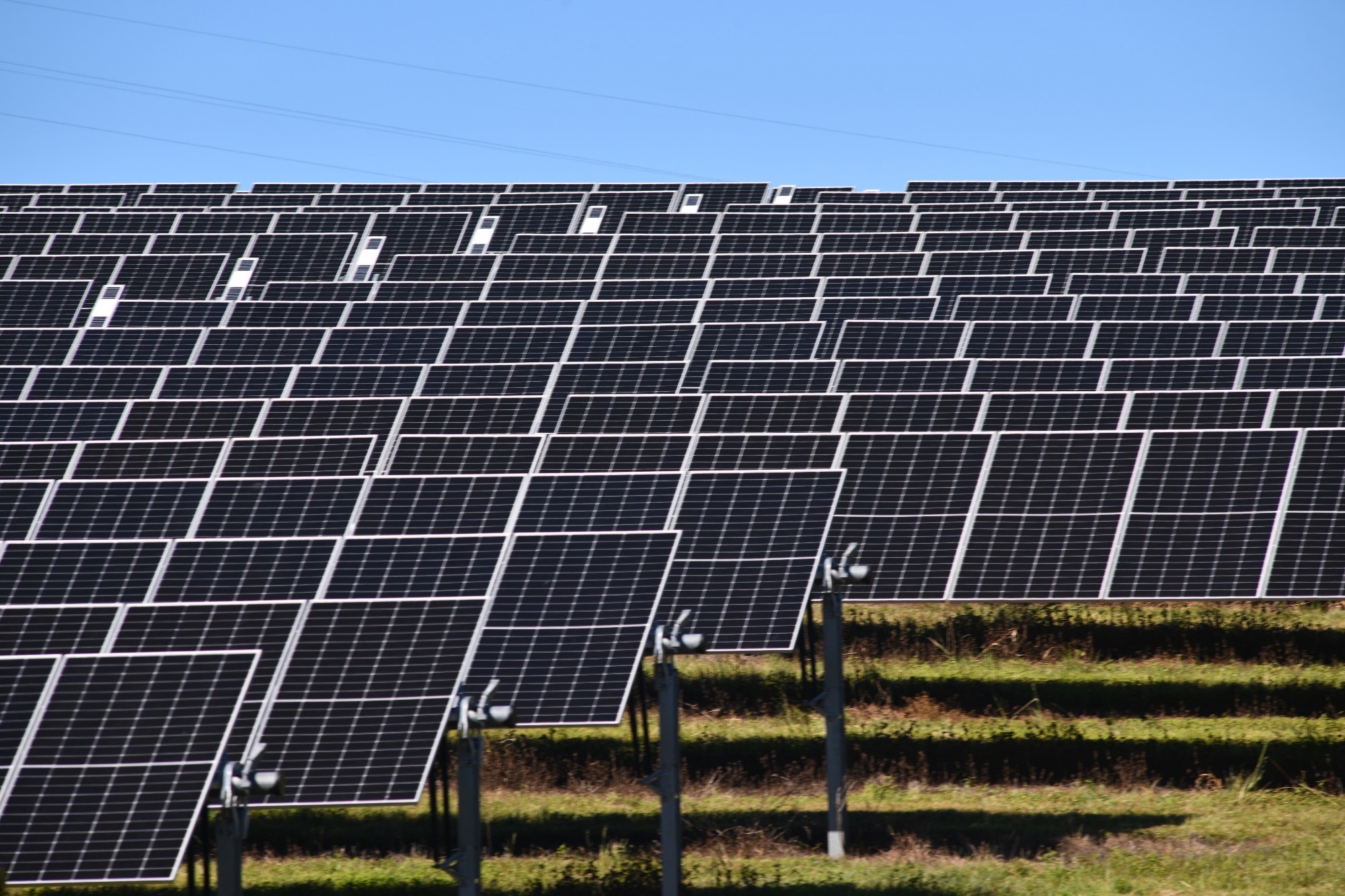 Study: Laser-induced delamination of aged silicon photovoltaic modules to achieve >95% selective silver recovery. Image Credit: Lakeview Images/Shutterstock.com
Strong Polymer Bonds Complicate Solar Panel Recycling
As solar energy systems are increasingly being used worldwide, improved recycling methods become necessary as more panels reach the end of their service life. While glass makes up most of a panel's mass, materials such as metallic conductors and crystalline silicon wafers remain embedded in its structure.
Crystalline silicon solar panels are designed to withstand harsh outdoor exposure, making their disassembly challenging. A significant obstacle is the encapsulant, primarily cross-linked ethylene–vinyl acetate (EVA), which bonds the front glass to fragile silicon wafers. This adhesion complicates non-destructive separation, particularly after years of weathering.
Conventional methods, which rely on mechanical shredding, thermal pyrolysis, and chemical dissolution, have limitations. These challenges highlight the need for a dry, interface-selective method that can separate panel components while preserving valuable materials.
Near-Infrared Laser Separates Aged Solar Panel Layers
To separate bonded materials without bulk decomposition, the researchers developed an optical method using a Q-switched fiber laser operating at a wavelength of 1064 nm.
They tested the method on commercial multicrystalline silicon solar modules decommissioned after 10 to 13 years of service. Initially, the front glass sheets were removed using a heated blade system, exposing the encapsulant layer while preserving the remaining structure.
The separation process employed a galvanometric scanning head with a 60 μm focal spot diameter and 200 ns pulse durations. The laser scanned the laminate surface at a speed of 1000 mm/s, covering average power levels of 9–27 W and pulse repetition frequencies of 30–50 kHz.
The process capitalizes on differences in the optical properties of the materials: the EVA encapsulant is highly transparent at 1064 nm, allowing the laser beam to pass through with minimal attenuation, while silicon absorbs the radiation due to its bandgap, producing localized heating.
In contrast, metallic conductors exhibit high reflectance, limiting direct laser penetration and confining energy deposition near the polymer-silicon boundary.
Following irradiation, the laminate separates into distinct fractions, including an intact EVA sheet, isolated copper-rich ribbon busbars, and fine silicon-rich powder containing contact metallization. The detached semiconductor residues were collected for further processing.
A two-stage recovery process was applied to the powdered fraction, in which mild sodium hydroxide treatment selectively removed the aluminum contacts, accounting for approximately 7.7–8.5% of the processed sample mass. This was followed by treatment with iron(III) chloride-choline chloride brine, a deep eutectic solvent alternative to nitric acid.
Laser Recycling Achieves Over 95% Silver Extraction Selectivity
Parametric evaluations identified a minimum laser power required to initiate separation. At powers below 12–14 W, corresponding to fluences below 14 J/cm2, energy absorption was insufficient to release the degraded polymer bonds, resulting in negligible separation. Above this threshold, material detachment increased rapidly before plateauing at 20–24 W, where mass loss stabilized at 48–52%, indicating complete removal of the front layer.
Fourier-transform infrared (FTIR) and Raman spectroscopy confirmed that laser treatment preserved the chemical structure of the bulk EVA film. Polymer modifications remained localized near the laser-irradiated interfaces, where transient temperature increases caused hydrolysis of vinyl acetate groups.
Download a free copy of this page here!
X-ray diffraction (XRD) analysis of the recovered cell powder showed the characteristic crystalline silicon peaks were retained and showed traces of metallic contacts, confirming that the crystalline structure remained intact during separation.
The recovered material underwent a two-stage hydrometallurgical recovery procedure. An initial treatment with 1 M sodium hydroxide selectively dissolved the aluminum contacts, while the remaining fraction was treated with iron(III) chloride-choline chloride deep eutectic solvent. This solvent stabilized silver as soluble chlorocomplexes, reducing salt precipitation and avoiding nitrogen oxide emissions associated with nitric acid treatment.
Inductively coupled plasma optical emission spectroscopy (ICP-OES) indicated silver extraction selectivity of approximately 95% for Canadian Solar modules and 99% for REC (Renewable Energy Corporation) modules. Though these results show promising levels of silver leaching from the recovered powder, additional processing would be required to obtain reusable silver.
Cyclic voltammetry confirmed the electrochemical activity of the recovered silver ions, indicating their suitability for subsequent electrodeposition. The remaining solid residue consisted of crystalline silicon that could undergo further refining.
Laser Delamination Creates Cleaner Material Streams for Recycling
Laser-assisted delamination represents a key alternative to conventional recycling methods for photovoltaic and electronic waste. By concentrating energy at the interfaces between material layers, the process could reduce thermal energy needs compared with furnace-based pyrolysis.
By separating components into distinct material streams, the method limits cross-contamination associated with mechanical shredding. These streams include intact EVA sheets, copper-rich busbars, and silicon-rich powders containing metallic contacts.
This process supports the recovery of valuable materials, particularly silver, which accounts for less than 0.1% of panel weight but over 60% of its economic scrap value. The use of a choline chloride-based leaching process provides an alternative to strong nitric acid treatment and avoids associated nitrogen oxide emissions.
Recovered crystalline silicon could be further refined for use in solar ingot production or silicon-anode batteries, while recovered silver could support high-efficiency photovoltaic cells. The separated EVA may also be suitable for non-hazardous disposal, subject to applicable waste toxicity testing.
Faster Processing and Future Testing
Combining pulsed laser delamination with hydrometallurgical recovery provides a novel approach to photovoltaic recycling based on selective material separation rather than bulk thermal decomposition.
Future work should focus on scaling the process for commercial recycling, implementing multi-beam laser systems, and validating the method across different photovoltaic architectures. Regenerating the chloride-based solution and standardizing modules for automated optical disassembly could further improve efficiency.
Journal Reference
Alsulami, B.N., et al. (2026). Laser-induced delamination of aged silicon photovoltaic modules to achieve >95% selective silver recovery. Communications Materials. DOI: 10.1038/s43246-026-01424-2, https://www.nature.com/articles/s43246-026-01424-2.
Disclaimer: The views expressed here are those of the author expressed in their private capacity and do not necessarily represent the views of AZoM.com Limited T/A AZoNetwork the owner and operator of this website. This disclaimer forms part of the Terms and conditions of use of this website.