In a recent article published in the journal Physics Letters B, researchers investigated the properties of non-singular black holes, specifically extending the Dymnikova regular black hole model to higher dimensions.
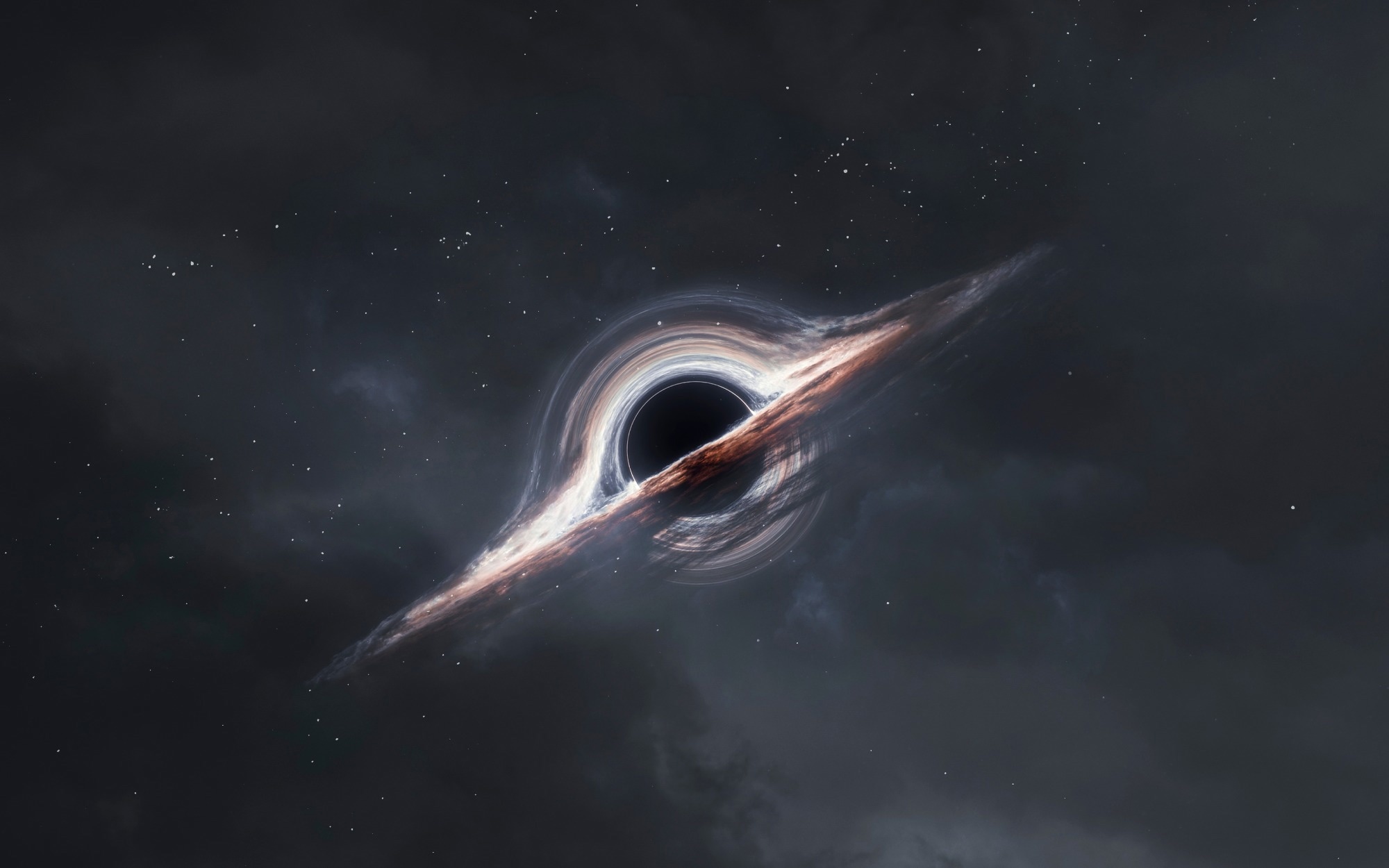
Image Credit: Vadim Sadocski/Shutterstock.com
Background
General Relativity predicts black holes with central singularities, such as the Schwarzschild solution, which suggests a breakdown of the theory in these extreme regions. The concept of regular black holes, which replace the singularity with a nonsingular core (often a de Sitter-like region) addresses this fundamental issue. The research is motivated by strong observational support for black holes from gravitational-wave detectors and the Event Horizon Telescope (EHT), which captured the first images of black hole shadows.
The study aims to construct the higher-dimensional Dymnikova metric, analyze its geometric and thermodynamic features, and, crucially, determine the observational signatures, particularly the black hole shadow, to place constraints on the model's parameters using EHT data. The overall framework connects the theoretical construction of regular black holes in extended spacetimes with their potential astrophysical manifestations.
The Current Study
The research began by constructing the metric for the Dymnikova black hole in D dimensions, starting from a density profile derived from the gravitational analogue of the Schwinger mechanism. This density profile is defined by characteristic scales r0 (related to the de Sitter core) and rs (related to the Schwarzschild radius) and is generalized to D dimensions. The resulting spacetime metric’s lapse function incorporates these parameters and the dimensionality D, allowing for the analysis of the horizon structure and the regularity of the geometry. The regularity was confirmed by showing that all curvature invariants (Ricci scalar, Ricci tensor squared, and Kretschmann scalar) remain finite, demonstrating the absence of a physical singularity.
For the optical analysis, the motion of light (null geodesics) in the higher-dimensional spacetime was examined using a Lagrangian approach. Focusing on equatorial motion, the dynamics were reduced to a one-dimensional effective potential, which depends on the conserved energy and angular momentum of the photons. The locations of unstable circular photon orbits define the photon sphere radius (rp ), and the corresponding maximum of the effective potential yields the critical impact parameter, which, when projected onto the celestial sphere of a distant observer, determines the angular size of the black hole shadow (Rs). The stability of these orbits was confirmed using a phase space approach, showing they correspond to unstable saddle points. Finally, the predicted angular size of the shadow was compared with the measured angular diameters of Sgr A* and M87* from EHT observations. This comparison allowed the researchers to derive confidence limits (at 1σ and 2σ) for the regularization parameter r0 and the Schwarzschild radius parameter rs.
Results and Discussion
Numerically, the shadow size (Rs) was found to increase gradually with larger Rs (the generalized Schwarzschild radius) but exhibited only a minimal dependence on the regularization parameter r0 when D=5. Crucially, increasing the number of dimensions D generally caused the shadow radius Rs to decrease. This dimensional effect on the shadow size is consistent with findings in other higher-dimensional models, such as Schwarzschild-Tangherlini spacetimes.
Comparing the predicted shadow size with EHT observational data for Sgr A* and M87* allowed for placing constraints on the model parameters. The apparent shadow diameter was found to scale smoothly with the black hole’s mass and distance, matching theoretical expectations. The EHT data established upper limits on the parameters r0 and rs in units of mass (M). M87* permits higher minimum values but yields tighter (narrower) intervals than Sgr A*, while Sgr A* allows larger maxima, especially at 2σ. Specifically, M87* (which has a larger shadow) constrained r0 to be between 0.035 and 0.084 (at 1σ), while Sgr A* yielded tighter bounds for r0, between 0.0062 and 0.119 (at 1σ). These results highlight that the presence of higher-dimensional Dymnikova structures influences spacetime geometry in ways that are constrained by current astrophysical observations.
Conclusion
This study successfully characterized the higher-dimensional extension of the Dymnikova regular black hole, linking its internal structure and geometry to observable features. By analyzing null geodesics, the existence of unstable circular photon orbits was confirmed, guaranteeing a well-defined black hole shadow. The key optical finding is that while the shadow size grows with the black hole scale parameter (rs), it slightly decreases as the number of spacetime dimensions (D) increases. The regularization parameter r0 showed a subtle, minimal impact on the shadow size for the specific dimension D=5. By leveraging EHT data for Sgr A* and M87*, precise observational bounds were established for r0 and rs , demonstrating that M87* allows for larger values of these regularization and scale parameters than Sgr A*. The work establishes a clear framework for evaluating and constraining regular black hole models in extended spacetimes using current astrophysical observations of black hole shadows.
Source:
Journal Reference
A. Errehymy, Y. Khedif, et al. (2026). Event Horizon Telescope Observational Constraints on Dymnikova-Type Non-Singular Black Holes in Higher Dimensions, Physics Letters B, DOI: 10.1016/j.physletb.2026.140168, https://www.sciencedirect.com/science/article/pii/S0370269326000225