Reviewed by Frances BriggsJan 19 2026Reviewed
Researchers from the Keck School of Medicine at USC, in collaboration with a team of engineers from Caltech, have created a novel medical imaging technique to simultaneously map blood vessels and tissue.
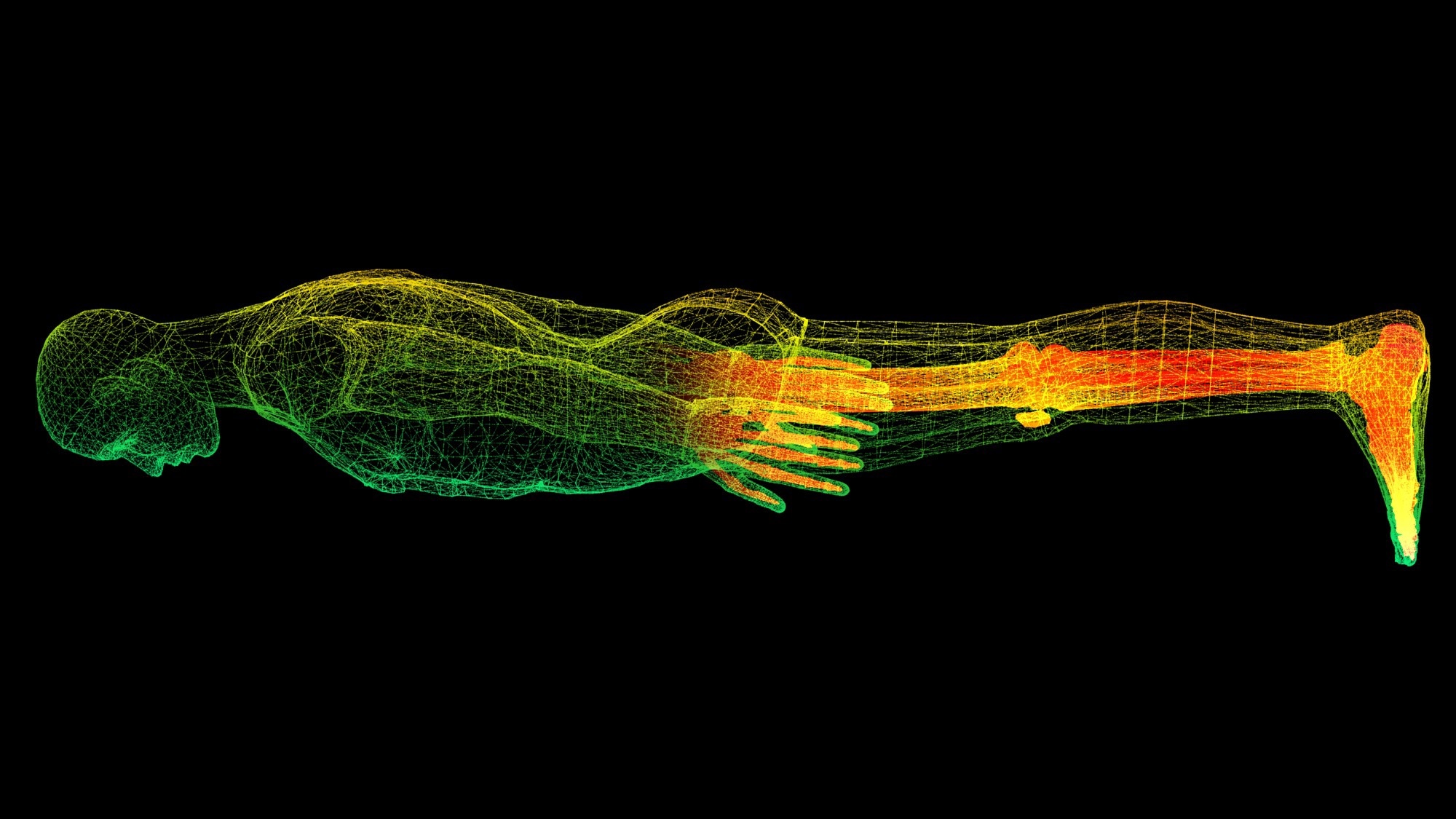 Image Credit: Color4260/Shutterstock.com
In a proof-of-concept study supported by the National Institutes of Health, researchers have demonstrated that their noninvasive method can be employed to swiftly gather 3D images of the human body, from head to toe. The study was published in the journal Nature Biomedical Engineering.
This technology integrates ultrasound and photoacoustic imaging, which identifies sound waves produced by light, to concurrently capture images of both tissues and blood vessels.
Imaging plays a vital role in contemporary medicine, guiding treatment across various conditions such as injury, infection, cancer, chronic diseases, and more. However, the current gold standard techniques (ultrasound, X-ray, computed tomography (CT), and magnetic resonance imaging (MRI)) each possess limitations.
These limitations involve the costs and time associated with each scan, as well as the capabilities of the images produced - specifically, the extent of the body visible at one time, the depth of the images, and the level of detail they offer.
You cannot understate the importance of medical imaging for clinical practice. Our team has identified key limitations of existing techniques and developed a novel approach to address them.
Charles Liu, M.D, Ph.D., Professor, Clinical Neurological Surgery, Urology and Surgery, Keck School of Medicine, USC
The researchers employed the system to image various areas of the human body: the brain, breast, hand, and foot to demonstrate the extensive applicability of the technology.
Brain imaging was conducted on patients with traumatic brain injuries who were undergoing surgery and had sections of their skull temporarily excised. The findings indicate that the technology is capable of capturing both tissue structure and blood vessels over a span of up to 10 cm wide, all within approximately 10 seconds.
We’ve devised a novel method that changes how ultrasound and photoacoustic imaging systems work together, which allows us to achieve far more comprehensive imaging at meaningful depths. It’s an exciting step forward in noninvasive diagnostics that doesn’t use ionizing radiation or strong magnets.
Lihong Wang, Ph.D, Bren Professor, Medical Engineering and Electrical Engineering, Caltech
A New Imaging Platform
The research team has integrated two imaging techniques: rotational ultrasound tomography (RUST) and photoacoustic tomography (PAT), resulting in a novel approach they refer to as RUS-PAT.
Similar to conventional ultrasound, RUST emits sound waves towards the targeted area for imaging. However, rather than employing a single detector to generate a two-dimensional image, it uses an array of detectors to reconstruct a three-dimensional volumetric representation of the body's tissues.
Meanwhile, PAT directs a laser light beam at the same region, which is absorbed by hemoglobin molecules present in the blood. These molecules then vibrate and emit ultrasonic frequencies, which are captured by the same detectors to produce three-dimensional images of blood vessels.
The RUS-PAT system is based on previous research conducted by the USC-Caltech team, which demonstrated that PAT can be utilized to capture images of brain activity.
RUS-PAT offers numerous advantages over current medical imaging technologies. It is more cost-effective to construct than an MRI scanner, eliminates the radiation associated with X-ray and CT scans, and delivers more advanced images than traditional ultrasound.
“When we think about the critical limitations of current medical imaging, including expense, field of view, spatial resolution and time to scan, this platform addresses many of them,” said Liu.
Broad Clinical Potential
Through the imaging of the brain, breast, hand, and foot, the researchers have demonstrated the potential of RUS-PAT in various health care applications.
Brain imaging is crucial for diagnosing and treating stroke, traumatic brain injury, and neurological disorders, whereas breast imaging aids in the management of one of the most prevalent cancers globally.
Photoacoustics opens up a new frontier of human study, and we believe this technology will be critical for the development of new diagnostics and patient-specific therapies.
Jonathan Russin, MD, Study Co-First Author, Professor and Chief, Neurosurgery, University of Vermont
Swift and economical imaging of the foot may also assist millions of individuals suffering from diabetic foot complications and venous disease.
Tze-Woei Tan, MD, coauthor and associate professor of clinical surgery and director of the Limb Salvage Research Program at the Keck School of Medicine, notes: “This approach clearly has the potential to help clinicians identify at-risk limbs and inform interventions to preserve function in diabetic foot disease and other vascular conditions.”
Additional efforts are required before RUS-PAT can be utilized in clinical settings. A significant obstacle for brain applications is the distortion of the system's signals caused by the human skull, which complicates the acquisition of clear brain images. The team at Caltech is investigating innovative methods to address this issue, such as modifying the ultrasound frequency. Moreover, further enhancements are necessary to guarantee uniform image quality throughout various scans.
“This is an early but important proof-of-concept study, showing that RUS-PAT can create medically meaningful images across multiple parts of the body. We’re now continuing to refine the system as we move toward future clinical use,” said Liu.
Journal Reference:
Zhang, Y., et al. (2026). Rotational ultrasound and photoacoustic tomography of the human body. Nature Biomedical Engineering. DOI: 10.1038/s41551-025-01603-5.