Traditional imaging techniques have played a pivotal role in driving scientific and technological progress. However, technical and fundamental limitations, such as the resolution issues, have rendered classical imaging methods outdated. In this regard, the quantum imaging methods, making use of quantum attributes, are becoming crucial for progress in various fields such as the bio-imaging industry, materials sciences, cosmology, and defense applications.1 Quantum imaging is boosting technological innovation by addressing limitations that have long challenged classical imaging methods.
Image Credit: Vink Fan/Shutterstock.com
What is Quantum Imaging?
The recent progress in quantum technology, non-linear optics, and quantum information processing has led to the emergence of a novel multifaceted field termed the quantum imaging industry, enabling researchers to form images with unmatched sensitivity and precision. The utilization of non-linear optical phenomena and quantum properties of light, such as entanglement, has allowed experts to develop novel quantum imaging techniques with unprecedented resolution.2
Download the PDF of this article
Limitations of Classical Imaging Techniques
Classical imaging methods have resolution, sensitivity, and contrast limits due to the wave nature of light. Traditional imaging techniques make use of conventional Abbe and Rayleigh criteria, which define the diffraction limit for optical resolution. However, the traditional Abbe and Rayleigh criteria don’t account for the imperfections and edge effects of the imaging substrate, affecting the resolution drastically.3
In the classical imaging framework, the Diffraction Limit (DL) is limited to be around 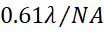 with
with  being the wavelength of light, and NA being the Numerical aperture. The value is the maximum image resolution that can be obtained by using classical imaging techniques. Similarly, the imaging methods utilizing classical techniques are limited by the shot-noise limit (SNL), which lowers the sensitivity to around
  , with Np representing the number of photons. The SNL affects the Poissonian fluctuations of the classical light states, limiting the attainable sensitivity, forcing experts to look for better alternatives.4
To resolve the issues faced by classical imaging techniques, experts have resorted to novel quantum imaging technologies such as super-resolution quantum imaging utilizing single-photon emitters, sub-shot-noise imaging, quantum-enhanced displacement sensing, and quantum ghost imaging.
Key Quantum Imaging Techniques
Ghost Imaging
Quantum ghost imaging is a crucial technique that makes use of the spatial correlation of two separate beams. The correlated spatially isolated beams of light reconstruct the image of the concerned object without any physical contact. The quantum ghost image reconstruction process involves quantum entanglement, and is a type of spontaneous parametric down conversion (SPDC) process.5
In the 1990s, Shih and his research group performed theoretical and experimental studies representing spatial correlations between signal and idler photon pairs used for ghost imaging. Then, Klyshko established an intuitive model called the ‘back-projection’ model, where a single-element detector was replaced with a light source and the non-linear crystal was replaced with a mirror.
The parametric down-conversion process during ghost imaging leads to the development of entangled photon pairs, with the process only utilizing the spatial correlation of the photon pairs to develop the image.6
Quantum Illumination
Another critical aspect of quantum-integrated optical technology is the emergence of Quantum Illumination (QI). QI technology leverages the entangled states of photons, improving sensitivity and enabling unprecedented sensing capabilities.
QI technology basically makes use of quantum entanglement, which allows researchers to detect particularly hard objects situated in a bright thermal environment. An optical source generates the entangled pairs, where one of the photon probes the targeted object while the other photon recombines with the signal as soon as it returns. The entangled nature of the pair allows precise sensitivity and accurate measurement even in remote settings.
The use of QI technology has been beneficial for improving the performance of LIDAR-based defense systems, revolutionizing the field by enabling the transition from the classical to the quantum realm. In the last decade, QI frameworks with high success rates in the microwave region have been designed, developing a novel quantum radar setup optimized for military applications as well as space exploration.7
Sub-Rayleigh or Super-Resolution Imaging
The optical diffraction of light as it passes through small apertures of classical instruments leads to blurred images, limited resolution, and loss of critical details. This Rayleigh criterion for diffraction limit was deemed an unresolved issue, forcing experts to delve into quantum physics for the solution.
Recent advancements in quantum sensing have helped researchers tackle this challenge through spatial de-multiplexing (SPADE) combined with photon detection. SPADE has shown particular promise in distinguishing between one and two point sources, and the incorporation of Machine Learning (ML) techniques has further enhanced its practical use. However, concerns have persisted about the reliability and optimal performance of SPADE in the sub-diffraction regime, especially across the microwave to far-infrared spectrum, which is critical for applications in cosmology and biological imaging.
Recently, experts have resolved these issues by developing a Gaussian model for incoherent light to generate a point-spread function (PSF), allowing the model and SPADE criteria to be functional beyond the diffraction limits. This will be critical for incoherent-source sub-diffraction discrimination, revolutionizing astronomy by fostering the development of novel galaxy identification frameworks.8
Quantum Enhanced Interferometry
Interferometers have been essential for enabling ultra-sensitive measurements of phase-varying parameters. The integration of single-mode squeezed states with a multi-arm interferometer allows for different optical mode functionalities, leading to novel photoacoustic sensing devices. However, the performance of interferometers was traditionally limited by the shot noise limit (SNL), with quantum-enhanced precision measurement resources becoming key for resolving this issue.
Quantum-enhanced interferometers have a crucial 3 dB improvement in sensitivity for detecting gravitational waves over their traditional counterparts.9 A stable solid quantum device for interferometers is the quantum optical parametric amplifier (OPA), which uses squeezed states and quantum entanglement for signal amplification. In this regard, parametric processing has been a game-changer for improving the performance of quantum interferometers, with quantum-enhanced measurements using truncated SU (1,1) interferometers playing a key role in metrology and biological imaging.10
From Photonic Sources to Precision Bio-Imaging
Photonic sources like Quantum Dots (QDs) are playing an essential role in the advancement of quantum imaging in various fields, especially in vivo quantum imaging for cancer therapy. For in-vivo imaging, Near-Infrared (NR-I) and (NR-II) windows are highly suitable; however, conventional techniques are not effective in this range.
Quantum imaging using NR-II QDs has displayed exceptional stability, brightness, sensitivity, improvement in Stokes shift, and minimal tissue absorption, allowing for high-resolution imaging, revolutionizing bio-sensing, bio-imaging, and tracing.11
Challenges
Quantum imaging has emerged as a novel field with unmatched potential and success. However, it faces serious challenges as several quantum imaging protocols are not standardized and their applications are limited due to the low intensity of non-classical non-coherent light sources. The use of squeezed states and sources has led to severe noise generation, with no credible and functional suppression mechanisms being published or researched recently.1 Furthermore, the computational costs associated with the use of quantum superposition effects for quantum image processing are a serious concern among experts, along with the lack of practical applications outside laboratory settings.12
Applications in Industry
Quantum technology, especially imaging and sensing, is serving as the backbone for modern industrial applications ranging from the energy sector to defense applications. From a military point of view, Quantum ISTAR (intelligence, surveillance, target acquisition, and reconnaissance) has been a game changer in multi-domain warfare. Quantum gravimeters are used for mapping and underground surveillance, finding crucial applications in other domains like the mining industry. The novel quantum imaging protocols are key for all-weather, day-night, high-quality tactical sensing systems, taking defense capabilities to a new level.13
In the medical field, as mentioned above, quantum imaging is playing a crucial role in identifying cancerous masses and enabling biological tracing. Imaging techniques utilizing quantum entanglement to offer ultra-high resolution are key for providing valuable life-saving insights regarding heart conditions and cardiac abnormalities. In addition, quantum sensing mechanisms are being extensively utilized for the detection of biomarkers associated with Alzheimer’s disease to allow for early detection and targeted medicine delivery.14
What Does the Future Hold?
The field of quantum imaging is expanding rapidly, with experts aiming to develop the first operational commercial quantum camera within the next decade. Several major organizations and companies are collaborating to bring about innovations in quantum technologies associated with imaging systems. MITRE and NVIDIA are collaborating on a noninvasive quantum imaging system called Walsh Imaging, which utilizes the GPU-accelerated power of NVIDIA CUDA-Q. The modern system is capable of producing images of nanoscale electromagnetic signals, which will prove to be key for the semiconductor and biomedical industries.15 With the integration of digital technologies like ML algorithms, we can expect quantum imaging and its associated data processing to accelerate exponentially, leading to better frameworks and protocols.
Interested in the role of optics in quantum computing? It's all here
Further Reading
- Defienne, H., Bowen, W.P., Chekhova, M., Lemos, G.B., Oron, D., Sven Ramelow, Treps, N. and Faccio, D. (2024). Advances in quantum imaging. Nature Photonics, [online] 18(10), pp.1024–1036. doi.org/10.1038/s41566-024-01516-w.
- Rochester.edu. (2025). Quantum Imaging Home. [online] Available at: https://www.hajim.rochester.edu/optics/sites/boyd/archive/Quantum-Imaging/research.htm [Accessed 15 Dec. 2025].
- Pérez-Delgado, C.A., Pearce, M.E. and Kok, P. (2012). Fundamental Limits of Classical and Quantum Imaging. Physical Review Letters, 109(12), pp.123601–123601. doi.org/10.1103/physrevlett.109.123601.
- Berchera, I.R. and Degiovanni, I.P. (2019). Quantum imaging with sub-Poissonian light: challenges and perspectives in optical metrology. Metrologia, 56(2), p.024001. doi.org/10.1088/1681-7575/aaf7b2.
- Moodley, C. and Forbes, A. (2022). Super-resolved quantum ghost imaging. Scientific Reports, 12(1). doi.org/10.1038/s41598-022-14648-2.
- Padgett, M.J. and Boyd, R.W. (2017). An introduction to ghost imaging: quantum and classical. Philosophical Transactions of the Royal Society A: Mathematical, Physical and Engineering Sciences, 375(2099), p.20160233. doi.org/10.1098/rsta.2016.0233.
- Karsa, A., Fletcher, A., Spedalieri, G. and Pirandola, S. (2024). Quantum illumination and quantum radar: a brief overview. Reports on Progress in Physics, 87(9), p.094001. doi.org/10.1088/1361-6633/ad6279.
- Triggiani, D. and Lupo, C. (2025). Achieving quantum-limited sub-Rayleigh identification of incoherent optical sources with arbitrary intensities. Quantum Science and Technology. doi.org/10.1088/2058-9565/ae2885.
- Feng, Y., Zeng, Z, Cheng, J., You, Z., Lu, H., Yan, Z., Jia, X., Xie, C., Peng, K. (2025). Quantum-Enhanced Interferometer for Multiphase Sensing. Phys. Rev. Lett. 135, 183602. doi.org/10.1103/2hsx-5qfr
- Yu, J., Wu, Y., Nie, L. and Zuo, X. (2023). High-Sensitivity Quantum-Enhanced Interferometers. Photonics, 10(7), p.749. doi.org/10.3390/photonics10070749.
- Chen, L., Zhao, L., Wang, Z., Liu, S. and Pang, D. (2021). Near-Infrared-II Quantum Dots for In Vivo Imaging and Cancer Therapy. Small, 18(8). doi.org/10.1002/smll.202104567.
- Ruan, Y., Xue, X. and Shen, Y. (2021). Quantum Image Processing: Opportunities and Challenges. Mathematical Problems in Engineering, [online] 2021, p.e6671613. doi.org/10.1155/2021/6671613.
- Krelina, M. (2021). Quantum technology for military applications. EPJ Quantum Technology, 8(1). doi.org/10.1140/epjqt/s40507-021-00113-y.
- Shams, M., Choudhari, J., Reyes, K., Prentzas, S., Gapizov, A., Shehryar, A., Affaf, M., Grezenko, H., Gasim, R.W., Mohsin, S.N., Rehman, A., Rehman, S., Shams, M., Choudhari, J., Reyes, K., Prentzas, S., Gapizov, A., Shehryar, A., Affaf, M. and Grezenko, H. (2023). The Quantum-Medical Nexus: Understanding the Impact of Quantum Technologies on Healthcare. Cureus, [online] 15(10). doi.org/10.7759/cureus.48077.
- MITRE. (2025). MITRE Builds New Quantum Imaging Using NVIDIA CUDA-Q. [online] Available at: https://www.mitre.org/news-insights/news-release/mitre-builds-new-quantum-imaging-using-nvidia-cuda-q. [Accessed 18 Dec. 2025].
Disclaimer: The views expressed here are those of the author expressed in their private capacity and do not necessarily represent the views of AZoM.com Limited T/A AZoNetwork the owner and operator of this website. This disclaimer forms part of the Terms and conditions of use of this website.