Infrared imaging is transforming applications across agriculture, industrial inspection, semiconductor manufacturing, and defense by revealing information that visible light cannot detect. However, achieving reliable results requires careful consideration of wavelength selection, optical filters, detector performance, and system design.
In this interview, Brian Manning, Senior Application Scientist at Chroma Technology; Martin Ettenberg, Founder of IR Consult; and François Coursaget, General Manager of New ImagingTechnologies, discuss the capabilities, challenges, and emerging opportunities in infrared imaging.
What are the main challenges that infrared imaging can address?
Brian Manning: One of the biggest challenges is noise. Infrared imaging helps isolate useful information while reducing interference from environmental conditions such as fog or unwanted reflections. It also exploits differences in material absorption to identify substances without damaging or modifying samples.
Martin Ettenberg: Infrared allows us to see what visible imaging cannot, such as water content, chemical plumes, foreign materials in food, or broken glass inside packaging.
François Coursaget: Different materials have distinct absorption, transmission, and reflection characteristics across infrared wavelengths. These differences can reveal properties that are completely invisible to conventional cameras.
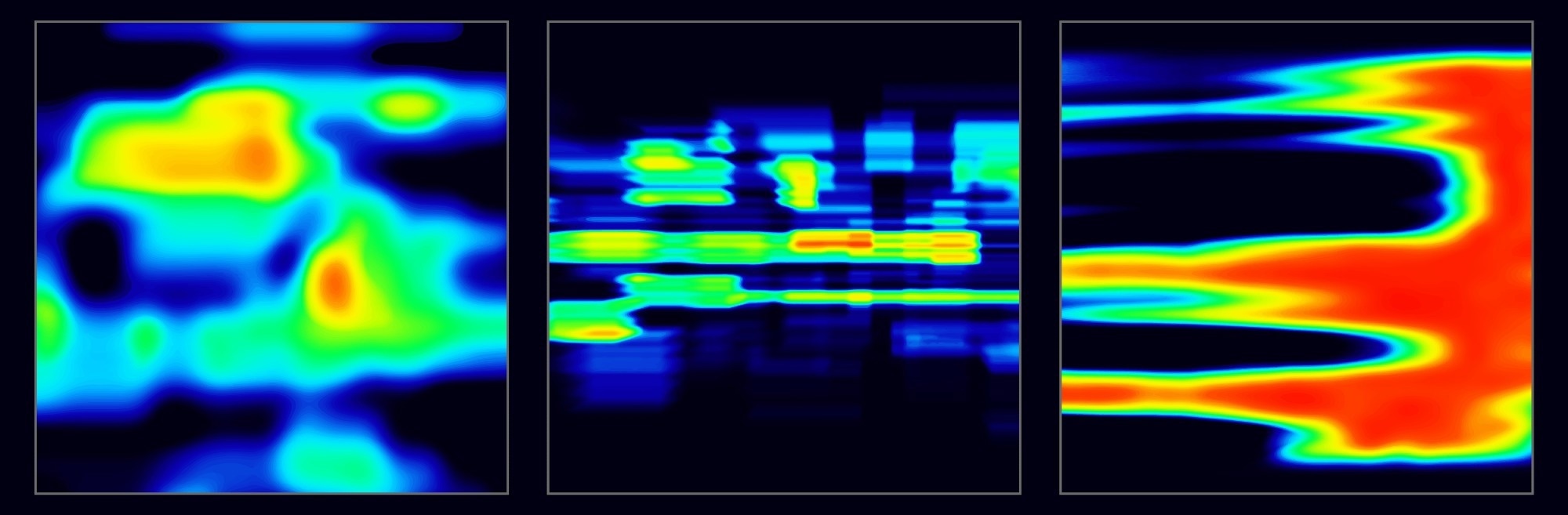 Image Credit: Shutterstock.com/Igor Kyrlytsya
How does wavelength selection affect infrared imaging performance?
François Coursaget: The appropriate wavelength depends on the material and the information required. Infrared imaging extends from approximately 700 nanometers to 12 microns, providing access to different material properties throughout the spectrum.
Martin Ettenberg: Water has a strong absorption feature around 1400 nanometers, while longer wavelengths reveal additional molecular signatures associated with gases, hydrocarbons, and minerals. Shortwave infrared (SWIR) generally requires reflected or transmitted illumination, whereas thermal imaging can detect emitted radiation.
Brian Manning: Selecting the correct wavelength allows us to isolate specific absorption features. For water detection, for example, filters can target approximately 1400 or 1800 nanometers while blocking unwanted wavelengths.
What should engineers prioritize when designing an infrared imaging system?
François Coursaget: Wavelength selection and signal-to-noise ratio are fundamental. Engineers must also consider detector sensitivity, illumination, resolution, and the required field of view.
Brian Manning: Optical geometry is particularly important. The angle of incoming light can shift an interference filter's spectral response, meaning a wide-field imaging system may require a different filter design from a microscope.
Martin Ettenberg: The entire system must be designed together. Camera selection, illumination, optics, filters, and processing requirements all depend on the target and its size, movement, and operating environment.
What role do optical filters play, and which specifications matter most?
Brian Manning: Filters are just as important for blocking unwanted light as transmitting the desired signal. Key specifications include bandwidth, transmission efficiency, spectral edge steepness, optical density and out-of-band blocking.
An application separating 1064.0 and 1064.4 nanometers requires far greater spectral precision than one distinguishing broad wavelength bands. Similarly, blocking requirements may range from optical density two to six or even eight, depending on the application.
Martin Ettenberg: Filters shouldn't be unnecessarily complicated. If a system uses controlled illumination around 1400 nanometers, a simpler filter blocking wavelengths below approximately 1200 nanometers may be sufficient.
When should developers consider custom optical filters rather than off-the-shelf solutions?
Brian Manning: Custom doesn't necessarily mean expensive or entirely new. Existing filter designs can often be adapted to meet specific requirements.
The key is discussing the application with the manufacturer early, rather than specifying unnecessarily tight tolerances.
Martin Ettenberg: Developers should also consider alternative architectures. Three cameras with relatively simple filters and software processing may be more economical than one camera with a highly complex filter.
François Coursaget: Customization can be as straightforward as resizing a filter for a particular sensor. For conveyor-belt inspection, multiple line-scan sensors may offer a more cost-effective solution than a large area-array detector.
How can engineers balance imaging performance, complexity, and cost?
Brian Manning: Narrow transmission bands, steep spectral edges, high optical density, and demanding angular tolerances increase manufacturing complexity and cost. Specifications should reflect the application's actual requirements.
Martin Ettenberg: Performance depends on the detection task. Measuring a chemical at parts-per-million versus parts-per-billion concentrations, or inspecting a small conveyor belt versus monitoring an entire facility, requires very different systems.
François Coursaget: Detecting moisture inside packaging may only require filtering around 1.4 microns. Identifying individual tree species alongside railway tracks is considerably more complex because seasonal and environmental conditions influence their spectral signatures.
How important is spatial resolution in infrared imaging?
Martin Ettenberg: Infrared cameras generally have lower resolutions than visible-light cameras. One common format is 640 × 512 pixels, though megapixel and four-megapixel infrared cameras offer higher resolution.
However, the number of pixels required depends on the target size and ground sample distance. High-speed production lines may benefit more from line-scan imaging than a high-resolution area array.
François Coursaget: Spectral filtering reduces the amount of light reaching the detector, potentially creating photon-starved conditions. Larger pixels can improve sensitivity by collecting more photons, although longer exposure times may otherwise be needed.
Applications such as wafer inspection can require both high spatial resolution and fast acquisition, whereas other tasks prioritize spectral sensitivity.
Where is SWIR imaging delivering the greatest benefits?
François Coursaget: Agriculture is a major application, with SWIR-enabled drones monitoring water stress and supporting more efficient irrigation. SWIR also helps distinguish plastics such as PET through their spectral reflectance signatures.
Emerging technologies include MEMS-based tunable Fabry-Pérot filters, which enable dynamic wavelength selection, and quantum-dot detectors that could provide alternatives to InGaAs sensors in some applications.
Martin Ettenberg: Moisture measurement is particularly valuable in paper drying, food processing, and crop monitoring. Extended SWIR wavelengths beyond approximately 1700 nanometers also support mineral identification.
Brian Manning: Other applications include semiconductor overlay metrology, detecting circuit misalignment and scribe defects, and examining artworks beneath visible paint layers.
Hyperspectral imaging expands these capabilities by combining spatial and spectral measurements to identify material distributions across multiple wavelengths.
What opportunities exist for mid- and long-wave infrared imaging?
François Coursaget: Long-wave infrared cameras are increasingly available as smartphone-compatible modules, particularly for electricians, building inspectors, and maintenance professionals.
Martin Ettenberg: Thermal imaging supports predictive maintenance by identifying overheating components before failure. Two-color infrared measurement techniques can also improve temperature determination by comparing signals at different wavelengths.
Brian Manning: Longer-wavelength filtering presents additional manufacturing challenges. Chroma's current optical filter focus extends primarily to approximately three microns, although longer-wavelength applications remain an area of interest.
What advice would you give engineers developing infrared imaging systems?
Martin Ettenberg: Start by defining what you need to detect. Illumination wavelength can significantly influence contrast in reflective SWIR imaging, while thermal imaging is more dependent on emitted radiation and environmental temperature conditions.
Brian Manning: Involve filter manufacturers early and communicate the target wavelengths, detector characteristics, unwanted signals, and operating conditions. Over-specification can increase costs without improving performance.
François Coursaget: Consider the complete system rather than individual components. The most effective design may use custom filters, multiple cameras or laboratory testing to identify the most suitable spectral bands.
Ultimately, successful infrared imaging is about selecting the right wavelengths and combining optics, sensors, filtering, and processing to extract reliable information efficiently.
In's and Outs of Infrared Imaging
About Brian Manning
Brian Manning, Ph.D., is a Senior Application Scientist at Chroma Technology Corp., whe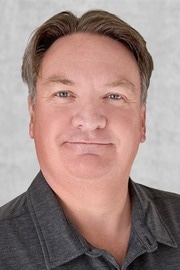 re he has contributed since 2006. He earned his Ph.D. in Anatomy and Neurobiology from the University of Vermont and completed a postdoctoral fellowship at the Massachusetts Eye and Ear Infirmary. With two decades at Chroma, Brian has developed deep expertise in fluorescence microscopy, Raman spectroscopy, and flow cytometry.
Brian is recognised for his collaborative approach to problem-solving and his ability to bridge the gap between complex optical technologies and practical applications. His work has been instrumental in advancing Chroma’s capabilities in high-transmission precision optics, particularly in applications such as satellite communications and advanced microscopy techniques. He has also contributed to discussions on the role of optical filters in enhancing satellite communication technologies, emphasizing the importance of narrow transmission bands and high out-of-band blocking to maintain signal fidelity in challenging environments.
Brian’s dedication to scientific collaboration and innovation continues to support researchers and engineers across various disciplines, reinforcing Chroma's reputation as a leader in optical filter technology.

About Martin Ettenberg
Dr. Martin Ettenberg is currently the founder of IRConsult, LLC, a consulting company focused on helping startups with business, marketing, product, and technical issues in the commercial and DoD space. Martin was the CEO and Founder of Princeton Infrared Technologies, Inc., for 12 years - a company dedicated to commercialisation of NIR/SWIR detection and imaging technologies. This award-winning company had deployed many imaging systems in space and in commercial inspection systems. He had been developing InGaAs detectors for more than 25 years starting at Sensors Unlimited Inc./Goodrich Corporation.
Martin led the development of the first night-vision-capable InGaAs camera, which was later commercialised as the SU320MX. In addition to fabricating larger focal plane arrays and more sensitive cameras, he was instrumental in developing smaller cameras for robotics and unmanned aerial vehicles. His DARPA work led to his nomination in 2005 for the DARPA Significant Achievement Award. He is a SPIE fellow and was honoured to be included in the Photonics100 list in 2024 from Electro Optics. Dr. Martin H. Ettenberg graduated with a Masters and a Ph.D. degree from the University of Virginia Dept. of Materials Science and Engineering. He also received his BS in Materials Science and Engineering from Cornell University.
About François Coursaget
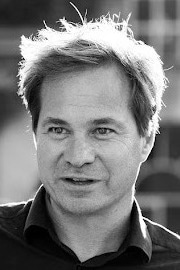
With a BS from ENSAM (Arts&Metiers) Engineering school in Paris and a Master’s degree in Material Science at Georgia Tech, François Coursaget started his career in the electro-optics field at Safran, with different positions and heading the advanced studies department.
He then joined the start-up company New Imaging Technologies (NIT) and helped the company grow to become a world class SWIR sensor and module manufacturer, with customers in the defense, industrial, scientific, and Space application fields. With the acquisition of NIT by Lynred, François now acts as General Manager for NIT and the SWIR Business Unit at Lynred.
This information has been sourced, reviewed, and adapted from materials provided by Chroma Technology Corp.
For more information on this source, please visit Chroma Technology Corp.
Disclaimer: The views expressed here are those of the interviewee and do not necessarily represent the views of AZoM.com Limited (T/A) AZoNetwork, the owner and operator of this website. This disclaimer forms part of the Terms and Conditions of use of this website.