Sponsored by MKS OphirReviewed by Olivia FrostJul 22 2026
For the approximately 400 million people worldwide living with diabetes, the ability to detect blood glucose levels non-invasively (without penetrating the skin) would be extremely beneficial. Thanks to a patented breakthrough of DiaMonTech AG, this could become a reality.
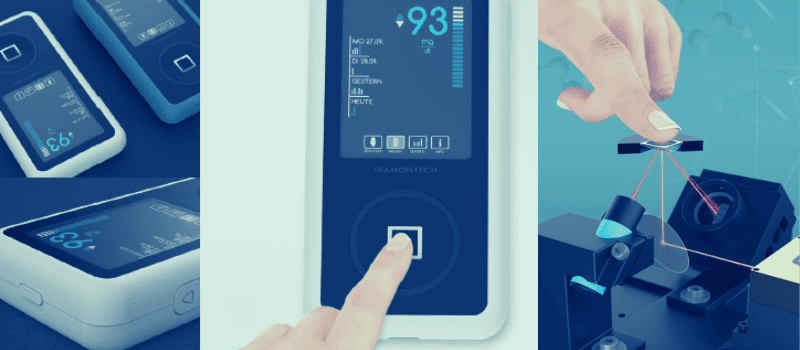
Image Credit: MKS Ophir
The technology employs an infrared quantum cascade laser and is already accessible as a desktop device. However, a smartphone-sized gadget will soon follow. To achieve this downsizing without sacrificing quality, it is important to detect even minute changes in the laser beam.
DiaMonTech employed the Ophir Pyrocam to test and characterize all of their laser developments.
Successful Research
Many non-invasive approaches for monitoring blood glucose have failed because they are insufficiently accurate: glucose levels in bodily fluids such as tears, saliva, and perspiration do not correlate well with blood glucose levels.
The situation is different for skin fluid (interstitial fluid - ISF). Measurements made on ISF in areas with excellent blood supply accurately reflect the glucose concentration in the bloodstream.
DiaMonTech was established in 2015, following years of study at Goethe University Frankfurt. On the basis of this study, the company developed the first non-invasive blood glucose meter, which received CE clearance as a medical device in 2019.
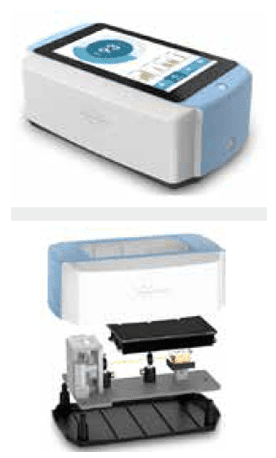
Figure 1. D-Base, the non-invasive blood glucose meter from DiaMonTech. Image Credit: MKS Ophir
Deep Innovation
The desktop gadget, known as the D-Base, is based on infrared spectroscopy, especially the photothermic deflection concept. A quantum cascade laser emits infrared pulses with wavelengths of 8–11 μm to penetrate deeper skin layers.
The pulses at these wavelengths travel through the sensor element, causing the glucose molecules to vibrate momentarily before quickly relaxing and emitting a small amount of heat into the surroundings.
At the skin's surface, the temperature rises minimally. The heat gradient in the sensor element (internal reflection element (IRE)) produces a thermal lens effect. This thermal lens deflects the test beam from a red laser diode as it travels through the IRE.
A position-sensitive photodiode measures the deflection, and the device uses this information to determine the glucose concentration.
The Pyrocam makes our daily work easier. We no longer waste hours on time-consuming measurements; rather, we get reliable results very quickly.
Sergius Janik, COO, DiaMonTech AG
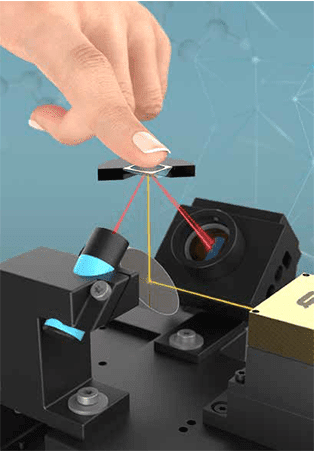
Figure 2. Functional principle of non-invasive blood glucose measurement by DiaMonTech. Image Credit: MKS Ophir
Miniaturization as a Goal
The measurement concept has now been validated in routine clinical practice, with several experiments demonstrating that the measures yield reliable results.
As Sergius Janik, COO at DiaMonTech, explains, shrinking the size of the measuring device is still a challenge: “Diabetes patients want fast and compact measurement technology that they can easily use at home and on the road. This is the focus of all our current research.”
DiaMonTech's D-Base is powered by tunable quantum cascade lasers, which are only available from a few manufacturers. To minimize the total size of the measurement instrument, the laser must be incredibly small.
The exact parameters of the laser beam must not be impacted by this size decrease. Even the classic quantum cascade lasers employed so far must fulfill these exact parameters.
Critical Laser Measurements
To assess the quality of a quantum cascade laser, the DiaMonTech laboratory performs extensive tests on each of them to answer the following questions:
- What does the laser beam profile look like?
- What is the laser's output power?
- How divergent is the beam?
- What is the pulse repetition rate?
- How stable and shaped are the pulses from one to the next?
- How large is the focus point on the skin?
In the company's early days, the team used the knife-edge approach for laser measuring to produce beam profiles. However, because of the large number of measurement sites necessary, this method of measuring a laser beam takes many hours.
If the company had used this strategy to design its new, compact blood glucose meter, it would have wasted a lot of time and produced inaccurate results.
After extensive investigation and testing in their own facilities, the experts chose the Ophir Pyrocam-III-HR-C-A-PRO. Using this high-resolution pyroelectric matrix camera, the beam profile of an infrared laser may be measured rapidly and accurately.
The camera was individually tuned to the right signal level for DiaMonTech's application. The camera data is then analyzed using the BeamGage program. The camera can quickly assess output power, beam profile, and beam divergence.
TheOphir Pyrocam is our key measuring device for characterizing the laser beam, and we use it every day. We use it not only for developing new prototypes, but also for quality assessment and troubleshooting. As necessary, we also make the Pyrocam available to our development partners, so they can make precise and reliable adjustments.
Sergius Janik, COO, DiaMonTech AG
Troubleshooting Made Easy
Sergius Janik uses a specific application to demonstrate the Pyrocam's enormous time savings. During a series of tests on a new laser, the DiaMonTech lab's experts were unable to concentrate the beam.
The beam's power distribution was extremely uneven, but the cause for this was not immediately clear.
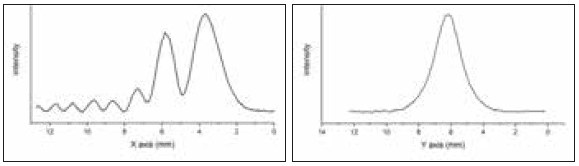
Figure 3. While the beam has the desired Gaussian distribution in the y-axis, the profile of the x-axis is very uneven. Image Credit: MKS Ophir
Only photographs captured with the Pyrocam gave an explanation. Instead of the anticipated symmetrical Gaussian beam profile, the beam appeared heavily deformed (left panel of Figure 4).
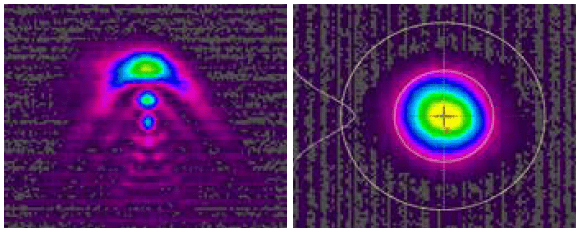
Figure 4. Imaging of the original beam profile using the Pyrocam: left is before, right is after lens adjustment. Image Credit: MKS Ophir
These findings indicated that the beam's collimating lens was out of tune, possibly due to shipping. The laser system was returned to the manufacturer, the lens was readjusted, and Pyrocam tests revealed a uniform beam profile, as shown in the right panel of Figure 4.
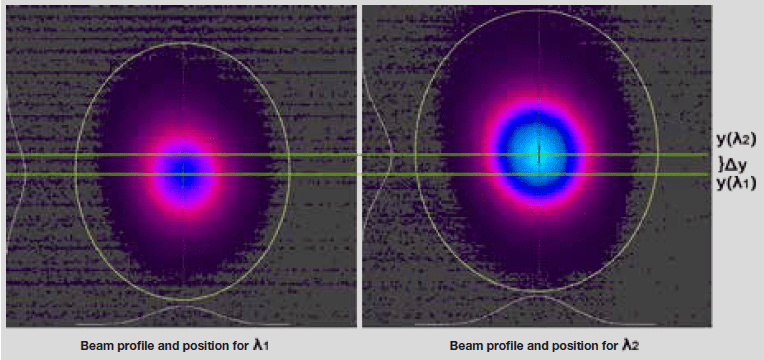
Figure 5. Laser beam migration. Image Credit: MKS Ophir
Easy Measurement of Tunable Lasers
Another issue in developing a small blood glucose meter is the variable beam location for any given wavelength. To detect glucose in the skin, measurements must be taken at a number of infrared wavelengths.
With a tunable laser, the beam shifts whenever the wavelength changes (also known as "beam hopping"). As a result, it penetrates the skin at a slightly altered place (up to around 1/4 mm) and, similarly to incorrectly corrected eyesight, the thermal lens becomes fuzzy.
When the DiaMonTech team switches wavelengths, they employ the Pyrocam to determine the focal point, which is highlighted with crosshairs.
The BeamGage program tracks changes in crosshair position to ensure precise tracking. The wavelengths that produce the most exact measurements may then be identified using the results of these observations.
Faster Measurements Mean More Efficient Development
In the quest for downsizing in non-invasive blood glucose monitoring, a camera-based assessment of the beam profile is required. Before selecting measurement equipment, DiaMonTech researched the options on the market.
The Ophir measuring device not only had a wavelength range appropriate for the task but also delivered the necessary performance range and was extremely cost-effective.
The Pyrocam makes our daily work easier. We no longer waste hours on time-consuming measurements; rather, we get reliable results very quickly. This allows us to concentrate on the essential work of development.
Sergius Janik, COO, DiaMonTech AG

This information has been sourced, reviewed and adapted from materials provided by MKS Ophir.
For more information on this source, please visit MKS Ophir.