Designing an ultra-wide-aperture LWIR lens requires the balancing of aperture size, compactness, thermal stability, and image quality. These goals are often in conflict.
Two lens configurations (20 mm F/0.85 and 40 mm F/1.0) use passive athermalization to deliver excellent MTF performance, minimal distortion, and stable imaging performance from -40 °C to 80 °C.
Aspherical elements combined with optimized materials enable compact, high-performance optics. Precise control of illumination and chief ray angle guarantees detector compatibility. These designs support a wide range of applications, including UAV imaging and surveillance, and demonstrate scalable, producible solutions for high-performance infrared systems.
Introduction
In long-wave infrared (LWIR, 8–12 μm) optical systems, achieving a balance among large aperture, miniaturized form factor, thermal stability, and high imaging performance remains a major design challenge.
These requirements are often mutually constraining, especially in applications requiring long-range detection, broad field coverage, and dependable performance across harsh environmental conditions. Traditional design techniques often face constraints when trying to simultaneously optimize aberration correction, athermalization, and producibility.
This article examines two high-performance fixed-focus LWIR lenses engineered to overcome these hurdles: a 20 mm F/0.85 ultra-wide aperture lens and a 40 mm F/1.0 high-resolution lens.
The designs exhibit strong performance across critical parameters such as modulation transfer function (MTF), distortion, relative illumination, and chief ray angle (CRA), while preserving compact mechanical configurations and passive athermalization across a broad thermal range.
Core Performance Comparison
Source: Avantier Inc.
| |
|
|
| Parameter |
20 mm F/0.85 |
40 mm F/1.0 |
| Focal Length |
20 mm |
40 mm |
| F-number |
0.85 |
1.0 |
| Field of View |
43.85 ° × 36.04 ° |
11.56 ° (Diagonal) |
| Detector Compatibility |
Φ16.85 mm |
- |
| Optical Length |
32.5 mm |
47.51 mm |
| Back Focal Length |
7.17 mm |
11.81 mm |
| Athermal Range |
-40 °C to 80 °C |
-40 °C to 80 °C |
| Relative Illumination |
66% |
81.92% |
| Distortion |
4.65% |
-2.96% |
| CRA |
3.52 ° |
6.27 ° |
| Spatial Resolution |
- |
0.5 mrad |
| Minimum Object Distance |
5 m |
10 m |
| Max Diameter |
25 mm |
40 mm |
| Total Length |
35 mm |
48 mm |
20 mm F/0.85 Lens: Ultra-Large Aperture in a Compact Architecture
Optical Performance
The lens ensures consistent MTF performance across the entire field of view at three representative temperatures (20 °C, -40 °C, and 80 °C), guaranteeing uniform contrast under fluctuating environmental conditions. Its defocus response shows smooth behavior, signifying sufficient depth of focus and supporting tolerance control throughout assembly.
The near-field MTF performance remains strong at a five meter object distance, supporting applications that require both imaging and radiometric measurement.
Aberration control is achieved through effective energy concentration in diffraction spots across the field. Distortion is held at 4.65%, a competitive level for a wide-angle system with such a large aperture.
Relative illumination reaches 66% at F/0.85, indicating effective control of vignetting. The CRA (3.52 °) is well aligned with standard uncooled detector microlens arrays, reducing shading and ensuring consistent signal response.
Mechanical Design
The optical system is integrated into a miniaturized housing featuring a maximum diameter of 25 mm and an overall length of 35 mm. The form factor facilitates integration into size- and weight-limited platforms including UAVs, handheld thermal imagers, and vehicle-mounted systems. Interface configurations can be tailored to meet specific system specifications.
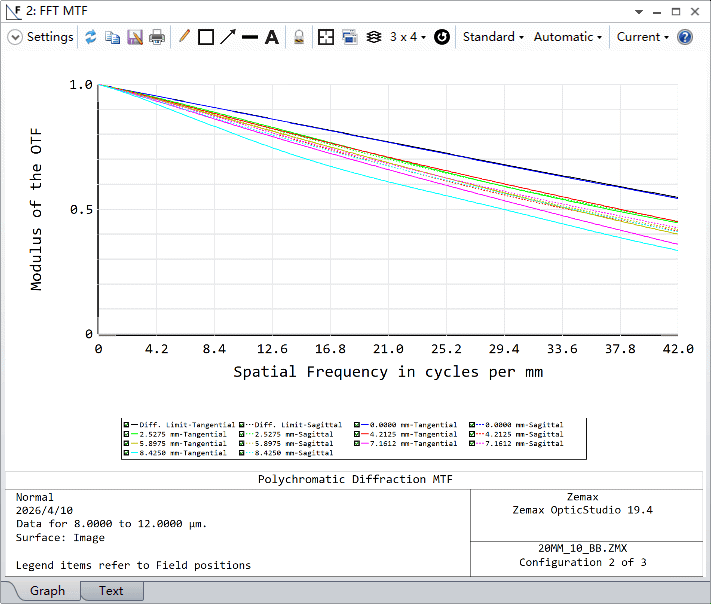
20 °C MTF. Image Credit: Avantier Inc.
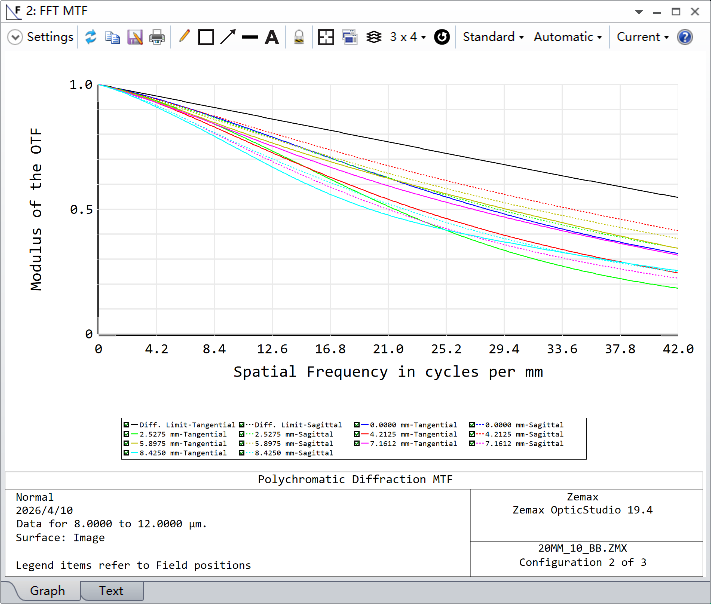
-40 °C MTF. Image Credit: Avantier Inc.
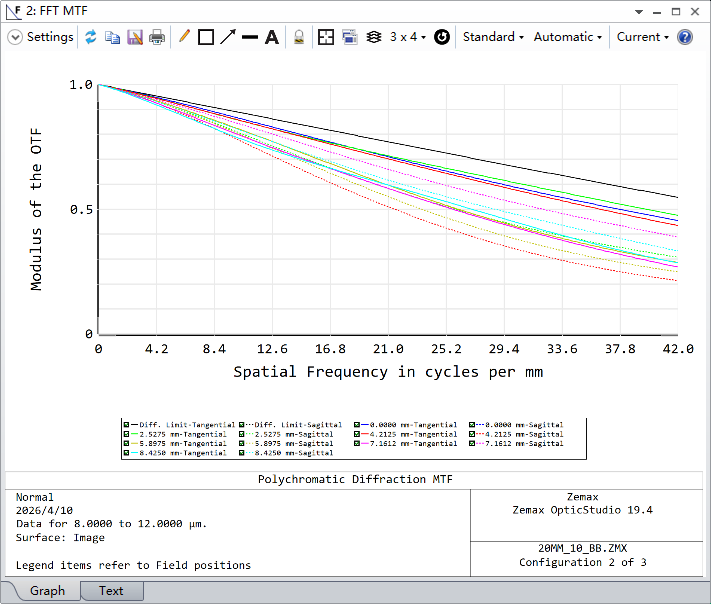
80 °C MTF. Image Credit: Avantier Inc.
MTF Performance at 20 °C and 5 m Object Distance. Image Credit: Avantier Inc.
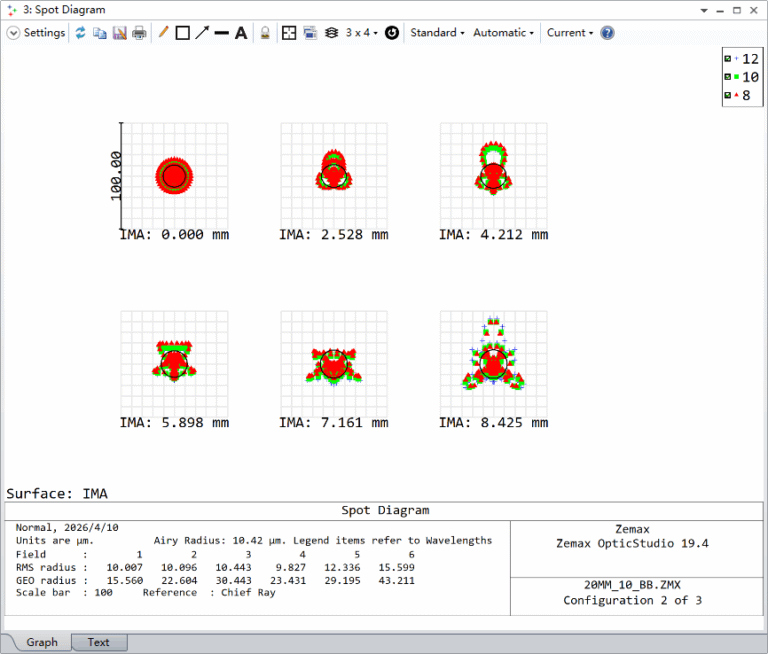
Spot Diagram. Image Credit: Avantier Inc.
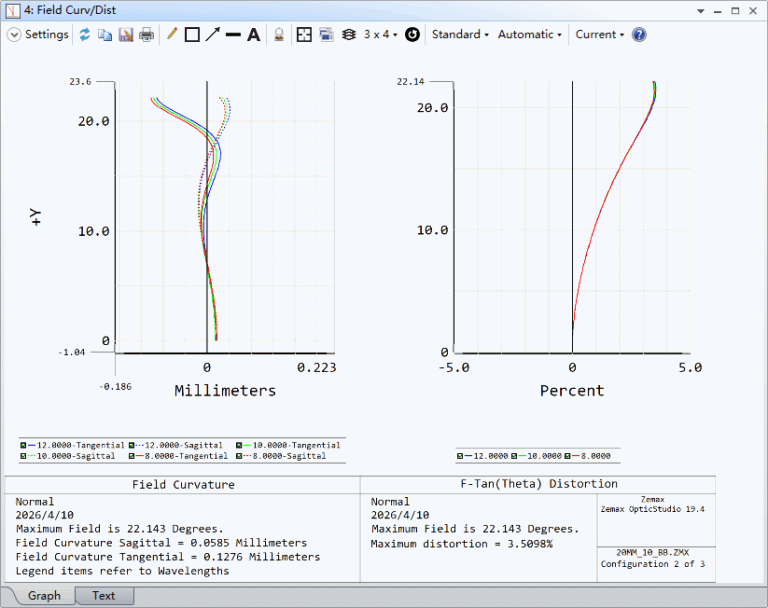
Field Curvature. Image Credit: Avantier Inc.
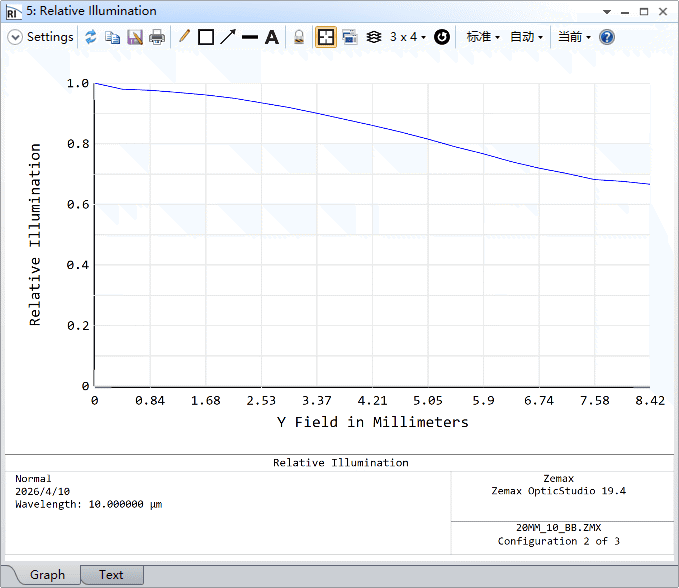
Relative Illumination. Image Credit: Avantier Inc.
40 mm F/1.0 Lens: High-Resolution Medium Telephoto Design
Optical Performance
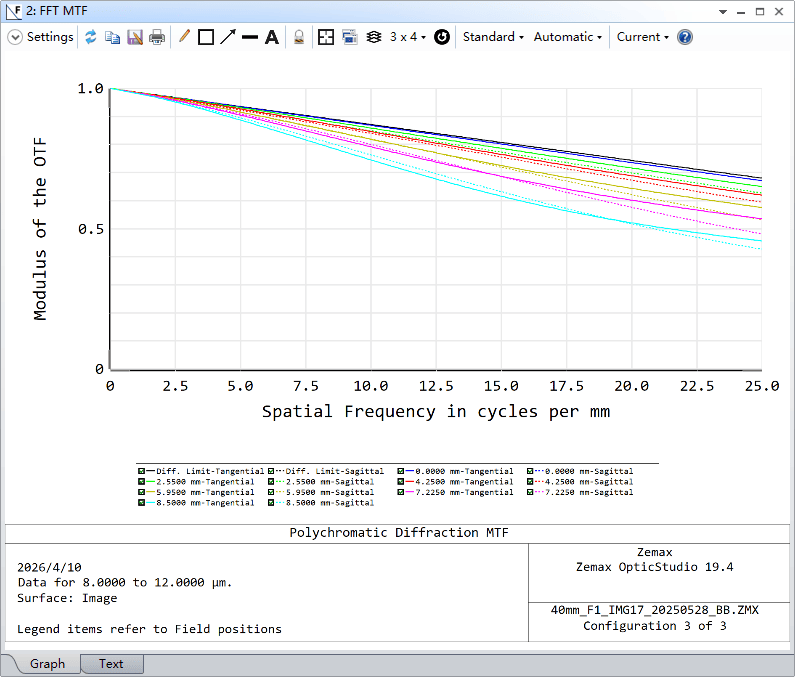
The 40 mm lens delivers MTF performance close to the diffraction limit across the operational thermal range. At yquist frequency (25 lp/mm), high contrast is maintained, facilitating dependable high-resolution detection.
MTF stability supports medium-range recognition applications at a 10 m object distance. Aberrations, such as spherical aberration, astigmatism, and field curvature, are effectively suppressed.
Distortion is limited to -2.96%, allowing precise measurement and ensuring compatibility with computer vision and AI-based image evaluation workflows.
Relative illumination surpasses 81%, providing consistent brightness across the field. The CRA (6.27 °) is optimized to achieve efficient coupling with conventional infrared detectors.
Mechanical Design
Featuring a maximum diameter of 40 mm and an overall length of 48 mm, the lens provides a balance between optical performance, mechanical durability, and temperature control.
The design maintains compatibility with conventional infrared camera interfaces, supporting operation in extreme environments including surveillance systems, automotive platforms, and airborne payloads.
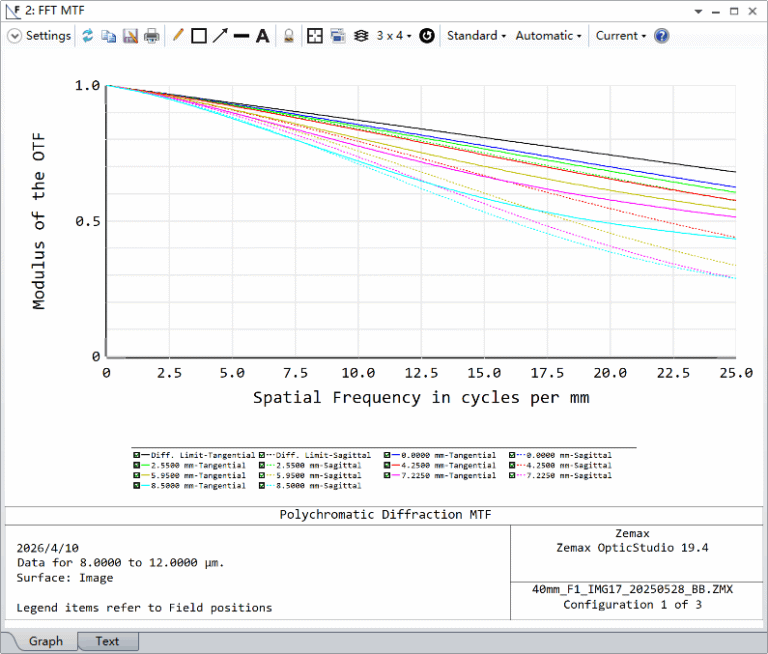
20 °C MTF. Image Credit: Avantier Inc.
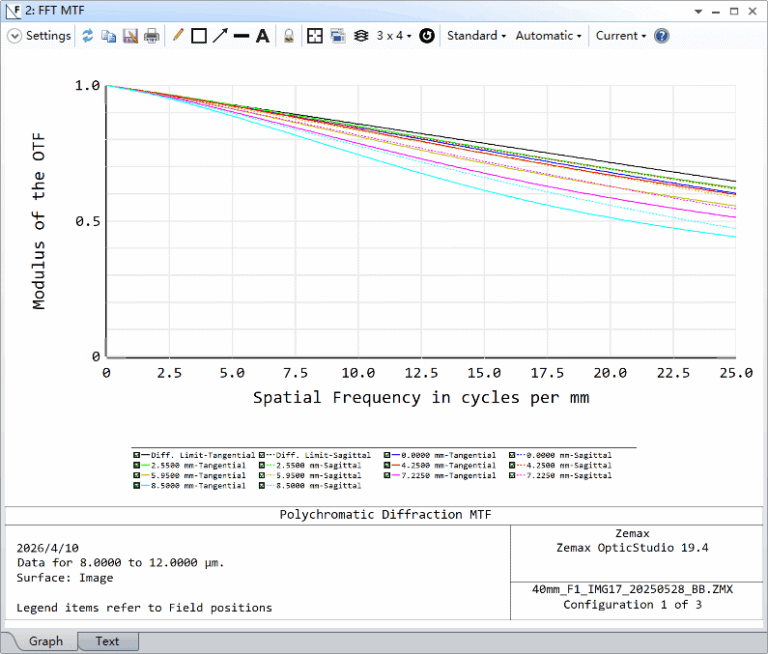
-40 °C MTF. Image Credit: Avantier Inc.
80 °C MTF. Image Credit: Avantier Inc.
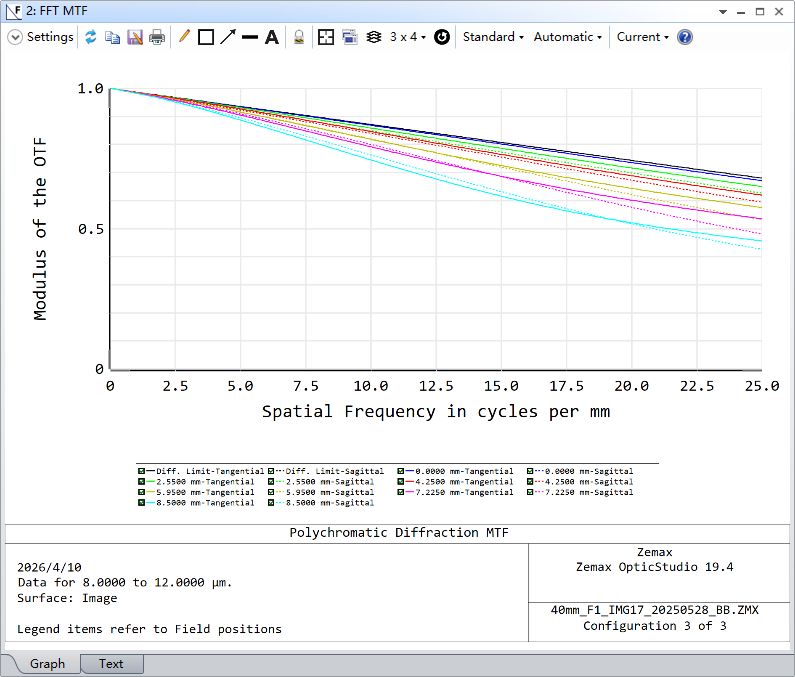
MTF Performance at 20 °C and 10 m Object Distance. Image Credit: Avantier Inc.
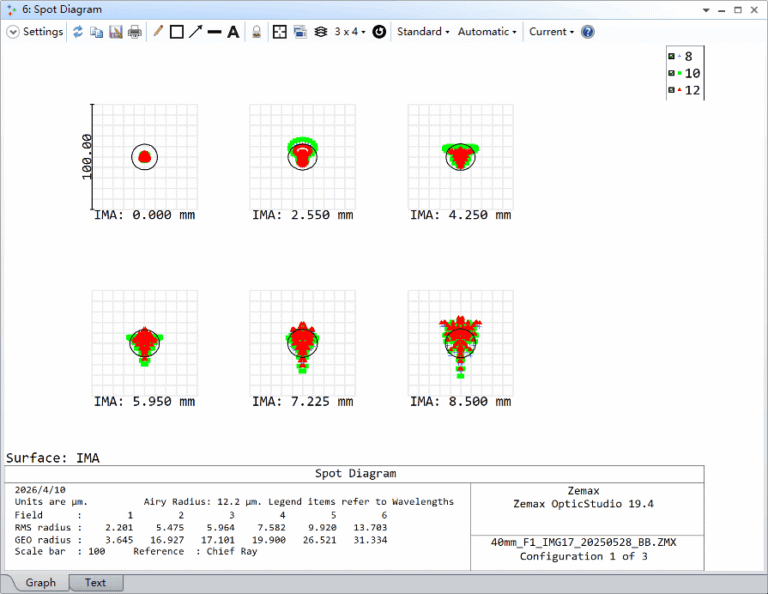
Spot Diagram. Image Credit: Avantier Inc.
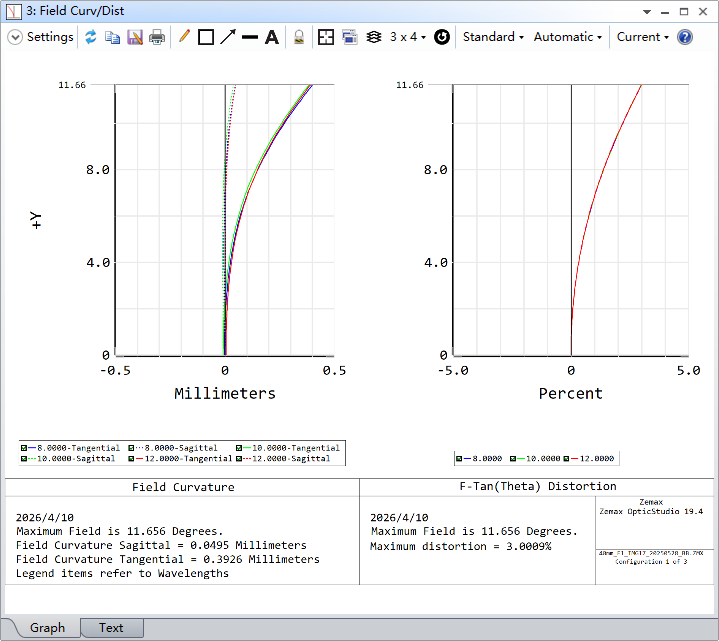
Field Curvature. Image Credit: Avantier Inc.
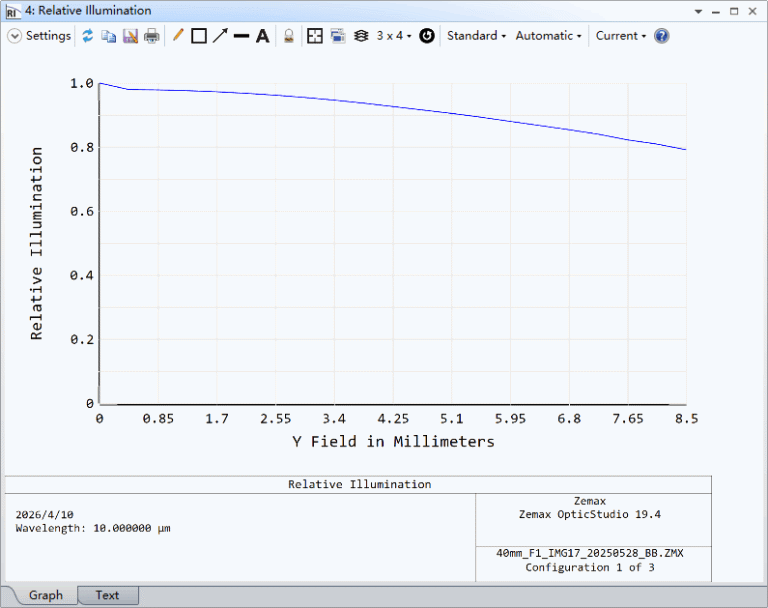
Relative Illumination. Image Credit: Avantier Inc.
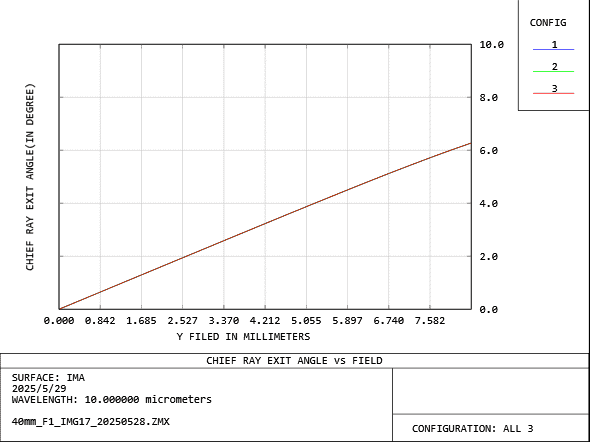
Chief Ray Exit Angle vs. Image Height Curve. Image Credit: Avantier Inc.
Technical Considerations
Large Aperture and Miniaturization
The designs use several aspherical surfaces alongside low-absorption infrared materials, such as germanium (Ge), zinc selenide (ZnSe), and chalcogenide glasses. Global optimization methods and tolerance-sensitivity evaluations are employed to preserve exceptional imaging performance within compact geometries.
Passive Athermalization
Athermal performance is realized by combining materials with differing thermo-optic coefficients and mechanical compensation techniques. This approach facilitates stable imaging over a thermal range spanning -40 °C to 80 °C without the need for active refocusing.
Illumination and CRA Optimization
Managing pupil aberration and optimizing vignetting enhances edge illumination. The CRA is precisely aligned to detector microlens structures to avoid non-uniformity and radiometric artifacts.
Production and Assembly
Execution depends on submicron-precision aspherical machining and high-transmission infrared coatings. Accurate mechanical design and active alignment procedures guarantee repeatability and consistent performance during volume manufacturing. Environmental validation involves thermal cycling, vibration, shock, salt spray, and particulate exposure.
Typical Applications
20 mm F/0.85
- Handheld thermal-imaging systems
- Short-range detection and monitoring
- UAV-based reconnaissance
- Automotive night vision
- Industrial thermography
40 mm F/1.0
- Border and perimeter surveillance
- Infrared measurement systems
- Medium-range target detection
- Robotics and automation
- AI-assisted vision systems
Customization Capability
Customization options include:
- Optional active focus mechanisms (stepper motor or voice coil motor)
- Spectral band optimization (e.g., 5–8 μm, 8–14 μm)
- Manufacturing and qualification test planning
- Focal length, F-number, and field of view
- Mechanical interface and back focal distance
Conclusion
The presented LWIR lens designs show a balanced combination of ultra-wide-aperture performance, passive athermalization, miniaturized mechanical structure, and producibility.
Such advancements demonstrate a systematic approach to addressing critical constraints in infrared optical design, enabling robust imaging performance across a wide range of use cases and environmental settings.

This information has been sourced, reviewed, and adapted from materials provided by Avantier Inc.
For more information on this source, please visit Avantier Inc.