Sponsored by MKS OphirReviewed by Olivia FrostJul 31 2026
Axtra3D was created in 2021 with the ambitious objective of transforming the additive manufacturing industry. Only a year later, the company released its hybrid photosynthesis (HPS) technology, which is truly revolutionizing the industry.
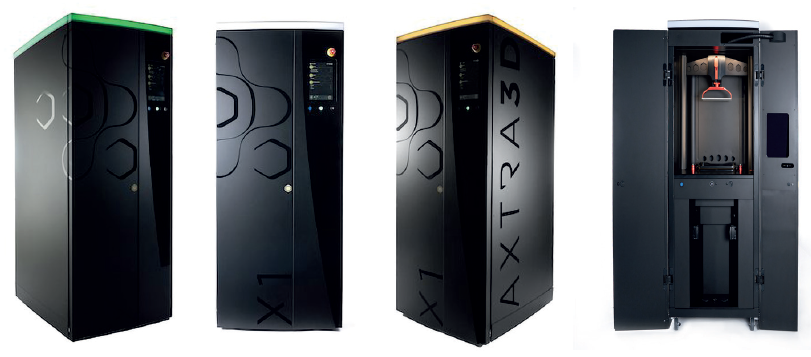
Image Credit: MKS Ophir
HPS is the first coaxial system to enable users to print tiny features quickly and with excellent surface smoothness. The idea is based on photopolymerization procedures using two light sources: a digital projector and a solid-state laser.
The laser beam and light must be perfectly synchronized for HPS technology to function. With MKS technology, the firm obtains the optimal fit and depends on Ophir® measuring equipment throughout the product life cycle.
Overcoming the Limitations of Photopolymerization
Additive manufacturing offers significant opportunities for fast 3D object manufacturing. Since the introduction of the first commercial stereolithography apparatus (SLA) in the 1980s, technology has continued to progress. Meanwhile, layer-by-layer resin printing is widely available for home use.
Even with industrial high-end SLA technologies, production speed and surface quality remain limited. To overcome speed limits, Digital Light Processing (DLP) was developed, enabling the printing of an entire layer at once.
A projector shows images of each layer on the resin, which cures when exposed to UV light. Despite the tremendous advancements enabled by DLP technology, the completed item still requires considerable rework. The printed parts must be cleaned, and the exposed surface structure requires further treatment.
This is where Axtra3D comes in. The firm, based in the United States with an innovation lab and production facilities in Italy, was built on an intriguing patent portfolio to develop innovative additive manufacturing solutions.
Paul Spoliansky, founding member of Axtra3D and its chief revenue officer, says: “Our technology puts an end to the trade-offs we have seen with other additive technologies. We enable our customers to print true to their CAD files without further rework needed.”
Products
- Ophir® NanoScan™ 2s measurement device
- Ophir PD300R-3W sensor
- Ophir Starbright™ meter Customer Market:
- Additive Manufacturing
Application
- Development, quality inspection, field service
Advantages
- Ophir NanoScan device measures a large range of beam diameters
- Easy to set up and use
- Suited for measuring over the whole product lifecycle
- Accurate power measurement with PD300R-3W
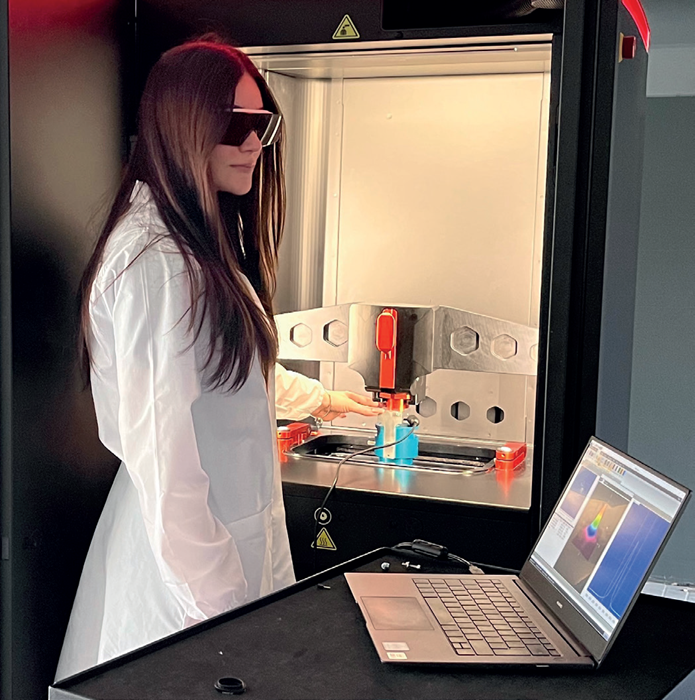
Figure 1. The Ophir NanoScan beam profiler is key to ensure the reproducibility in the AM process. Image Credit: MKS Ophir
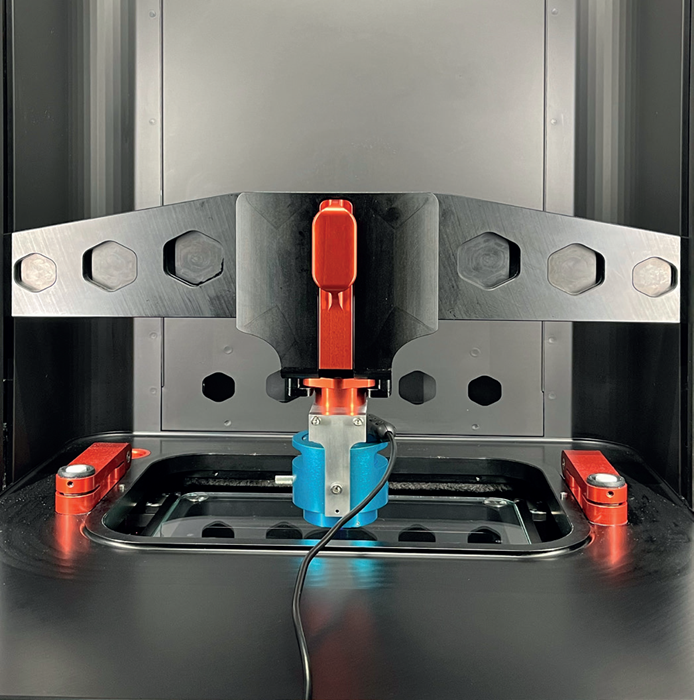
Figure 2. The measurement device is mounted with a bracket to measure the laser beam. Image Credit: MKS Ophir
Combining Key Technologies in the HPS Light Engine
The HPS technology recently launched in the Lumia X1 3D printer combines a digital light processor that prints the entire layer at once with a diode-based solid-state laser that optimizes each layer's structure in parallel. As with most high-tech solutions, while the end result appears simple, the route to get there was quite difficult.
Combining the digital light projector and its precise optics with the laser necessitates complete harmony. To meet high manufacturing requirements, both devices must produce light at the same wavelength, with a maximum variance of 30 µm between the two sources.
We knew that it would be critical to know the laser parameters and beam shape, so we turned to MKS and their Ophir measurement solutions to get trustworthy measurements.
Federico Iacovella, Chief Product and Innovation Officer, Axtra3D
Beam Roundness is Key
When creating new technologies, the primary goal is to ensure long-term repeatability of the additive manufacturing process. Customers want identical items with each print job, particularly when 3D printers are used in industry.
To ensure the high quality of the HPS light engine, it is critical to transparently monitor key beam characteristics, including beam shape, not only during R&D and manufacturing but also during printer servicing.
With that in mind, Federico Iacovella sought an easy-to-use measuring setup that nonetheless provided high-quality data at each stage of the product life cycle: “We first tried camera-based measurement devices, but we realized that they were not suitable for our application in the field. This is why we decided to test slit-based measurement – with great success.”
The Ophir NanoScan beam profiler, with its 9 mm aperture, provides greater versatility with varied beam diameters and is easier to use. He continues: “Even if, in the end, what we want to measure is a really small spot size of only 45 µm, we start with a 7 mm beam.”
With the Ophir NanoScan device we gain full flexibility due [to] its broad measurement range.
Federico Iacovella, Chief Product and Innovation Officer, Axtra3D
The PC-based equipment analyzes laser beam spatial irradiance profiles in accordance with ISO 11146. With the accuracy and stability of beam profile measurement, beam size and aiming may be measured to a three-sigma precision of several hundred nanometers.
The HPS light engine requires a laser beam with 90% circularity; using the NanoScan measurement system, Axtra3D can accurately measure the beam's diameter and shape, whether in the clean room or in the customer’s production environment.
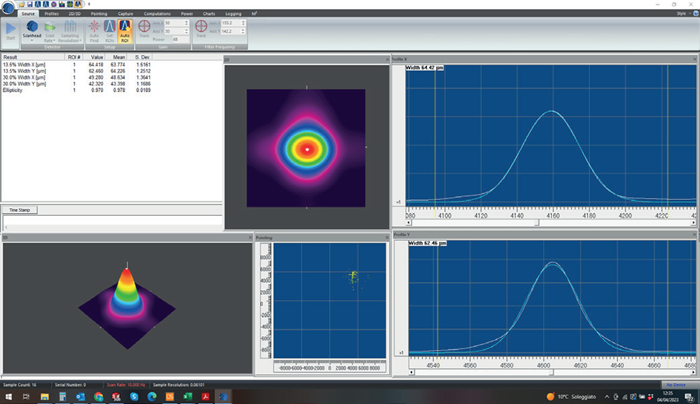
Figure 3. The PC-based profiler includes multiple graphical functions eg. 2- and 3D-graphs. Image Credit: MKS Ophir
Managing Power and Energy
Another key aspect of HPS technology is the constant use of a specified laser energy to polymerize the resin. As Axtra3D single-handedly makes each diode laser used in the Lumia X1 systems, including the diode drivers, there is a strong need to examine the strength of each diode laser individually.
Federico Iacovella clarifies: “We use the Ophir PD300-3W sensor to measure the single diode power and thus linearize the response current with the power of each diode. This way we can ensure that every diode laser will deliver the correct energy needed for each individual 3D-printing process. In terms of repeatability, those measurements are critical for both manufacture and the maintenance of the Lumia X1 systems.”
Measurements of the PD300-3W sensor are presented using a tiny, portable Ophir StarBright power meter, which provides the user with advanced power- and energy-logging capabilities, arithmetic functions, and a range of graphical options.
New Quality Level in Photopolymerization
Axtra3D's HPS technology is groundbreaking in advancing photopolymerization. Not only does the speed of the 3D printing processes transcend SLA printers and equal high-speed DLP processes, but by employing twin light sources, the technique removes the need for post-processing.
This, to a great part, directly relates to MKS measurement technology:
Ophir measurement devices are a substantial part of the product innovation, as measuring the laser parameters lays the foundations for the high quality of our 3D-printing technology.
Federico Iacovella, Chief Product and Innovation Officer, Axtra3D
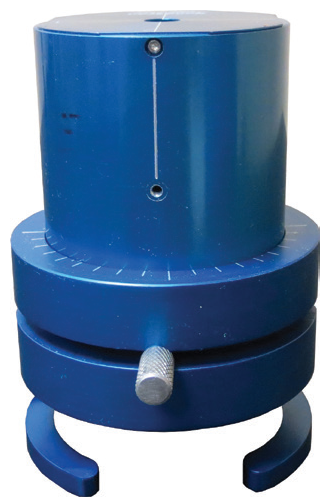
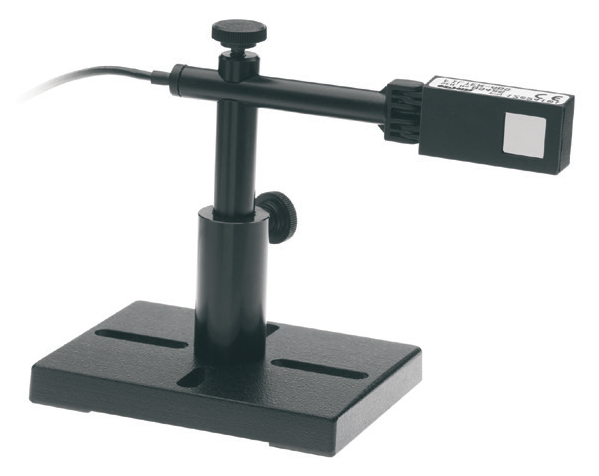
Figure 4+5. Axtra3D relies on the Ophir NanoScan 2s scanning-slit profiler (left) and the Ophir PD300-R-3W sensor. Image Credit: MKS Ophir
Image Credit: MKS Ophir
MKS Photonics Solutions
MKS Instruments helps organizations overcome their most difficult technological hurdles. As a trusted partner of the world's major electronics and industrial firms, MKS uses cutting-edge science and engineering expertise to provide solutions that increase process performance and efficiency for its clients.
The MKS Instruments Photonics Solutions segment includes the brands Spectra-Physics, Ophir, Newport, and ESI. Spectra-Physics combines cutting-edge laser technology with extensive application knowledge to produce industry-leading lasers for precise industrial and scientific research applications.
Ophir specializes in laser and LED measuring equipment, such as laser power and energy meters and laser beam profilers. Ophir also manufactures high-performance infrared thermal imaging lenses and optical components, as well as optics for CO2 and high-power fiber laser processing.
Newport offers a comprehensive suite of solutions, including precise motion control, optical tables and vibration isolation systems, photonic instruments, temperature monitoring, and optical and optomechanical components.
ESI systems provide industry-leading solutions for flexible PCB laser processing, high-speed MLCC testing, and CO2-laser-based HDI PCB and IC substrate production. MKS Photonics Solutions helps its clients improve their capabilities and productivity in the semiconductor, advanced electronics, and specialty industrial industries.

This information has been sourced, reviewed and adapted from materials provided by MKS Ophir.
For more information on this source, please visit MKS Ophir.