Sponsored by MKS OphirReviewed by Olivia FrostJul 30 2026
The development and production of laser systems for medical applications face several challenges, including major safety requirements. It is no surprise that medical technology companies pick their suppliers extremely carefully.
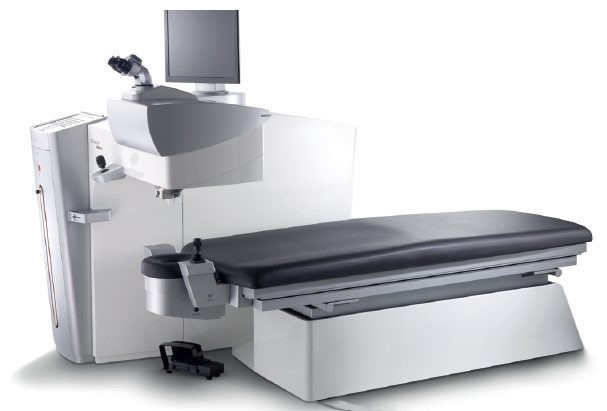
Image Credit: MKS Ophir
WaveLight GmbH, an Alcon subsidiary and refractive surgery industry leader, effectively develops, manufactures, and maintains high-quality laser systems using MKS Instruments products.
For more than a decade, Spectra-Physics laser sources have been integrated into WaveLight® FS200 femtosecond laser systems, and Ophir technologies for monitoring laser power and energy, as well as laser beam analysis, are used throughout the development and maintenance process. Millions of patients benefit from this collaborative effort.
Refractive Surgery Requires the Very Highest Quality
The number of people with ametropia is increasing, and many of them are so limited by it that they choose to have their eyesight corrected with laser therapy. Thus, refractive surgery is becoming increasingly significant globally.
WaveLight GmbH is a leading provider of innovative diagnostic and surgical technology for repairing refractive problems with eye lasers. WaveLight, a subsidiary of Alcon, one of the world's top ophthalmology firms, develops and manufactures high-quality laser and diagnostic equipment at three locations in Germany.
Since the introduction of the WaveLight® Refractive Suite, which includes the WaveLight® FS200 femtosecond laser and the WaveLight® EX500 excimer laser, several thousand of these systems have been installed worldwide, and millions of patients have been treated with the Refractive Suite.
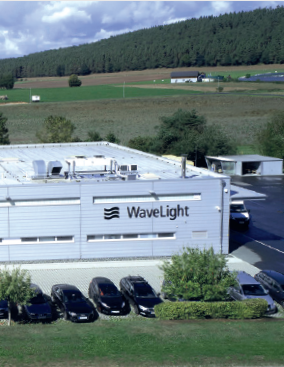
Image Credit: MKS Ophir
This resounding vote of confidence is no coincidence: WaveLight values accuracy and quality in both research and manufacturing. Laser sources are examined and selected properly; therefore, the standards for laser measuring technology are stringent.
Products
- Spectra-Physics® laser source
- Ophir® BeamSquared®
- Ophir® 3A-FS sensor
- Ophir® SW
- Ophir® LT655
- Ophir® PE50U sensor
Field of Application
Application, Laser Source
- Part of the WaveLight® FS200 femtosecond laser
Application, Measuring Technology
- Development, production, service of all WaveLight laser systems
Advantages, Laser
- Customized development of a laser source in the femtosecond range: highest precision and reliability
Advantages, Measuring Technology
- High measuring accuracy
- Comprehensive SW functions

Fig 1. WaveLight attaches great importance to precision and reliability in the production of its laser systems in Pressath/Bavaria. Image Credit: MKS Ophir
The Long Path from Development to Approval
The laser source is a crucial component of any laser system. During the development of the WaveLight® Refractive Suite, the engineers searched the market to check if appropriate laser sources were available as standard.
WaveLight was looking for an infrared laser source with a power of one to two watts and a pulse width in the femtosecond region to cut the flap, i.e., make the incision in the cornea. The developers found what they were looking for at MKS and chose a Spectra-Physics laser source.
After extensive testing, the team settled on the typical pulsed laser source, which had to be modified to satisfy WaveLight's specific needs. The laser's size, integrated interfaces, and power supply were all tailored to satisfy WaveLight's requirements.
It takes a few months to move from the experimental setup in the lab to the prototype, and it often takes one to two years to have the first pre-series product ready for testing.
After five years, the laser system was certified in Europe, and after another three years, it was also approved internationally. The MKS SpectraPhysics laser production plant in Rankweil has been accredited to the general quality standards EN ISO 9001 and EN ISO 13485 for medical device design and manufacture.
You have to remember, it’s not enough just to have an excellent prototype. It’s essential to successfully complete the full approval process and to ensure that the product’s quality remains high when manufactured in series. But many processes can be greatly simplified if you have the right certifications. On the whole, we worked very closely with the MKS developers while setting up the first Spectra-Physics laser sources and thus avoided quite a few pitfalls.
Mario Klafke, Head of R&D Comeal Refractive, WavLight
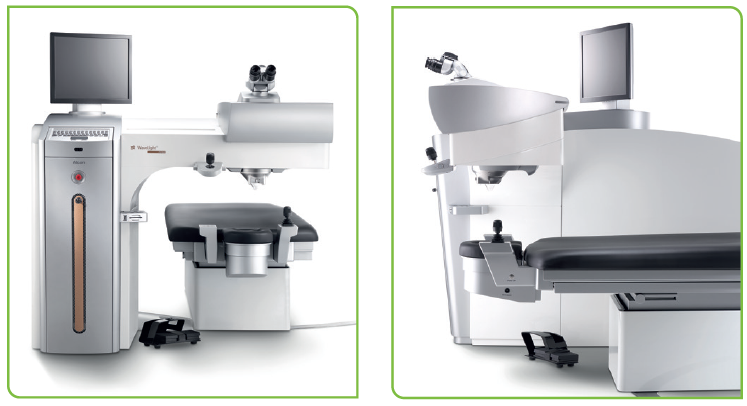
Fig 2. The WaveLight® Refractive Suite offers the fastest possibility to correct refractive errors with the highest precision. Image Credit: MKS Ophir
Metrological Testing of the Quality Parameters
When evaluating the quality of a laser source, the beam propagation ratio M2 is commonly used to measure the laser's ability to focus. As a result, an additional MKS product, Ophir BeamSquared, is used not only at Spectra-Physics for manufacturing and incoming product inspection, but also at WaveLight to modify the laser source.
In less than a minute, this fully automated, camera-based system accurately monitors the beam profile of continuous-wave and, in this case, pulsed lasers.
In terms of the laser source for the femtosecond laser system, there is a clear advantage to using the same system for testing on both the manufacturer's and the customer's sides, but Ophir products are also used to measure the excimer lasers used for ablating the inner corneal tissue.
Our number one priority is the quality of our laser systems. Ophir measurement technology is therefore in daily use at our company – each and every laser system is meticulously tested, first in the manufacturing process and again during commissioning and maintenance. To do this, our worldwide service team uses exactly the same products as manufacturing does, ensuring comparable results every time.
Mario Klafke, Head of R&D Comeal Refractive, WavLight
WaveLight employs Ophir 3A-FS thermal sensors and Ophir PE50U pyroelectric sensors to monitor laser power and energy, respectively. The latter features a more serious damage threshold thanks to a unique coating.
“Successfully creating a reliable laser system is not a sprint but rather a marathon. Once you have established the desired product quality, you have to ensure that it is maintained.” Mario Klafke, Head R&D Corneal Refractive.
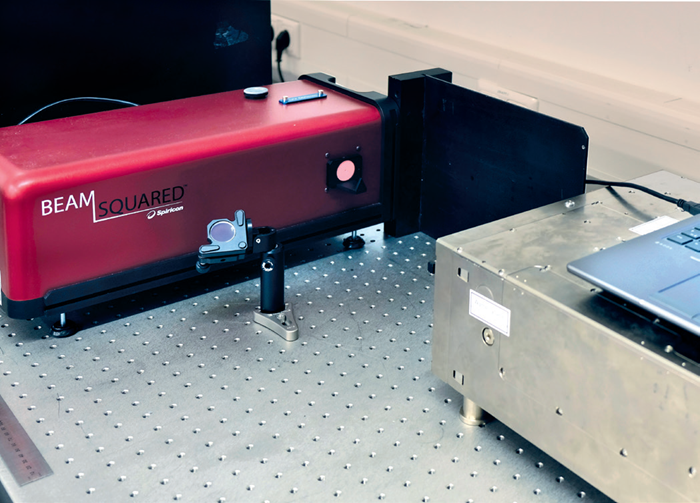
Fig. 3. The beam profile of the femtosecond lasers is checked with the Ophir BeamSquared analysis system. Image Credit: MKS Ophir
At the same time, as OEM sensors, they are specifically calibrated to the 193 nm wavelength, boosting their absolute measurement precision. WaveLight uses these camera-based devices, equipped with large-format LT665 silicon cameras, to calculate the beam profile and complete the laser system measurement.
Ophir's sophisticated software was one of the primary criteria in selecting its measuring technology, as Mario Klafke puts it: “The measurement accuracy was an important criterion for us, and various functions of the BeamGage software plus the direct interface to the PC also made our work easier.”
Continuous Quality Assurance
The WaveLight® Refractive Suite has been on the market for over 10 years, and many procedures have been conducted with these laser systems. The most important need is that they be of exceptional quality.
This is where the close collaboration between the WaveLight and SpectraPhysics development teams, as well as the thorough measurements of the laser systems using Ophir measuring equipment, have truly paid off.
“We view the cooperation with MKS as very positive. Of course, when dealing with any supplier, challenges will arise from time to time – but here they have always been resolved constructively and with a focus on service. By the way, this is not only true for Europe; on-site service in other regions also works very well,” explains Mario Klafke.
Image Credit: MKS Ophir
MKS Photonics Solutions
MKS Instruments helps organizations overcome their most difficult technological hurdles. As a trusted partner of the world's major electronics and industrial firms, MKS uses cutting-edge science and engineering expertise to provide solutions that increase process performance and efficiency for its clients.
The MKS Instruments Photonics Solutions segment includes the brands Spectra-Physics, Ophir, Newport, and ESI. Spectra-Physics combines cutting-edge laser technology with extensive application knowledge to produce industry-leading lasers for precise industrial and scientific research applications.
Ophir specializes in laser and LED measuring equipment, such as laser power and energy meters and laser beam profilers. Ophir also manufactures high-performance infrared thermal imaging lenses and optical components, as well as optics for CO2 and high-power fiber laser processing.
Newport offers a comprehensive suite of solutions, including precise motion control, optical tables and vibration isolation systems, photonic instruments, temperature monitoring, and optical and optomechanical components. ESI systems provide industry-leading solutions for flexible PCB laser processing, high-speed MLCC testing, and CO2-laser-based HDI PCB and IC substrate production.
MKS Photonics Solutions help its clients improve their capabilities and productivity in the semiconductor, advanced electronics, and specialty industrial industries.

This information has been sourced, reviewed and adapted from materials provided by MKS Ophir.
For more information on this source, please visit MKS Ophir.